


Industrial Painting – Complete Guide for Toronto Facilities
Rust corrodes nearly 40% of metal infrastructure each decade, costing industries billions and threatening the safety of bridges, factories, and public spaces. Industrial painting is at the forefront, protecting critical assets with advanced coatings and specialized techniques. Understanding this process gives businesses the tools to extend equipment lifespans, cut future costs, and maintain strong safety and compliance standards.
Key Takeaways
| Point | Details |
|---|---|
| Importance of Industrial Painting | Industrial painting is vital for protecting surfaces, enhancing durability, and ensuring regulatory compliance across manufacturing and infrastructure. |
| Techniques and Applications | Key techniques include powder coating and web coating, both essential for surface treatment in the construction and manufacturing sectors. |
| Safety and Compliance | Strict adherence to environmental regulations and workplace safety requirements is crucial for mitigating risks and ensuring quality. |
| Common Risks and Mistakes | Proper surface preparation is essential; neglecting it can lead to adhesion issues and increased project costs. |
Defining Industrial Painting and Its Importance
Industrial painting represents a specialized and critical process within manufacturing and infrastructure maintenance. According to GlobalSpec, industrial painting services involve complex techniques like powder coating and web coating designed to provide both protective and decorative finishes to various industrial substrates, particularly metal surfaces.
The primary purpose of industrial painting extends far beyond aesthetic considerations. As Wikipedia explains, these painting processes aim to protect large structures and equipment from corrosion, enhance surface durability, and improve overall structural integrity. Industrial painting serves multiple critical functions that are essential for infrastructure longevity and performance.
Key objectives of industrial painting include:
- Preventing metal corrosion and degradation
- Extending equipment and structure lifecycle
- Improving surface resistance to environmental challenges
- Enhancing visual appearance of industrial assets
- Maintaining regulatory compliance for safety standards
Professional industrial painting requires specialized knowledge, advanced techniques, and precise application methods. Learn more about the differences between commercial and industrial painting in our comprehensive guide on commercial vs industrial painting, which provides deeper insights into these specialized painting processes and their unique requirements.
Major Types of Industrial Painting Services
Industrial painting encompasses a diverse range of specialized services tailored to meet complex surface protection needs. GlobalSpec highlights several advanced techniques that form the core of industrial painting services, with powder coating and web coating standing out as primary methods for industrial surface treatment.
Key Industrial Painting Techniques
Powder Coating
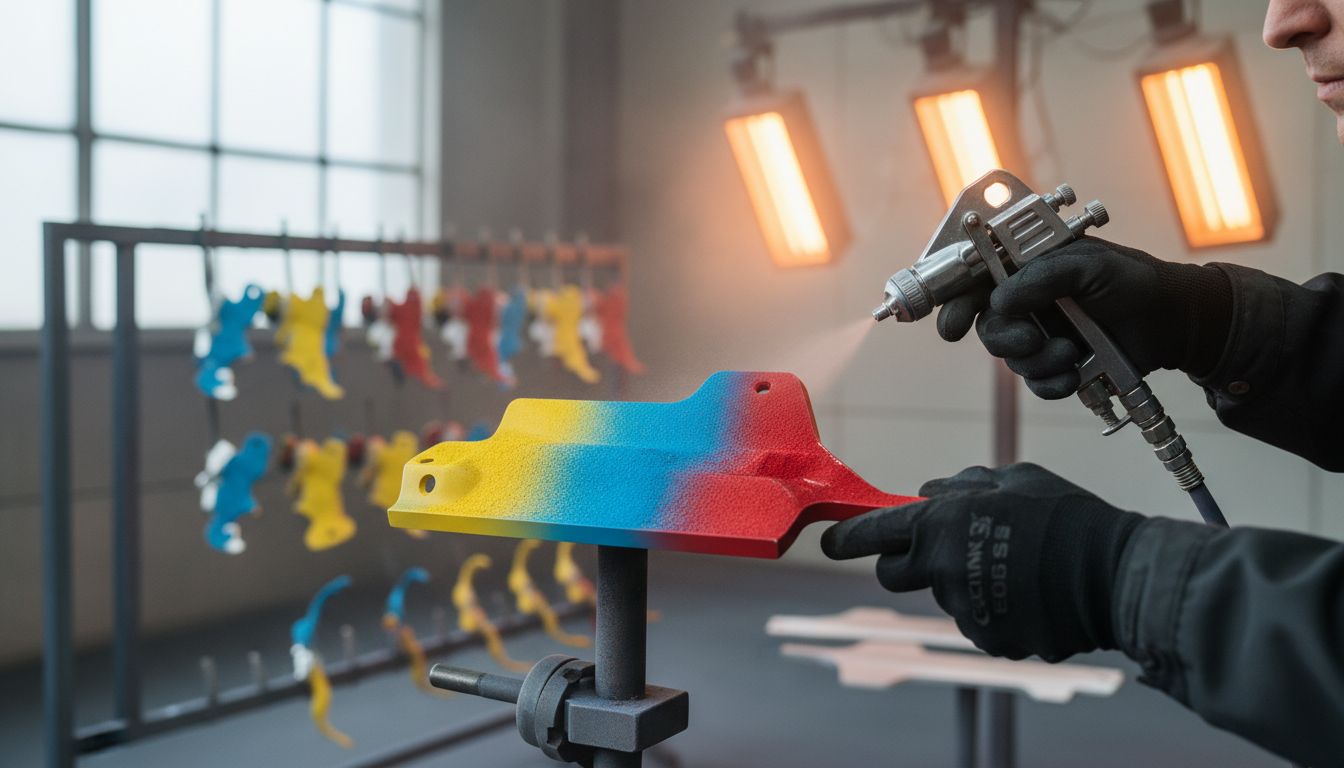
Powder coating represents a sophisticated painting technique where electrostatically charged dry paint particles are applied to surfaces, creating a durable and uniform protective finish. This method offers superior advantages:
- Exceptional durability
- Uniform coating without drips or runs
- Environmental friendliness with minimal volatile organic compounds
- Excellent resistance to chipping, scratching, and wear
Web Coating
Web coating is a continuous painting process designed for materials that require consistent and efficient surface treatment. This technique is particularly useful for manufacturing industries dealing with long sheets of materials like metal, plastic, or fabric.
Other notable industrial painting services include:
- Spray painting for large industrial equipment
- Electrostatic painting techniques
- Immersion coating for comprehensive surface protection
- High-temperature resistant coating applications
Explore our comprehensive guide on commercial paint types to understand more about specialized painting techniques that can inform your industrial painting choices and requirements.
How Industrial Painting Processes Work
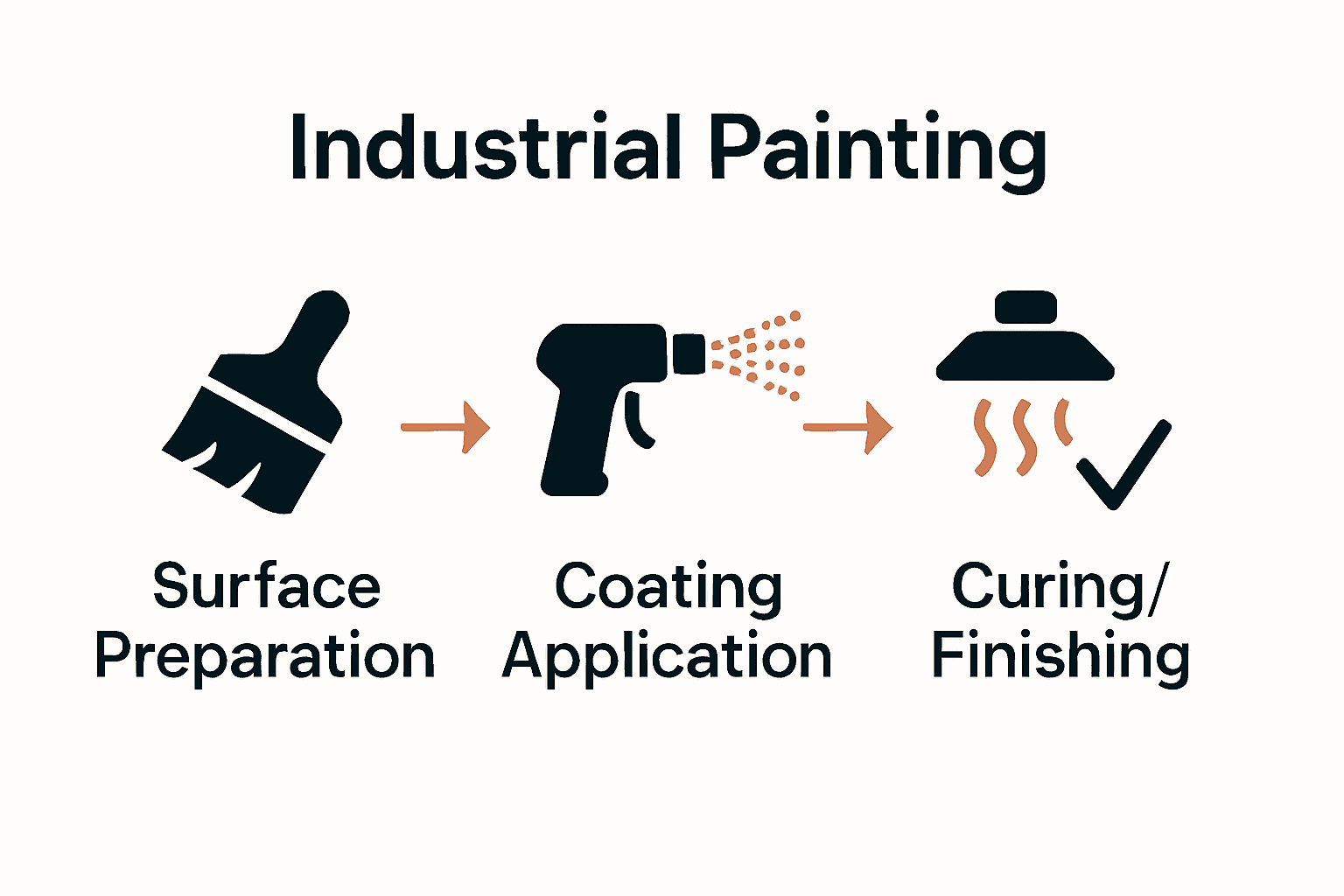
Industrial painting involves complex, multi-step processes designed to ensure maximum surface protection and aesthetic quality. Wikipedia explains that the coil coating process represents a sophisticated method of surface treatment, involving meticulous cleaning and preparation of metal surfaces before applying protective coatings.
Key Stages of Industrial Painting
Surface Preparation
Before any coating application, surfaces undergo comprehensive preparation:
- Thorough cleaning to remove contaminants
- Mechanical or chemical surface roughening
- Removal of rust, old paint, and oxidation
- Application of primer to enhance coating adhesion
Coating Application Techniques
Multiple advanced techniques ensure precise and durable coating:
- Electrostatic spray application
- Powder coating with charged paint particles
- Immersion coating for complete surface coverage
- Automated robotic painting for consistent results
Advanced Surface Treatment Methods
Some innovative techniques push the boundaries of traditional painting.
 Wikipedia highlights water transfer printing, or hydro dipping, which allows intricate design application on three-dimensional surfaces through a water-based film transfer process.
Learn more about painting techniques in our comprehensive guide comparing residential and commercial painting approaches, which provides deeper insights into professional painting methodologies.
Key Applications in Commercial and Industrial Spaces
Industrial painting plays a crucial role in protecting and enhancing surfaces across numerous commercial and industrial sectors. Wikipedia highlights that prepainted metal finds extensive applications in diverse fields, including construction, manufacturing, and product design.
Primary Industrial Painting Applications
Construction and Infrastructure
In the construction industry, industrial painting serves critical protective and aesthetic functions:
- Building panel coatings
- Metal roof treatments
- Structural steel protection
- Exterior facade finishing
- Corrosion resistance for architectural elements
Manufacturing Sector
Manufacturing relies heavily on specialized painting techniques for various components:
- Appliance finishing
- Office furniture coating
- Automotive parts treatment
- Electronic device surface protection
- Precision equipment preservation
Specialized Surface Treatment
Some innovative painting techniques extend beyond traditional applications. Wikipedia demonstrates how water transfer printing enables intricate decorative finishes on complex surfaces like:
- Automotive dashboards
- Bike helmets
- Electronic device casings
- Decorative industrial components
Explore our comprehensive guide on commercial paint types to understand more about specialized painting techniques that can inform your industrial and commercial painting requirements.
Safety Standards and Regulatory Compliance
Industrial painting is governed by stringent safety standards and regulatory requirements designed to protect workers, environments, and end-users. Wikipedia highlights how specific surface treatments like phosphate conversion coatings must align with precise industry standards to ensure comprehensive protection and performance.
Key Regulatory Considerations
Environmental Protection Standards
Modern industrial painting processes must comply with rigorous environmental regulations:
- Volatile Organic Compound (VOC) emission limits
- Waste disposal protocols
- Chemical handling and storage requirements
- Sustainable coating material specifications
- Emissions tracking and reporting
Workplace Safety Requirements
Occupational safety plays a critical role in industrial painting practices:
- Personal Protective Equipment (PPE) mandates
- Respiratory protection standards
- Ventilation and containment guidelines
- Chemical exposure monitoring
- Training and certification protocols
Technical Compliance Standards
Industrial painting must meet multiple technical compliance criteria:
- Material performance specifications
- Corrosion resistance benchmarks
- Surface preparation quality controls
- Coating durability testing
- Adhesion and finish consistency requirements
Learn more about specialized painting techniques in our comprehensive guide comparing residential and commercial painting approaches, which provides deeper insights into professional painting methodologies and compliance standards.
Common Risks, Costs, and Mistakes to Avoid
Industrial painting represents a significant investment that requires meticulous planning and execution. GlobalSpec warns that neglecting proper cleaning and pretreatment processes can compromise coating adhesion and durability, potentially leading to substantial financial losses.
Critical Risk Areas
Surface Preparation Pitfalls
Common mistakes that increase project risks include:
- Inadequate surface cleaning
- Skipping essential primer applications
- Ignoring substrate contamination
- Failing to address existing surface defects
- Rushing preparation processes
Financial Risk Factors
Potential costly mistakes can dramatically impact project budgets:
- Improper material selection
- Inadequate surface preparation
- Using low-quality coating materials
- Neglecting environmental control measures
- Insufficient quality control procedures
Performance and Durability Risks
Key areas where industrial painting projects can fail:
- Poor coating thickness consistency
- Inappropriate coating selection for environment
- Inadequate corrosion protection
- Insufficient adhesion testing
- Overlooking long-term performance requirements
Explore our comprehensive guide on commercial paint types to understand more about avoiding common painting mistakes, which provides deeper insights into professional painting best practices.
Protect Your Industrial Spaces with Expert Painting Solutions
The challenge of safeguarding industrial equipment and structures against corrosion and wear requires trusted expertise and precision. This article highlighted how vital processes like powder coating and surface preparation are for durability and long-term performance. At Royal Home Painters, we understand these specific needs and offer tailored painting services designed to extend the life and appearance of your industrial assets with meticulous attention to detail and advanced techniques.
Enhance your property with our professional Exterior Painting – ROYAL HOME PAINTERS services that protect and beautify large structures. Whether you require protective coatings on metal surfaces or finishing touches for newly built warehouses, our expert team delivers reliable results backed by top ratings on Google and Homestars.

Don’t let inadequate painting put your investments at risk. Discover how our industrial painting solutions can reduce costly repairs and maintain compliance with industry standards. Visit our website now or explore our Kitchen Cabinets services if your project includes specialized interior finishes. Take the first step toward lasting protection and exceptional quality today.
Frequently Asked Questions
What is the primary purpose of industrial painting?
Industrial painting primarily aims to protect large structures and equipment from corrosion, enhance surface durability, and improve overall structural integrity. It also serves aesthetic purposes and helps maintain regulatory compliance for safety standards.
What are the main types of industrial painting services?
The main types of industrial painting services include powder coating, web coating, spray painting, electrostatic painting, and immersion coating. Each technique offers unique benefits suited to different industrial applications.
How does surface preparation impact industrial painting processes?
Surface preparation is crucial in industrial painting as it involves thoroughly cleaning, removing contaminants, and applying a primer to enhance coating adhesion. Inadequate surface preparation can compromise the durability and effectiveness of the paint, leading to premature failure.
What are some common risks and mistakes to avoid in industrial painting?
Common risks in industrial painting include inadequate surface cleaning, improper material selection, and neglecting quality control procedures. Mistakes such as skipping primer applications and rushing preparation processes can lead to significant financial losses and performance failures.

