


Condo Painting Checklist – What Toronto Owners Should Know
Painting a condo in Toronto is more than just picking a colour. From my years of experience as the owner of Royal Home Painters, I’ve seen countless projects get delayed or complicated by minor oversights. Most condo owners underestimate the sheer amount of coordination required before a single drop of paint touches the walls.
This isn’t just another generic guide. This practical condo painting checklist is based on real-world experiences that have helped hundreds of homeowners across Toronto & the GTA. I’ve personally dealt with last-minute scrambles to book elevators, resolved issues with property management over paint fumes, and guided clients in choosing the right low-VOC paints to comply with strict building bylaws.
Think of this as your inside guide to getting the job done right. We’ll cover everything from getting approval from the condo board to the final walkthrough. Following this plan will save you time, prevent stress, and help you achieve that flawless finish you envision for your space.
1. Get Condo Board Approval & Review the Rules
Before anything else, you need to understand your building’s rules. In our experience, this is the most common reason for project delays. Painting in a condominium means you’re part of a shared community, and ignoring the bylaws can lead to fines or even being forced to repaint.
Every condo, from the modern towers in Liberty Village to established buildings in North York, has specific rules to maintain safety and aesthetics.
What You Need to Do:
- Get the Bylaws: Ask your property manager for the rules on renovations. We’ll help you find restrictions on paint colours, paint types (such as low-VOC requirements), and working hours.
- Book the Elevator & Parking: Most Toronto condos require you to book a service elevator for moving supplies and equipment. You’ll also likely need to reserve a parking spot for our vehicle. Do this as early as possible—slots fill up fast!
- Submit a Formal Request: Your board will likely need a written application. This includes your chosen paint colours, our company’s insurance, and WSIB details.
- Get Written Approval: Verbal permission isn’t enough. We always wait for formal, written approval before scheduling the work to protect you.
Quick Expert Note
In our experience working in buildings like the Aura Condos at College Park, elevator booking is the biggest bottleneck. Some buildings require a week’s notice and have very limited service hours. We once had a project delayed by three days because another move-in took the last available slot. Plan ahead!
2. Plan Your Colours & Design
Now for the fun part: choosing colours! This is a strategic decision that impacts the feel and perceived size of your space. A well-planned colour scheme can transform a standard downtown Toronto condo into a personalized sanctuary.
The goal is to choose colours that work with your condo’s specific lighting, layout, and existing finishes. For more colour options for painting a small condo, please read our guide.

What a Professional Colour Plan Involves:
- Lighting Analysis: We evaluate the natural and artificial light. A north-facing room in a Liberty Village condo will make colours appear cooler than a south-facing unit.
- Complementing Finishes: We help you select hues that complement your flooring, kitchen cabinets, and furniture.
- Choosing the Right Sheen: The paint’s finish is just as important as the colour. We recommend matte or eggshell for walls and a durable satin for trim and doors. We always use low-VOC or zero-VOC paint, which is often required by condo boards and improves your indoor air quality.
Pro Tip from Royal Home Painters
Never choose a colour from a small paint chip under store lighting. We always recommend applying large sample swatches directly on your walls. Live with them for a few days to see how they look in the morning, afternoon, and at night. It’s the only way to be 100% confident.
3. Prepare & Protect Your Space
Next on our condo painting checklist is preparing the physical space. This step is essential for an efficient, clean, and damage-free project. It’s what separates a professional job from a messy one.
The goal is to create a safe workspace and guarantee that your furniture, floors, and belongings remain in pristine condition.
Also read: How to paint your condo with minimal disruption.
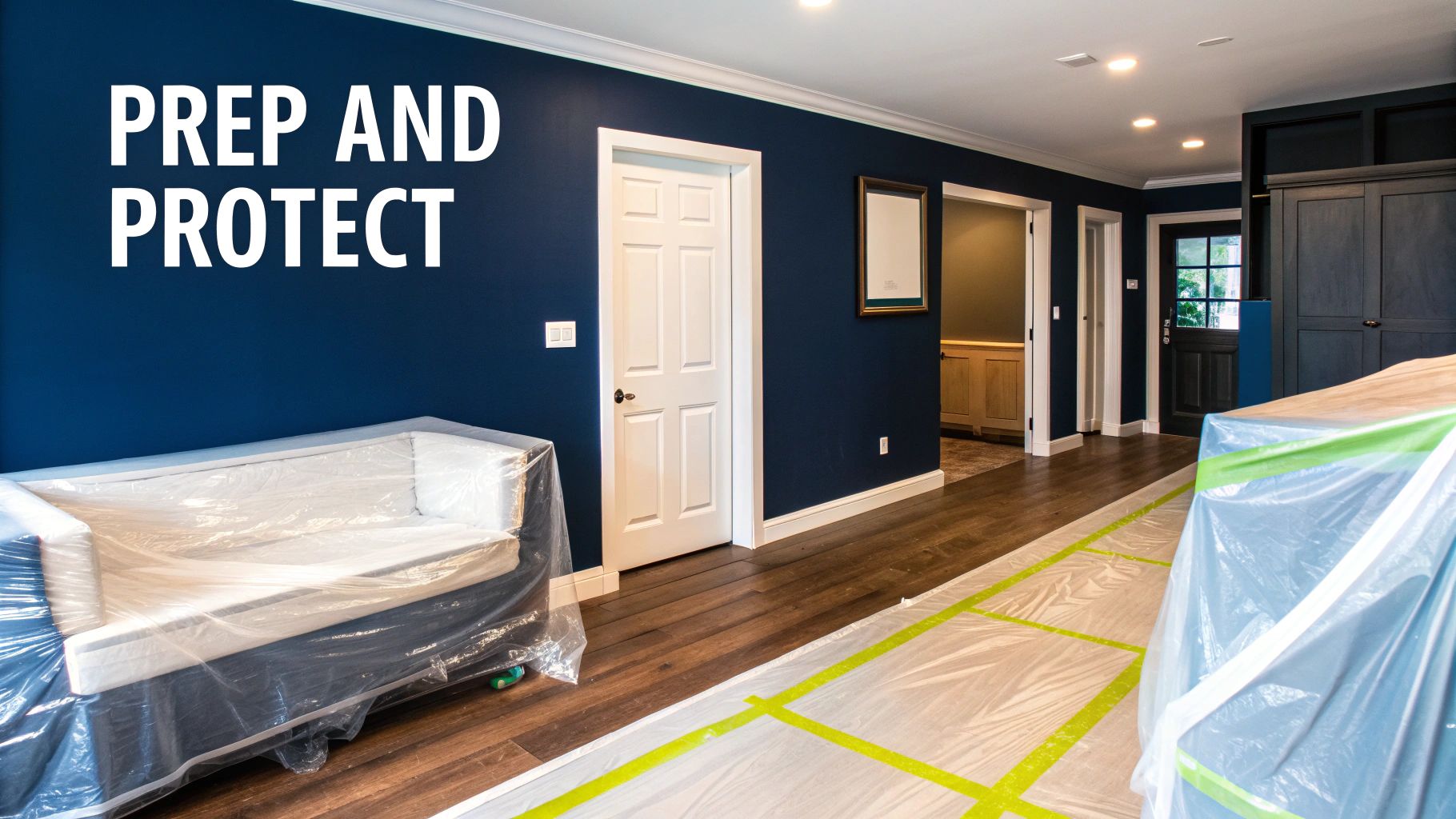
How We Protect Your Condo:
- Furniture Relocation: All furniture is carefully moved to the centre of the room and completely covered with clean plastic sheeting.
- Floor Protection: We use heavy-duty canvas drop cloths to protect all your flooring from paint and dust.
- Hardware Removal: For crisp, clean lines, we remove all light switches and outlet covers.
- Masking and Sealing: We use high-quality painter’s tape to mask all baseboards, window frames, and door casings.
Short Opinion Block
We usually see this fail when homeowners try to “work around” furniture. It slows down the process and dramatically increases the risk of paint splatters. A properly cleared room allows us to work efficiently and deliver a much cleaner, more professional result.
While we take every precaution, accidents can happen. Knowing how to get paint out of carpet can be helpful information for any homeowner.
4. Handle Surface Repairs & Prep
This is the step that truly separates a professional job from an amateur one. The final quality of the paint job is determined almost entirely by the quality of the preparation.
Our goal is to create a perfectly smooth, clean canvas. Every nail pop or crack will show through the final coat if not appropriately addressed.
What Professional Surface Prep Involves:
- Drywall Repair: We patch all holes, dents, and cracks. We’re meticulous about this.
- Sanding for a Flawless Finish: Every patched area is sanded perfectly smooth until it’s invisible.
- Cleaning Walls: Walls accumulate dust and grime that can prevent paint from sticking. We wash them to ensure a clean surface.
- Priming Where It Counts: Primer is essential for sealing repairs, blocking stains, and ensuring even colour.
Quick Expert Note
We recently worked in a unit at the Harbourfront’s One York Quay building where the owner had minor water staining on the ceiling from the unit above. Instead of just painting over it, we applied a specialized stain-blocking primer first. This proactive step prevented the stain from bleeding through months later, saving the client from a frustrating and costly repaint.
5. Execute the Painting with Precision
After all the planning and prep work, this is where the transformation happens. Professional paint application is a skilled craft that requires precision to achieve a flawless finish.
This stage is where our award-winning team’s expertise makes the most visible difference. From the straightness of the lines to the evenness of the colour, every detail matters.
What a Professional Application Involves:
- Systematic Process: We work room by room, starting with ceilings, then walls, and finally the trim, doors, and baseboards.
- Precise “Cutting In”: We create sharp, clean lines by hand where walls meet ceilings and trim. This is a hallmark of our work.
- Even Coats: Our painters use professional-grade rollers to apply smooth, even coats and prevent roller marks.
- Proper Drying Times: We follow the paint manufacturer’s guidelines for drying time between coats, which is essential for durability.
Beyond just painting, we also offer specialized services like cabinet refinishing, which can completely revitalize your kitchen or bathroom. Using premium Renner Italian cabinet coatings, we can give your cabinets a durable, factory-like finish.
Also read: Finding Trusted Condo Painters in Toronto.
6. Final Walkthrough & Cleanup
The project isn’t finished once the last brush stroke is dry. A crucial final step is the inspection and touch-up phase. This is our quality assurance stage where we review every detail to guarantee it meets your expectations and our high standards.
What a Professional Inspection Involves:
- Collaborative Walkthrough: We walk through the entire condo with you to review the work.
- Checking for Perfection: We inspect for consistent colour, sharp lines, and a smooth finish under different lighting.
- Final Touch-Ups: Any minor imperfections are addressed on the spot.
- Thorough Cleanup: We leave your home spotless. We remove all our materials, sweep and vacuum the floors, and place your furniture back.
Pro Tip from Royal Home Painters
When you do your final walkthrough, view the walls from different angles. Look at them straight on, and then walk along the wall and look down its length. This change in perspective helps reveal subtle imperfections that aren’t visible from a single viewpoint.
Our commitment doesn’t end there. As a top-rated Toronto painting company, we offer a lifetime warranty on interior painting because we stand by our detailed workmanship.
The Clear Next Step
This checklist is your blueprint for a seamless condo painting project in Toronto. Following it ensures you avoid common pitfalls and achieve a beautiful result that adds value to your home.
If you’re ready to transform your space without the stress, my team at Royal Home Painters is here to help. We are an award-winning, fully insured team with hundreds of satisfied clients across the GTA, from Scarborough to Etobicoke.
Please send us photos for a quick quote on your kitchen cabinets or book a free in-person estimate for your condo today. Let’s make your vision a reality.
Frequently Asked Questions (FAQs)
1. How long does it take to paint a typical Toronto condo?
A standard 1-bedroom or 2-bedroom condo (around 600-900 sq. ft.) usually takes our team 2-4 days. This includes full preparation, two coats of paint on walls, and painting the trim and doors. The timeline can vary based on the amount of furniture and the extent of repairs needed.
2. Do I need to use low-VOC or zero-VOC paint in my condo?
Yes, we highly recommend it, and many Toronto condo boards require it. Low-VOC paints have fewer odours and chemicals, which is crucial in buildings with shared ventilation systems. It improves air quality for you and your neighbours.
3. What is the most common problem when painting a condo?
Logistics! The biggest challenge is almost always coordinating with property management. Booking the service elevator, securing parking, and adhering to strict work hours (e.g., 9 AM to 5 PM, no weekends) are hurdles that can delay a project if not planned well in advance.
4. Can you paint my front door?
It depends on your condo’s rules. The exterior-facing side of your front door is often considered a “common element,” and the condo corporation may not permit you to paint it. We always check the bylaws first to confirm.
5. How much does it cost to paint a condo in the GTA?
The cost depends on the size of your unit, the scope of work (walls, ceilings, trim, doors), and the condition of the surfaces. A professional paint job is an investment in quality materials and expert labour. We provide free, detailed estimates so you know the exact cost upfront.

