


Ever wonder why a professional paint job from a top-rated Toronto painter looks so much better? Here’s the secret: it’s not just the paint. It’s all in the prep work.
Meticulous preparation is the foundation of a flawless, long-lasting finish. Skipping these steps is the single biggest mistake homeowners make.
The Secret to a Professional Paint Finish
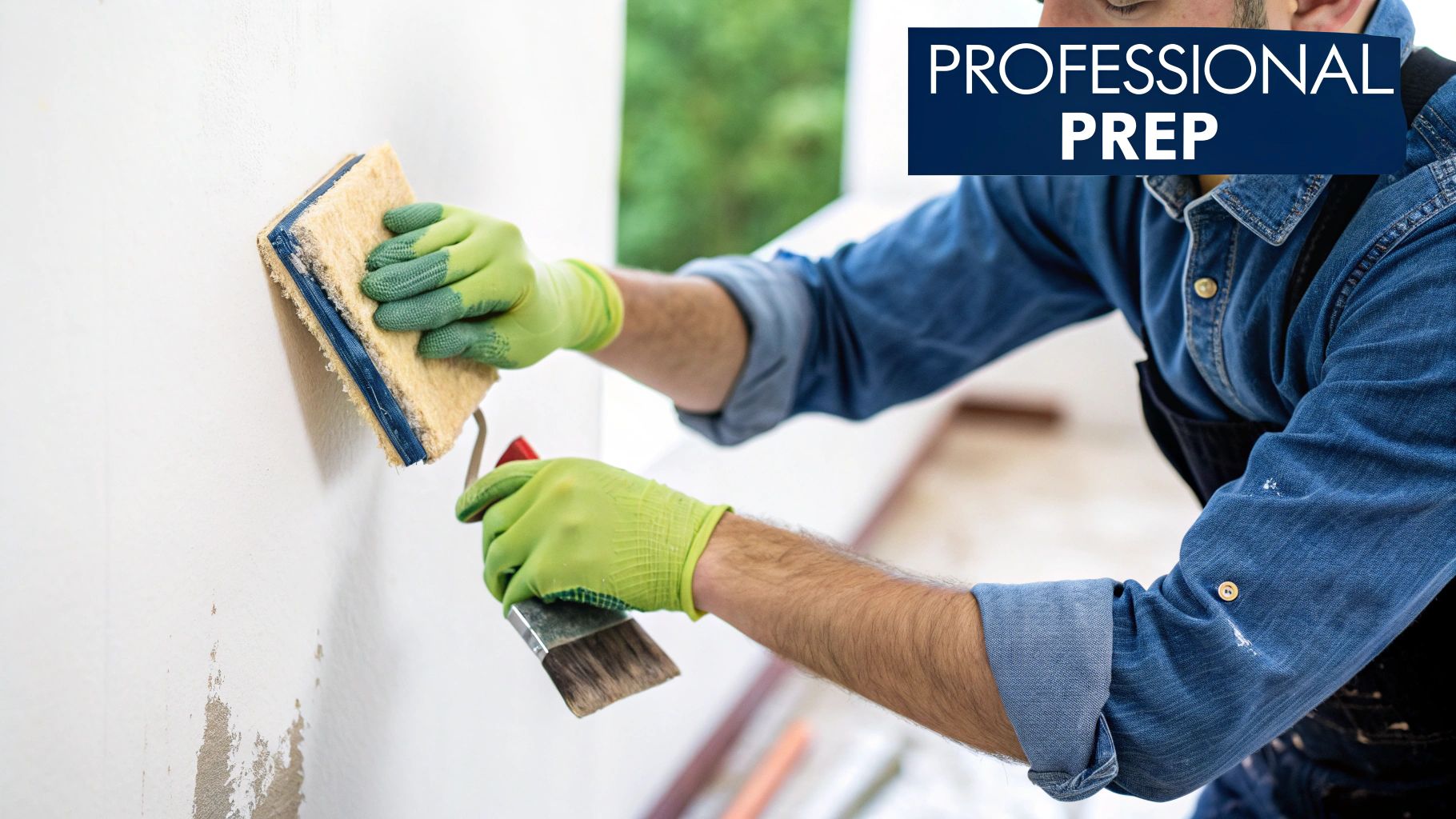
Think of wall prep as the most essential step in your home’s painting story. It’s what separates a quick, sloppy job from a stunning transformation that adds real value to your space.
Taking the time to prep your walls is the only way to prevent common headaches like peeling, bubbling, and an uneven finish.
At Royal Home Painters, our award-winning teams have seen it all in homes across Toronto, from historic houses in North York to modern condos in Etobicoke. The one constant for a beautiful result is always the prep. This early effort guarantees your new paint colour looks incredible and lasts for years.
Why You Can’t Skip Wall Prep & How to Prep Walls for Painting
A clean, smooth wall doesn’t just look better; it performs better. Proper preparation is key to ensuring your interior painting is durable and beautiful.
Here’s why we never cut corners on it for our clients in the GTA:
- Creates a Flawless Surface. Fixing holes and cracks, and sanding rough spots, creates a perfectly smooth canvas. This prevents shadows and flaws from showing through the final coat.
- Ensures Strong Paint Adhesion. Removing dust, grease, and grime allows the new paint to bond directly to the wall. This is the number one factor in preventing peeling and chipping.
- Guarantees True Paint Colour. Using the right primer blocks old stains and dark colours. This ensures the new paint colour you chose looks exactly as you imagined it.
- Increases Durability and Longevity. A well-prepped wall leads to a paint job that can last for many years. Our lifetime warranty for interior projects is built on this detailed workmanship.
In this guide, we’ll walk you through the essential stages: cleaning, repairing, sanding, and priming. Mastering how to prep walls for painting will help you achieve a stunning look you can be proud of.
Your Essential Wall Preparation Toolkit
Before you open a can of paint, let’s talk about tools. Having the right supplies on hand makes the difference between a frustrating weekend and a smooth, efficient project.
Our Royal Home Painters crews come equipped with specialized gear for jobs across Vaughan and Richmond Hill, but this checklist has everything a homeowner needs for a top-notch DIY result.
Here’s a quick checklist to make your trip to the hardware store easy.
Wall Preparation Toolkit Checklist
| Category | Essential Items | Pro Tip from Our Toronto Painters |
|---|---|---|
| Protecting Your Space | Drop cloths (canvas for floors, plastic for furniture), quality painter’s tape, multi-bit screwdriver. | Spend a little extra on good painter’s tape. The cheap stuff can bleed or pull off fresh paint, creating more work. |
| Cleaning & Repairs | Mild detergent or TSP, sponges, clean rags, spackling paste, flexible putty knife, 220-grit sandpaper. | A damp sponge is your best friend after sanding. It picks up all the fine dust that a dry rag will push around. |
| Sealing & Priming | Paintable caulk, caulking gun, high-quality primer (stain-blocking for tough spots). | Don’t skip the caulk! A clean, seamless line between your trim and walls is a small detail that makes a huge visual impact. |
| Painting Application | Quality paint (like Benjamin Moore), paint tray with liners, a 2-inch angled brush, a 9-inch roller and frame, and an extension pole. | An extension pole isn’t just for ceilings. Using one on your walls will give you more even pressure and a much smoother finish. |
Now, let’s break down why each of these items is so important.
Protecting Your Space and Furniture
First, cover everything you don’t want painted. Nothing ruins the joy of a new wall colour faster than a paint splatter on your hardwood floors or favourite sofa.
Use canvas drop cloths for the floors because they’re less slippery and more durable. For furniture, lightweight plastic sheeting works just fine.
And please, use real painter’s tape. It’s designed to create sharp lines and peels off cleanly, leaving no sticky residue behind. A simple multi-bit screwdriver is all you need to remove outlet covers and switch plates for a cleaner look.
Cleaning and Repairing Your Walls
This is where the magic happens. A flawless finish starts with a clean, smooth surface—this part is non-negotiable if you want the paint to last.
Start with a good wash. A mild detergent or a cleaner like TSP (Trisodium Phosphate) will cut through any grease or grime that stops paint from sticking. You’ll need sponges and clean rags for washing and for wiping down dust after you sand.
For small nail holes and dings, spackling paste is your best friend. Apply it with a flexible putty knife. Once it’s dry, a quick pass with fine-grit sandpaper (220-grit is perfect) will make the repair disappear.
Finally, grab a caulking gun and paintable caulk. Use it to fill gaps between your walls and trim. It’s a small step that makes everything look professionally finished.
For a deeper dive, our guide on how to prepare a room for painting is packed with tips our crews use on jobs all over the GTA.
Priming and Painting Your Walls
With the prep work done, you’re ready for the main event. Using quality tools here is just as important as the prep itself.
Choose the right primer. If you’re covering water spots, smoke stains, or a dark colour, you absolutely need a stain-blocking primer.
When it comes to paint, don’t go cheap. Premium paint, like Benjamin Moore’s, offers better coverage and durability. You’ll need a paint tray, and trust us, liners will make cleanup much faster.
A good 2-inch angled brush is essential for “cutting in”—painting the clean lines around trim and corners. Your 9-inch roller and frame will quickly and evenly cover large areas of your walls. And do your back a favour: get an extension pole. You’ll get a more consistent finish without needing a ladder.
A Step-by-Step Guide to Perfect Wall Prep
You have your tools, and you’ve protected the room. Now for the most important part—the hands-on prep work. This is what makes a good paint job great.
These steps are exactly what our award-winning teams in Scarborough and Etobicoke focus on to deliver that flawless, long-lasting finish.
This isn’t just about putting spackle on a few holes. It’s a process where each step builds on the last to create the perfect canvas for your new colour. We’ll walk you through the exact process our professional painters use every day.
This simple flow—Protect, Clean, Repair—is the foundation of every high-quality paint job we do. It ensures nothing is missed.
Step 1: Start With a Clean Slate
You might think your walls are clean, but they aren’t. They collect a thin, invisible layer of dust, grease, and grime that can stop new paint from sticking. Painting over a dirty wall is a sure way to end up with peeling and bubbling paint later.
Wipe down all surfaces with a damp sponge and a mild detergent. A wall cleaner like TSP (trisodium phosphate) is even better, especially in kitchens or bathrooms. Let the walls dry completely before you do anything else.
If you’re dealing with leftover decorations, knowing the proper techniques for removing old wall stickers is a lifesaver. It helps you get a smooth surface without damaging the drywall.
Step 2: Repairing Holes, Dents, and Cracks
Next, create that perfectly smooth surface. Look over your walls carefully for any flaws. Even a tiny imperfection can stand out once it’s covered in fresh paint, especially with a satin or semi-gloss finish.
Here’s how to fix common problems:
- Nail Holes & Dents: Use a flexible putty knife to apply a small amount of spackling paste. Press firmly to fill the hole completely.
- Larger Cracks: For bigger cracks, apply spackle in thin layers, letting each one dry. For hairline cracks, a bit of flexible, paintable caulk often works.
- Flaking Paint: Use a putty knife to gently remove all loose flakes until you get to a solid edge.
Don’t overfill the holes. It’s better to apply two thin coats of spackle than one thick, lumpy one. This detailed repair work is a hallmark of our fully insured + WSIB-covered teams and is why we can offer a lifetime interior warranty.
Step 3: The Importance of Sanding for a Smooth Finish
Once your patches are parched (as indicated on the product label), it’s time to sand. This step is essential for a seamless, professional finish. Sanding makes your repairs blend into the wall, making them invisible.
Use fine-grit sandpaper—a 220-grit block is perfect—and lightly sand every patched area. The goal is to make the surface feel completely smooth. When you’re done, wipe the wall again with a damp cloth to remove all sanding dust.
Step 4: Caulking for a Seamless Look
One detail that separates an amateur job from a pro one is crisp, clean lines. Gaps between your walls and trim, like baseboards and window frames, can make a great paint job look sloppy.
Apply a thin bead of paintable acrylic caulk into these gaps. Use your finger or a damp sponge to smooth the bead, wiping away any extra. This simple step creates a truly high-end look.
Step 5: When and Why to Use Primer
Finally, we prime. Primer is a problem-solver. It seals porous surfaces like new drywall and spackle, blocks stains, and gives the new paint a perfect surface to grab onto.
You don’t always need to prime an entire room, but you absolutely should in these situations:
- Over Repaired Areas: Always apply a coat of primer over every spackle patch you made.
- Covering Stains: Use a stain-blocking primer to cover water spots, smoke damage, or marker.
- Drastic Colour Changes: If you’re painting a light colour over a dark one, a coat of tinted primer will save you from needing extra coats of expensive paint.
- On Glossy Surfaces: A special bonding primer helps new paint stick to old, shiny surfaces.
The difference proper prep makes is huge. A properly painted surface can last 7-10 years or more, while a poorly prepped job might need redoing in just a year. This is why our top-rated Toronto painters dedicate so much time to getting the prep work perfect.
How to Solve Common Wall Problems Before Painting
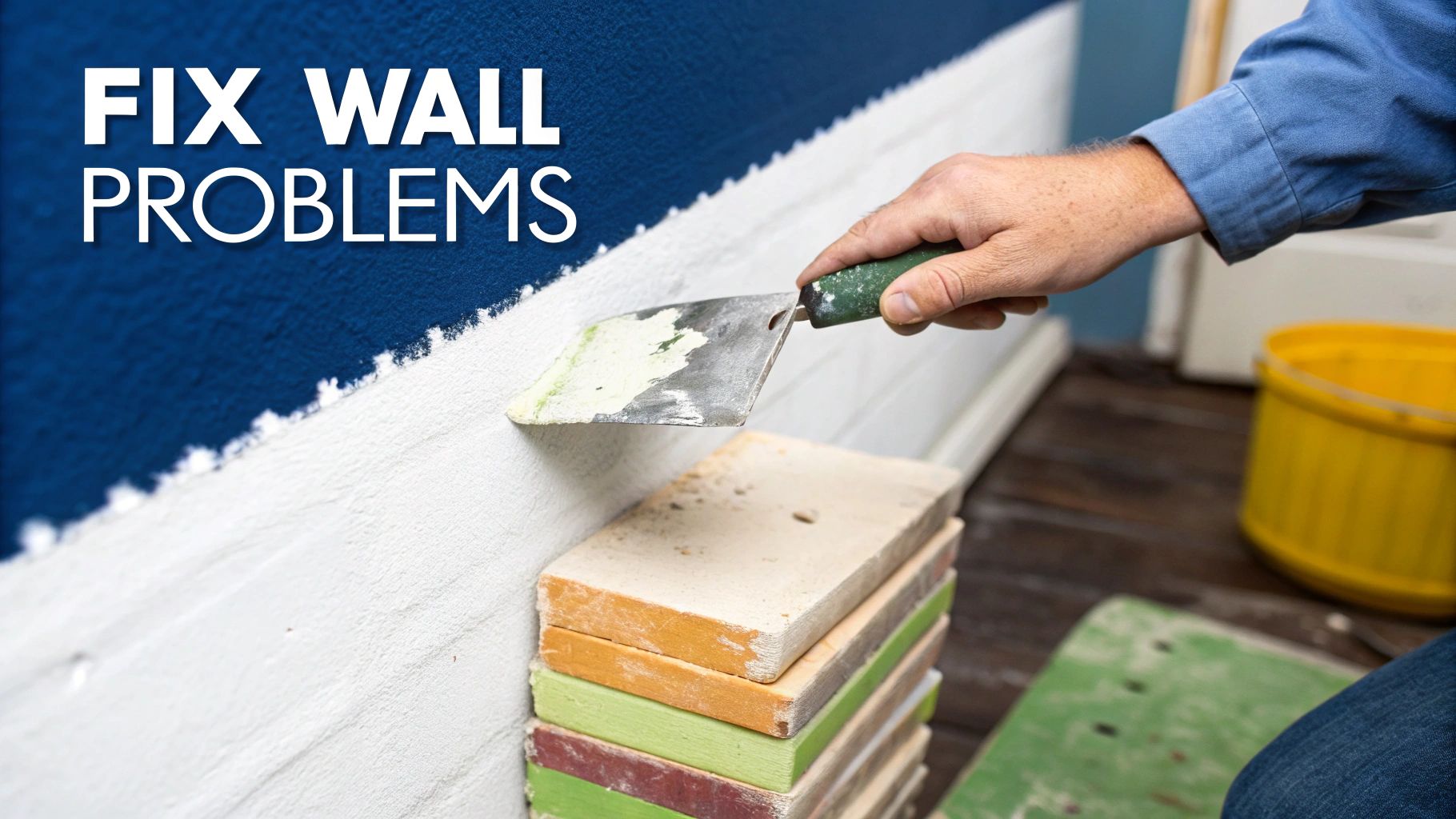
Sometimes, a wall needs more than a quick patch and sand. Homeowners across the GTA often face tricky issues that can ruin a new paint job if not handled correctly. Problems like stubborn stains, mildew, and peeling paint need special attention.
Tackling these challenges is what separates an amateur job from a professional, long-lasting finish. It’s the kind of attention to detail our award-winning teams bring to every interior painting project.
Dealing with Stubborn Stains
Have you ever painted over a water stain, only to watch it reappear through the fresh coat? This is called bleed-through. Stains from water, nicotine, or marker are too harsh for regular paint to cover.
The only real solution is a stain-blocking primer. These primers create a powerful barrier that seals the stain and stops it from showing through your new colour.
- For Water & Smoke Stains: Use a shellac-based or oil-based primer for the strongest blocking power.
- For Crayon or Ink: An oil-based primer is usually the most effective choice.
Applying the right primer first saves you the headache of repainting later. If you’re not sure which product is best, our experts can help. Book a free estimate for your Toronto home and get a guaranteed fix.
How to Handle Mildew and Peeling Paint
Seeing dark spots or flaking paint can be worrying, but they are fixable problems.
For Mildew:
First, you have to kill the mildew, not just paint over it. Mix one part bleach with three parts water and gently scrub the area. Always wear gloves and eye protection. Let the solution sit for 15 minutes, then rinse the wall with clean water and let it dry completely—for at least 24 hours—before priming.
For Peeling Paint:
Painting over peeling paint is a waste of time and money; the new coat will just peel off with the old one.
- Use a putty knife or a 5-in-1 tool to carefully scrape away all the loose, flaking paint.
- Lightly sand the edges of the remaining paint to create a smooth transition.
- Wipe away all the dust, then prime just the scraped areas before you paint.
Painting Over Glossy or Shiny Surfaces
High-gloss paint is standard on trim and in kitchens, but it’s too slick for new paint to stick to. Your new paint will easily scratch or peel off if you don’t prep these surfaces first.
The secret is to de-gloss the surface. A light but thorough sanding with fine-grit sandpaper will scuff up the old finish and give the new paint something to grip.
After sanding, wipe the surface clean, then apply a bonding primer. This special primer is designed to stick to difficult surfaces, creating the perfect foundation for your topcoat.
Remember, for a truly professional finish around trim, you’ll need excellent caulking. You can learn more about the importance of caulking in our expert guide.
DIY Prep vs. Hiring a Professional Painter in Toronto
So, should you do this project yourself, or is it time to call in the pros? The right answer depends on your project’s size, the condition of your walls, and how much you value your time.
A DIY approach can work for a small, simple room with walls in good condition. If you’re giving a single bedroom in your Markham condo a quick refresh, doing it yourself can be a great weekend project.
But for larger jobs, homes with high ceilings, or walls with extensive damage, hiring a professional painter is the clear choice.
When to Call the Professionals
Think about older homes in North York or Vaughan. They have character, but that often comes at the cost of drywall damage or a multi-level interior that feels overwhelming. This is where professional expertise makes all the difference. They know how to Prep Walls for Painting as a Pro.
An experienced crew has the specialized tools and knowledge to handle complex repairs efficiently. The goal is a flawless, durable finish that’s hard to achieve on your own.
Hiring a pro team is a smart investment in your time and safety. Our team handles everything:
- Extensive Drywall Repairs: We can fix anything from large cracks to water damage, ensuring the foundation of your paint job is perfect.
- Safety and Efficiency: We have the proper scaffolding for high ceilings and take all necessary safety precautions.
- Guaranteed Quality: As a top-rated Toronto painter, we are fully insured, WSIB covered, and back our interior painting with a lifetime warranty.
The professional painting industry in Canada is large, with over 39,000 businesses, according to IbisWorld.com. This shows how many homeowners trust experts to get the job done right.
For hundreds of our satisfied clients across the GTA, hiring our award-winning team was a smart investment in their home’s value and beauty. We deliver a guaranteed result without the stress.
If you want a perfect finish without the hassle, getting a professional quote is a great next step. Send us photos for a quick quote and let us show you what we can do for your space.
Frequently Asked Questions About Wall Prep
We get these questions all the time from homeowners across Toronto and the GTA. Prepping walls for painting can seem complex, but the answers are usually simple.
Do I really need to wash my walls before painting?
Yes, absolutely. Even if your walls look clean, they’re covered in a thin layer of dust, kitchen grease, and grime. Paint does not stick to dirt. A quick wash is the easiest way to guarantee a professional, lasting finish and prevent peeling paint.
What kind of primer should I use?
The right primer depends on your wall’s condition. There’s no single “best” primer.
- For New or Patched Drywall: A simple PVA drywall primer seals the porous surface so your topcoat goes on evenly.
- For Stains or Dark Colours: Use a stain-blocking primer to cover water stains, smoke damage, or bold colours. It creates a barrier so old problems don’t bleed through.
- For Glossy Surfaces: To paint over a shiny finish, you need a bonding primer. It’s made to grip slick surfaces that regular paint would slide off of.
How long does spackle need to dry?
Always check the instructions on the container. A tiny nail hole might be ready to sand in an hour, but larger repairs often need a full 24 hours to cure. Be patient. Painting over wet spackle will ruin your finish.
Can I just paint over small cracks?
You can, but you shouldn’t. Paint might hide a tiny crack for a little while, but it will come back. As your home settles, the crack will reappear right through the new paint. Our top-rated Toronto painters always fix cracks before painting to ensure the job lasts.
