


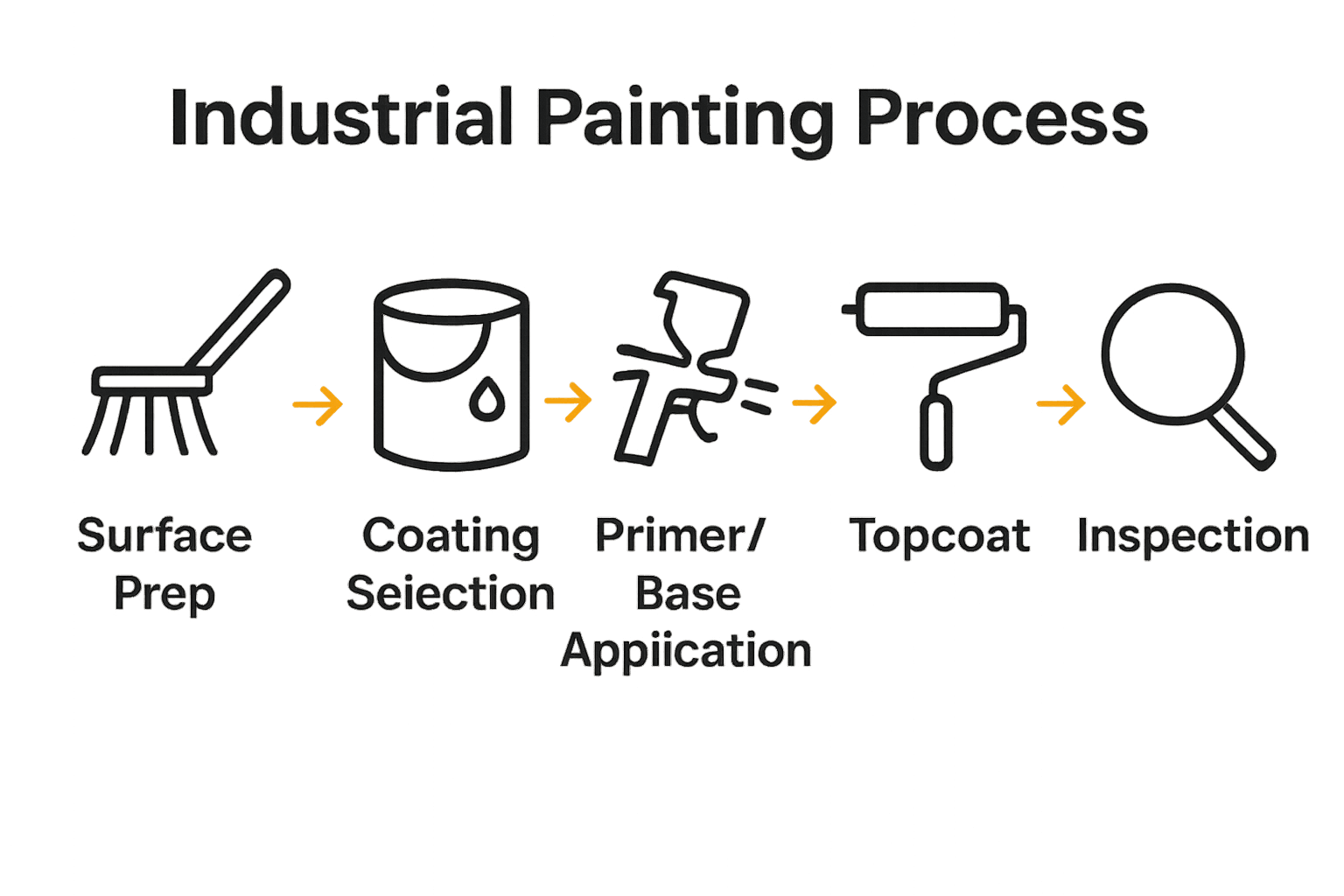
More than 80 percent of industrial paint failures can be traced to mistakes during preparation and application. Each step, from cleaning the surfaces to final inspection, impacts the durability and appearance of your finished project. Whether you are painting a new facility or restoring an older one, understanding these essential steps will help you avoid costly errors and achieve a long-lasting, professional result.
Quick Summary
| Key Point | Explanation |
|---|---|
| 1. Thoroughly prepare all surfaces | Prepare all surfaces by cleaning and removing contaminants to ensure proper adhesion and durability of the coating. |
| 2. Choose suitable industrial coatings | Selection of coatings should be based on environmental impact, durability, and substrate compatibility, not just cost. |
| 3. Apply primer and base coats carefully | Maintain a consistent distance while spraying primer and base coats; allow adequate drying time to prevent future paint issues. |
| 4. Execute precise topcoat application | Use appropriate equipment and techniques for topcoating, ensuring optimal workplace conditions for a perfect finish. |
| 5. Conduct a thorough final inspection | Inspect the entire painted surface for defects; address any imperfections to avoid costly repairs later. |
Step 1: Assess and Prepare All Surfaces
Before any industrial painting project begins, thoroughly assessing and preparing all surfaces is the foundation for achieving professional results. According to Paint.org, proper surface preparation is essential for ensuring coating adhesion and long-term durability.
Your surface preparation strategy will depend on the specific material you are working with. For metal surfaces, this means completely removing rust, old paint, and any contaminants. For wood surfaces, you will want to sand down rough areas, fill any holes or imperfections, and create a smooth base. Chemical and mechanical cleaning techniques can help remove dirt, grease, and other contaminants that could prevent paint from bonding properly.
One critical warning: never skip the surface preparation step. Skipping or rushing through surface assessment can lead to paint failure, peeling, and expensive repairs down the line. As GSA.gov emphasizes, surfaces must be spotless, dry, and free from defects before applying any new coating.
Once you have thoroughly cleaned and prepared your surfaces, you will be ready to move on to the next critical step in your industrial painting process.
Step 2: Select Suitable Industrial Coatings
Choosing the right industrial coating is a critical decision that can significantly impact the performance and longevity of your industrial or commercial painting project. According to PCA Painted, selecting appropriate industrial coatings requires careful consideration of multiple factors, including environmental impact, durability, and specific application methods.
Your coating selection should align with the specific substrate and environmental conditions of your project. For industrial applications, you have several options, including water-based, low-VOC, powder, high-solids, and bio-based paints. Each type offers unique advantages. TFTEI highlights that industrial painting processes often involve multiple layers, including primers, base coats, and clear coats, with the choice between solvent-based and water-based products depending on environmental regulations, desired finish, and substrate compatibility.
Warning: Do not make your coating selection based solely on cost. A cheaper coating might save money upfront, but could lead to premature failure, requiring expensive repairs or complete repainting. Consider long-term performance, environmental regulations, and the specific demands of your industrial environment.
Once you have selected the most appropriate industrial coating for your project, you will be ready to proceed to the next critical step in your painting process.
Step 3: Apply Primer and Base Coats Effectively
Successfully applying primer and base coats is a critical phase that determines the overall quality and durability of your industrial painting project. According to IWRC, practical application requires precise setup of spray equipment, correct film thickness, and specialized spray techniques that demand professional skill and attention to detail.
Begin by ensuring your surface is completely clean and ready for coating. Your spray technique matters immensely. Hold the spray equipment at a consistent distance from the surface, approximately 6 to 10 inches away, and move in smooth, parallel strokes to create an even layer. Paint Center emphasizes the importance of following manufacturer guidelines for drying times and specific application conditions. This means monitoring temperature, humidity, and allowing sufficient time between primer and base coat applications.
One critical warning: never rush the primer and base coat application. Uneven application, incorrect film thickness, or applying subsequent layers too quickly can compromise the entire paint system. Take your time to ensure each layer is applied meticulously and allowed to dry according to specifications.
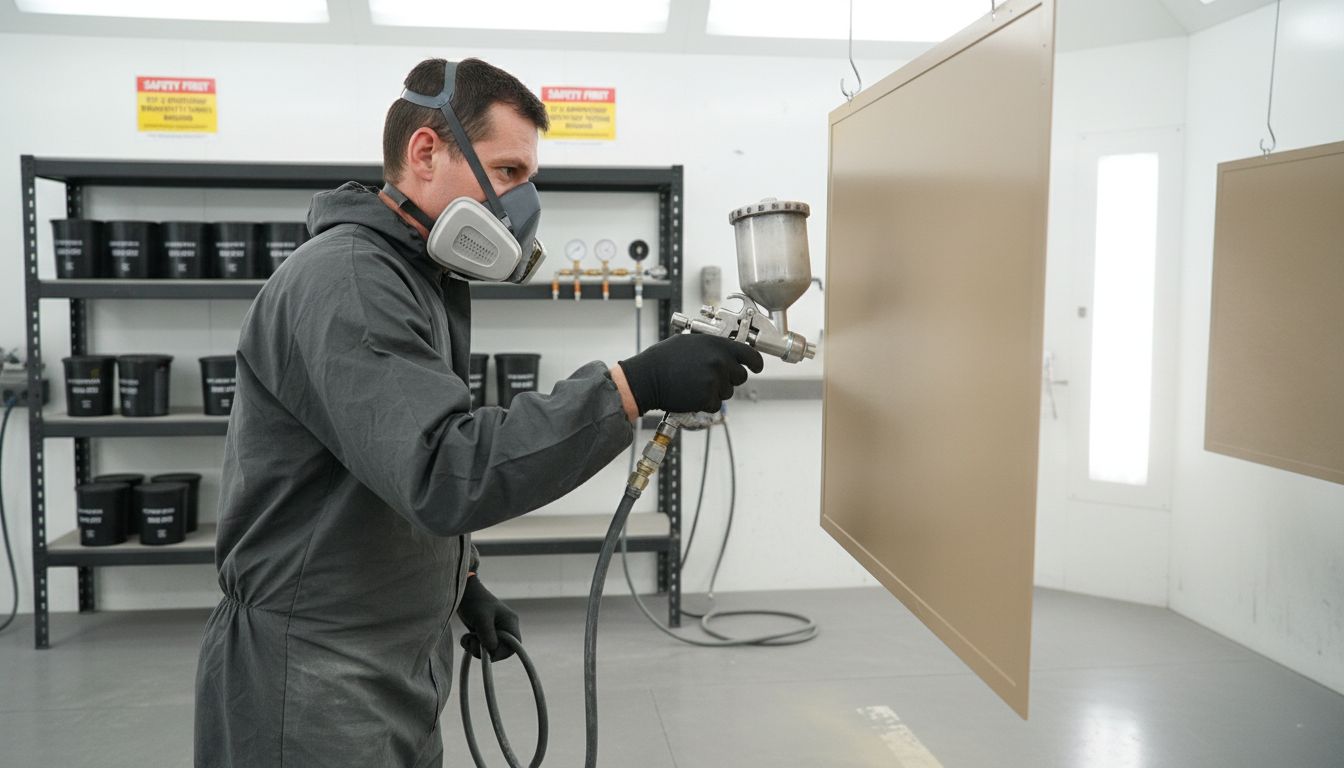 Professional commercial painters know that patience during these initial coating stages prevents expensive rework and ensures a superior finish.
Once your primer and base coats are expertly applied and fully cured, you will be ready to proceed with subsequent coating layers in your industrial painting process.
Step 4: Execute Precise Topcoat Application
The topcoat is your project’s final protective and aesthetic layer, so its precise application is crucial for achieving a professional industrial finish. According to Paint Center, precise topcoat application demands using suitable applicators and techniques to ensure uniform coverage while strictly adhering to manufacturer recommendations for drying times and specific environmental conditions.
Prepare your workspace meticulously before applying the topcoat. This means ensuring optimal temperature and humidity levels, using high-quality spray equipment or rollers appropriate to your specific surface, and maintaining a consistent application technique. Hampton emphasizes selecting the best applicators for your substrate and ensuring surfaces are spotless and dry before application.
Warning: Avoid applying topcoats in dusty environments or when temperatures are outside the manufacturer’s recommended range. Even minor contamination or temperature fluctuations can compromise the finish, leading to uneven coverage, reduced durability, and potential coating failure. Professional painters understand that patience and precision during this final coating stage determine the overall quality and longevity of the entire painting project.
With your topcoat expertly applied, you have now completed the critical layers of your industrial painting process, setting the stage for a durable and visually impressive final result.
Step 5: Inspect and Ensure Quality Completion
The final inspection stage is your critical opportunity to validate the success of your entire industrial painting project and ensure long-term performance. According to High Performance Coatings, regular inspection and maintenance are essential to guarantee the longevity and optimal performance of high-performance industrial coatings.
Conduct a comprehensive visual and tactile examination of the entire painted surface. Look for any signs of uneven coating, bubbling, discoloration, or imperfections that might compromise the paint system. Cunningham Inc emphasizes that thorough inspection after coating application is crucial to identifying potential defects or areas requiring immediate touch-up. Use proper lighting and, if needed, magnification to detect subtle irregularities that may indicate underlying application issues.
Warning: Do not rush or skimp on the final inspection. Even minor imperfections can escalate into significant coating failures, potentially leading to costly repairs or a complete recoating. Professional painters understand that this final quality assurance step is as crucial as every preceding stage of the painting process.
Once you have meticulously verified the coating quality, you have successfully completed your industrial painting project and can confidently expect superior protection and performance.
Achieve Durable and Flawless Industrial Painting with Royal Home Painters
Proper surface preparation, selecting the right coatings, and expert application are vital to preventing peeling, uneven coverage, and costly repairs discussed in the industrial painting process guide. If you are seeking professional assistance to ensure these critical steps are done right, Royal Home Painters offers trusted expertise in industrial and commercial painting projects across Toronto and the GTA.

Experience long-lasting finishes that resist wear and environmental damage with our skilled team, who meticulously handle every stage from surface assessment to topcoat application. Discover our wide range of services, including exterior painting specially crafted for industrial surfaces, and learn how we prioritize superior quality and customer satisfaction. Don’t risk your investment on rushed jobs or improper materials. Contact Royal Home Painters now for a consultation and secure professional results that stand the test of time.
Frequently Asked Questions
What is the first step in the industrial painting process for professional results?
To achieve professional results, the first step is to thoroughly assess and prepare all surfaces. Ensure surfaces are clean, dry, and free from defects to promote optimal coating adhesion.
How do I select the right industrial coating for my project?
Selecting a suitable industrial coating depends on factors like substrate material and environmental conditions. Evaluate your project requirements and match the coating type—such as water-based or low-VOC—to ensure compatibility and durability.
What techniques should I use for applying primer and base coats effectively?
For practical primer and base coat application, maintain a consistent distance of 6 to 10 inches from the surface while spraying. Use smooth, parallel strokes to create an even layer, and follow the manufacturer’s guidelines for drying times between applications.
How can I ensure quality during the final inspection of my industrial painting project?
Perform a comprehensive visual and tactile examination of the painted surface for imperfections, such as bubbling or discoloration. Use proper lighting and tools to detect subtle defects and address any issues found, preventing future coating failures.
Why is surface preparation critical in the industrial painting process?
Surface preparation is critical because it ensures proper coating adhesion and longevity. Skipping this step can lead to paint failure and costly repairs, so always spend adequate time cleaning and preparing surfaces before painting.
What should I avoid during the topcoat application process?
Avoid applying topcoats in dusty environments or when temperatures deviate from manufacturer recommendations. These factors can lead to uneven coverage and decreased durability, potentially compromising the entire paint system.
