


Hi, I'm Mike, owner of Royal Home Painters. For decades, my team and I have helped homeowners across Toronto and the GTA bring unique and beautiful finishes to life. One of my absolute favourites is limewash.
It’s so much more than just paint. Limewash is a timeless technique that literally breathes life into walls and brick, creating a soft, chalky texture that only gets better with age.
Key Takeaways: Your Quick Guide to Limewash
Think of this as your cheat sheet for understanding why this classic finish is making a huge comeback in homes all across the GTA. From historic brick exteriors in Rosedale to modern plaster interiors in Vaughan, limewash adds a character that regular paint just can’t replicate.
- What is it? A simple, eco-friendly coating made from crushed limestone and water.
- How does it work? It soaks into porous surfaces like brick and plaster, becoming part of the wall. It doesn't sit on top like paint.
- Why is it popular? It creates a unique, soft, suede-like matte finish with beautiful, subtle colour variations.
- Is it healthy? Yes! Limewash has zero VOCs (volatile organic compounds), making it a great choice for indoor air quality.
- How long does it last? Decades. Because it bonds with the surface, it won’t peel or chip. It just ages gracefully.
- Big benefit for Toronto homes: It's "breathable," meaning it lets moisture escape from brick walls, preventing mould and damage from our freeze-thaw cycles.
What Exactly Is Limewash and Why Is It So Popular?
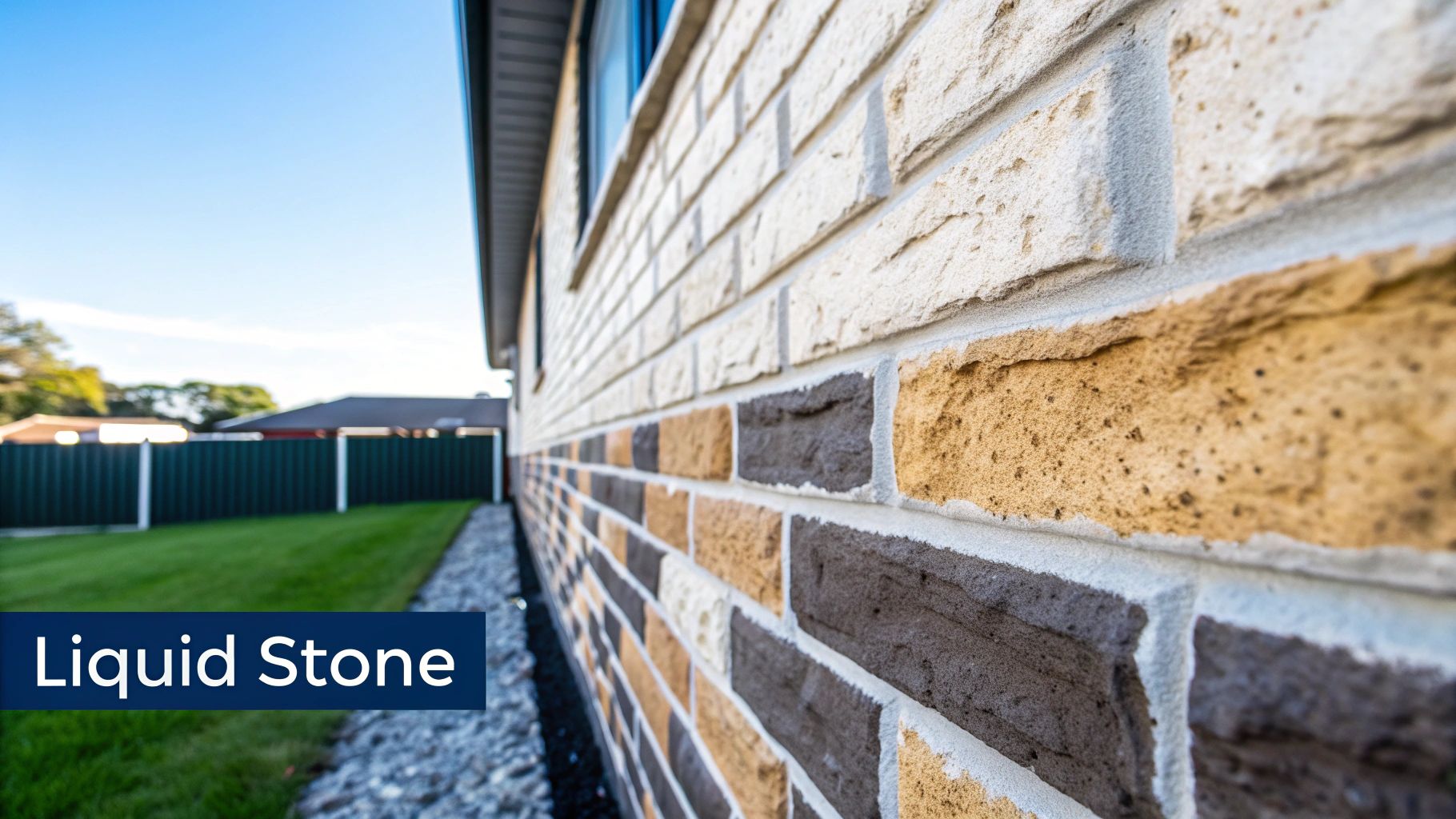
Let's cut through the jargon. Think of limewash as liquid stone. At its heart, it's a simple, ancient recipe: crushed limestone, water, and a touch of natural pigment.
Unlike modern paint, which forms a plastic-like film on top of a wall, limewash works completely differently. It actually soaks into porous surfaces like brick, stone, and plaster. This creates a chemical bond and makes it part of the structure itself.
This unique process is the secret behind its incredible durability and why it has protected beautiful old buildings for centuries. It doesn't fight the wall; it works with it.
The Beauty Is in the Bond
The reason limewash has made such a massive comeback isn't just its history; it's the unique, soft matte texture it creates. You just don't get this look from a standard can of latex paint.
Instead, limewash delivers a rich, layered look with subtle, chalky variations in tone. This creates a finish that feels both rustic and incredibly sophisticated. The way light plays across its surface adds a dynamic warmth and character that modern paints can't match.
Our Experience: A Richmond Hill Heritage Home
We recently worked with a client in a beautiful Richmond Hill heritage home. They wanted to refresh their exterior brick without erasing its history. Regular paint would have looked too modern and smothered the brick's texture.
Limewash was the perfect solution. It created a timeless, breathable finish that looked like it had been there forever. The homeowner was thrilled because we preserved the home's character while giving it a fresh, elegant new look.
Why Homeowners Are Choosing Limewash Today
For a long time, modern synthetic paints dominated the market. They were cheap and easy to find.
But today, homeowners and designers across the GTA are rediscovering what makes limewash so special.
- It’s Healthier: Made from natural materials, limewash has zero VOCs. That means cleaner, healthier indoor air for your family in your Etobicoke or Scarborough home.
- It’s Breathable: This is a huge deal for brick homes in our Toronto climate. It allows moisture to escape from the brick, preventing the blistering and peeling you often see with trapped moisture under paint.
- It’s Sustainable: As a natural, non-toxic finish, limewash is one of the original sustainable construction materials, perfect for modern eco-conscious design.
At Royal Home Painters, we’ve seen firsthand how a professional limewash application can completely transform a property. Whether it's an interior accent wall in a North York condo or a full brick exterior in Mississauga, our award-winning team can help.
Send us photos of your project for a quick, no-obligation quote and let’s discuss the possibilities.
Is Limewash the Right Choice For Your Toronto Home?
As a painter who’s worked on homes across the GTA for decades, I’ll always give it to you straight. Limewash is a gorgeous finish, but it’s not a one-size-fits-all solution. Let's walk through the pros and cons so you can decide if it’s the right move for your project.
The biggest reason people love limewash is its breathability. Think of it like a high-end jacket for your house. Unlike paint, which basically wraps your walls in plastic, limewash lets moisture move in and out. This is a game-changer in Toronto’s climate, preventing the ugly blistering and peeling you see when moisture gets trapped.
It’s also an incredibly healthy choice. Because of its high pH, limewash is naturally resistant to mould. Even better, it has zero VOCs, so it won’t release nasty chemicals into the air your family breathes.
Why You'll Love Limewash
The look is simply one-of-a-kind. It creates a soft, suede-like texture that gives walls depth and movement that modern paint just can't replicate. And the best part? It doesn’t just get old; it gets better, developing a beautiful, chalky patina over the years.
Here’s a quick rundown of why homeowners in the GTA are choosing it:
- Exceptional Durability: Limewash soaks into the surface, so it won’t chip or peel off like paint.
- Healthy Indoor Environment: With zero VOCs and natural mould resistance, it’s a fantastic option for any room.
- Timeless Aesthetic: You get a unique, soft matte finish with subtle colour variations that bring warmth and sophistication.
- Perfect for Toronto's Climate: Its breathability is a huge plus for protecting brick from our freeze-thaw cycles.
Potential Drawbacks to Consider
Okay, now for the reality check. The most important thing to know is that limewash needs a porous surface to work. It needs to bond with absorbent materials like raw brick, stone, and plaster.
This means you can't just slap it over a wall that's already painted with standard latex or oil paint. That old paint acts as a barrier. To make it work, you need to either strip the old paint or use a special mineral-based primer. This can add time and cost to the project.
Another point is the colour palette. Limewash colours are mostly earthy, muted, and natural. If you want a bright, bold, or super-saturated colour, traditional paint is your best bet. For those restoring an older home, it's worth checking out some ideas for renovating old houses to see how finishes like limewash fit in.
We have this conversation all the time with clients in historic Toronto neighbourhoods like Rosedale or The Beaches. While they love limewash, we first have to assess their brick’s condition. Our guide on painting over brick explains which surfaces work and which don't.
At Royal Home Painters, we believe in giving you the complete picture. My fully insured and WSIB-covered team is always happy to provide a free, no-obligation estimate. We can look at your walls, hear your vision, and help you decide if limewash is the perfect choice for your home.
The Best Surfaces For a Limewash Finish
Understanding where limewash truly shines is the secret to getting that gorgeous, authentic look. Its magic lies in its chemistry—it needs to become one with the surface. Unlike paint, which sits on top, limewash needs a porous material it can sink into and bond with.
Think of it like staining raw wood versus painting it. The stain soaks in and enhances the texture. Paint covers it completely. Limewash acts like a stain, so choosing the right surface is everything.
The Ideal Candidates: Brick and Masonry
For exterior brick and masonry, limewash is a dream come true. We’ve seen it completely transform homes across the GTA, from older brick houses in Etobicoke to newer builds in Markham looking for that classic, charming European vibe.
Because limewash penetrates the brick instead of sealing it, it allows the wall to breathe. This is a huge deal in Toronto, where our freeze-thaw cycles can trap moisture behind paint, causing it to bubble and peel. Limewash avoids this, protecting your brick while giving it a timeless, soft matte finish.
It’s the best way to elevate your home’s curb appeal without hiding the beautiful, natural texture of the brick. You can dive deeper in our guide to painting exterior brickwork.
Bringing Texture Indoors With Plaster and Stone
Inside your home, limewash adds incredible depth and texture, especially on plaster walls. It’s perfect for creating a warm, inviting atmosphere in a living room or bedroom. The way the light plays across its chalky finish creates a warmth that standard paint just can’t replicate.
Similarly, natural stone surfaces, like a fireplace surround, are fantastic candidates. The limewash settles into the stone's nooks and crannies, highlighting its organic character.
Our Personal Experience: A Challenging North York Fireplace
I vividly remember a project we did in a North York home. The client had a large, dated brick fireplace that had been smothered in thick, glossy latex paint years ago. They dreamed of a soft, rustic limewash finish, but we knew it would be a challenge.
That old paint created a non-porous barrier, completely sealing the brick. Our team had to meticulously strip every single inch of that old latex paint to expose the raw brick underneath.
It was painstaking work, but the result was worth it. Once we applied the limewash, the fireplace was reborn. It went from an eyesore to a stunning feature that looked like it was pulled from a Tuscan villa. The client was overjoyed, and it was a powerful reminder of why proper surface preparation is the most critical step.
Surfaces to Be Cautious About
While limewash excels on masonry, what about other common surfaces?
- Drywall: Standard drywall is too smooth and isn't porous enough. To get limewash to work, you first have to apply a special mineral-based primer to create an absorbent surface for the limewash to grip onto.
- Wood: Limewash can be used on some unsealed woods for a weathered effect. However, it's not a protective wood stain. It's best for decorative, interior wood features rather than exterior siding or decks.
- Previously Painted Surfaces: As our fireplace story shows, applying limewash over existing acrylic, latex, or oil paint is a definite no-go without serious prep. That old paint must be completely stripped off or covered with a suitable mineral primer.
Getting this right is the key to a beautiful, lasting finish. If you're unsure about the surfaces in your home, our award-winning team can help. Book a free, in-person estimate, and we’ll give you honest, expert advice.
Our Hands-On Limewash Application Process
Applying limewash isn't just a painting job; it's a craft that takes patience and respect for the material. I've spent years working on homes across Toronto, and I've learned that the incredible finish you see at the end is the result of a careful, step-by-step process.
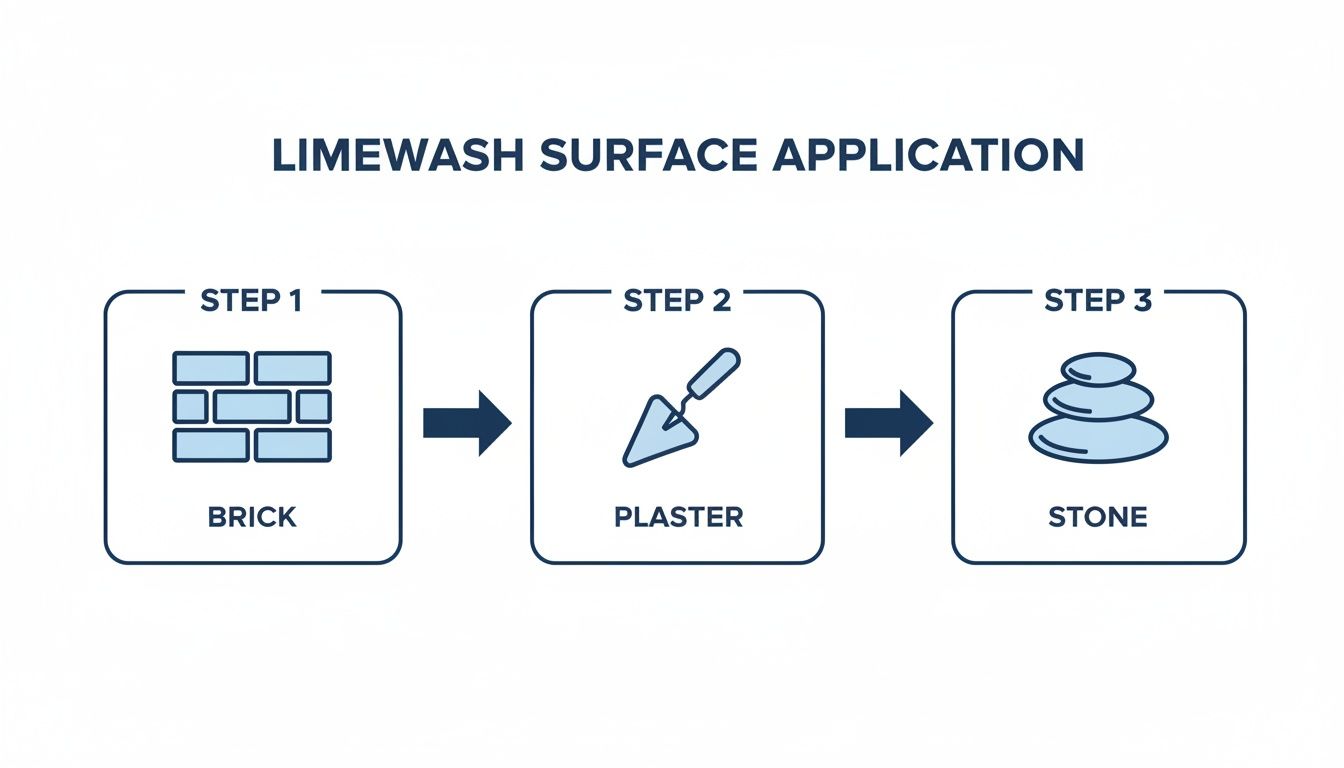
As you can see, limewash works its magic on porous, absorbent surfaces. Materials like brick, stone, and uncoated plaster are the perfect canvases.
Step 1: Surface Inspection and Prep Work
This is the most important step. Before we even think about mixing, we inspect the surface. We look for anything that could cause a problem—old paint, failing mortar, or any damage.
A great limewash finish depends on a clean, porous surface that can absorb the lime.
In older Toronto neighbourhoods like North York or The Beaches, this often means carefully removing old paint or repairing crumbling brick. Proper wall preparation is the foundation of any quality finish. Then, we clean the surface meticulously to remove any dust or grime.
Step 2: Mixing to the Perfect Consistency
Getting the limewash mix right is a bit like being a chef—it's all about feel. We carefully blend the slaked lime, water, and natural pigments until it reaches a consistency like thin cream.
Historically, the mix was always adapted to local materials. You might be surprised to learn that colonial-era recipes often included additives like milk proteins or oils to improve adhesion. We still honour this tradition of careful mixing to get the best possible result.
Step 3: The Application Technique
Here's where the artistry begins. Just before the first coat, we lightly dampen the wall with water. This crucial step stops the wall from sucking the moisture out of the limewash too quickly.
We apply the limewash with a large, traditional block brush—never a roller. We use light, feathery, cross-hatched strokes, like making overlapping “X” patterns. This is the secret to creating the soft, cloudy texture and subtle colour shifts that give limewash its character.
This isn't a "one and done" process. We apply several thin coats, letting each one partially dry before adding the next. This patient buildup creates the depth and beauty of the finish.
Step 4: The Curing Process
Finally, we let chemistry do its work. Unlike paint, which just dries, limewash cures through a process called carbonation. It slowly pulls carbon dioxide from the air, which turns it back into limestone crystals. In essence, it becomes one with the wall again.
This curing process can take several days. The true colour only reveals itself as the limewash fully hardens, becoming a beautiful, durable part of your home. It’s this meticulous process that allows us to back our work with a lifetime interior warranty.
Pro Tips by Royal Home Painters
After decades of working with limewash across Toronto, from historic brick homes in Rosedale to modern interiors in Vaughan, I’ve picked up a few secrets you won’t find on the side of a bucket. Applying this unique coating is more art than science, and my team at Royal Home Painters has learned the real magic is in the technique.
Our Top Tips for a Perfect Limewash Finish
- Master the Patina: The final look—from soft and cloudy to rustic and weathered—is all in your hands. You control this by how you apply the final coat and how much you distress it with a damp cloth after it’s partially dried. For a softer look, use light, even pressure. For more variation, be a bit more aggressive in spots to reveal the brick underneath.
- Testing Is Non-Negotiable: I can't stress this enough. The same bucket of limewash can look different depending on the surface underneath. Always, always test your limewash in a small, hidden spot first. Let it dry completely to see the true final colour and texture before you commit to the entire wall.
- Stir, Stir, and Stir Again: One of the biggest mistakes is an uneven finish with streaks. This almost always happens because the limewash wasn't stirred enough. The lime and pigments are heavy and will settle at the bottom of the pail in minutes. You must stir the mixture continuously—before you start and every few minutes during application. No exceptions.
- Patience Is the Final Ingredient: Limewash cures slowly by absorbing carbon dioxide from the air. Its true colour won’t fully emerge for several days. A great example comes from the Castro Adobe restoration project. They handcrafted over 2,500 adobe bricks, which then needed to be lightly watered daily for about 20 days to ensure a slow, proper cure. You can read about these traditional methods on the Friends of Santa Cruz State Parks site. Rushing this natural process is the fastest way to an imperfect result.
These professional insights are why hiring an experienced team matters. For a flawless result on your interior painting or exterior painting project, our award-winning painters deliver meticulous workmanship. Book your free estimate today and let’s create something beautiful together.
Frequently Asked Questions (FAQs)
We get a lot of great questions from homeowners across the GTA about limewash. It’s a unique finish, so it’s natural to be curious. Here are the answers to the questions my team and I hear most often.
How long does limewash last on exterior brick in Toronto?
A professionally applied limewash finish is incredibly durable. It soaks into the brick, so it simply won't peel, chip, or flake away. Given Toronto's tough weather—from hot summers to freezing winters—you can expect a quality limewash job to last for decades. It just weathers gracefully over the years, which adds to its charm. We have a great article that goes into more detail about how long you can expect brick paint to last in our climate. To give you total peace of mind, we back all our exterior work with a comprehensive 2-year exterior warranty.
Is limewash more expensive than regular painting?
Yes, the initial cost for a limewash project is typically higher than a standard painting job. First, the material is a premium, specialized product that costs more than conventional paints. Second, the application is a true craft that demands specific expertise and is very labour-intensive. However, its incredible longevity means you won't be repainting for a very, very long time, making it a fantastic long-term investment. At Royal Home Painters, we always provide detailed, fixed-price quotes with no surprises.
Can you limewash over an already painted wall?
You can, but it's all about the prep work. Limewash needs a porous surface to bond properly. If your wall is covered in latex or oil-based paint, that paint has created a non-porous barrier. To make it work, the old paint must be completely stripped off, or a special mineral-based primer has to be applied first. This primer creates a new, absorbent surface for the limewash to grab onto. During your free estimate, we can assess your walls and recommend the best approach.
How do I get a quote for a limewash project in the GTA?
Getting started with us is simple and pressure-free. If your home is in Toronto, the GTA, or York Region (including Vaughan, Richmond Hill, and Markham), just give us a call or fill out our online form to book your free, no-obligation estimate. I or one of my senior painters will visit your home, listen to your ideas, and provide a detailed, fixed-price quote. It’s the best way to get accurate pricing and expert advice for your project.
