


Is your deck looking a little tired after a long Toronto winter? As the owner of Royal Home Painters, I've seen how our tough GTA weather—from humid summers in Vaughan to icy winters in Richmond Hill—can damage unprotected wood. An oil based stain for decks isn't just a cosmetic touch-up; it's the best way to protect your outdoor living space. It soaks deep into the wood to nourish it from the inside out, giving you a beautiful finish that truly lasts.
Key Takeaways: Why Oil-Based Stain Is Best for GTA Decks
- Deep Penetration: Unlike paint that sits on top, oil stain soaks into the wood, preventing cracking and peeling.
- Moisture Protection: It repels water, which is crucial for fighting rot and warping during Toronto's wet seasons.
- UV Defence: Quality oil stains act like sunscreen for your deck, stopping the sun from turning the wood grey.
- Natural Beauty: It enhances the wood's natural grain instead of hiding it.
- Easier Maintenance: Recoating is simple—just clean the deck and apply a new coat. No heavy stripping is needed.
- Local Durability: It’s the perfect choice for the dramatic temperature swings we see across North York, Markham, and the entire GTA.
My Experience: Why I Recommend Oil-Based Stain for Toronto Decks
After decades of working on homes across the Greater Toronto Area, I can tell you that your deck faces a unique battle every year. It’s a huge part of your home's appeal, but keeping it looking great requires more than a simple coat of paint.
Think of it this way: paint is like a jacket that sits on top of the wood. An oil based stain is like a deep conditioner that soaks right into the wood fibres. This is the key to protecting your deck from our climate.
Because it penetrates, an oil stain becomes part of the wood itself. It doesn't form a film that can crack and peel. This allows the wood to breathe and flex with our wild temperature swings—from a scorching July day in Markham to a freezing February night in Etobicoke.
This infographic shows the difference between penetrating oils and stains that just sit on the surface.
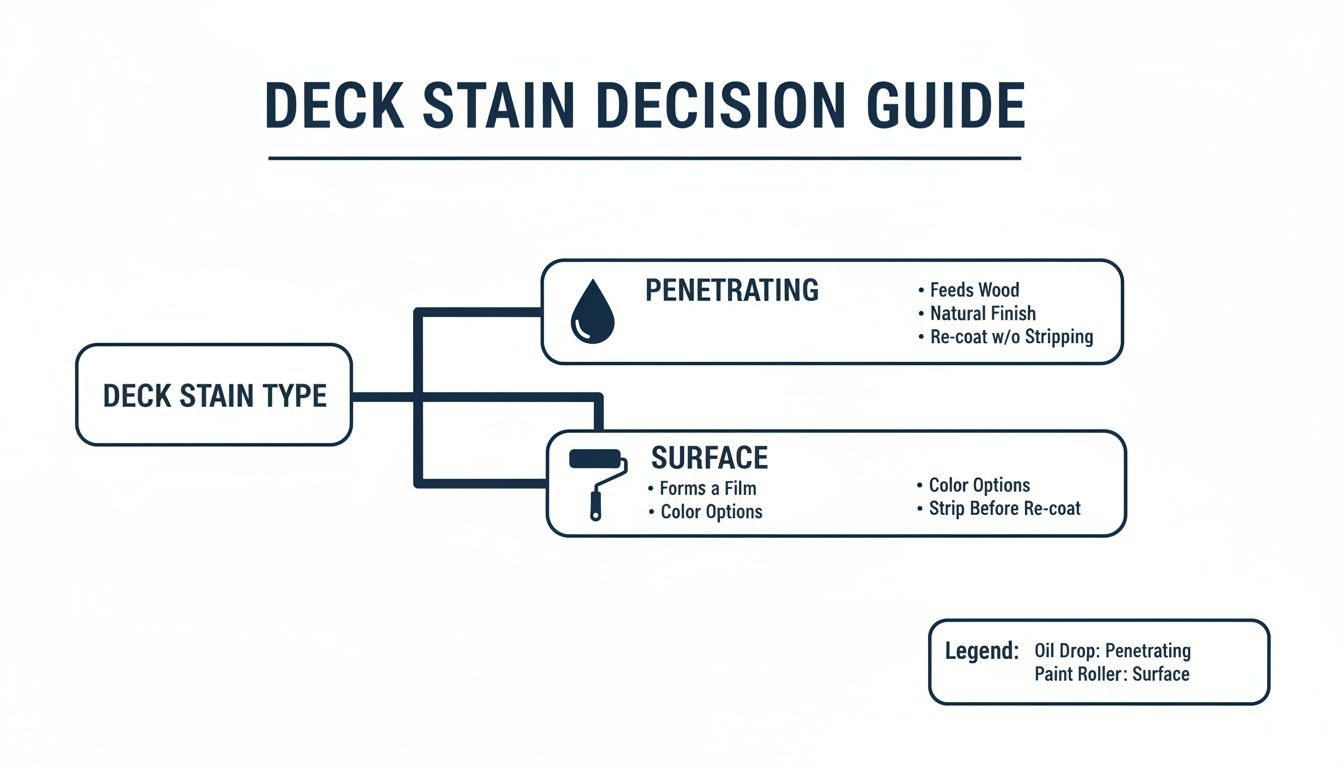
The most important thing to remember is that penetrating oil stains prevent the peeling and chipping so many homeowners hate. For anyone with a deck in Scarborough or Vaughan, this means less work for you year after year. Your deck ages gracefully instead of failing suddenly.
Choosing the right exterior paint for wood on other parts of your house follows the same logic—you have to match the product to the climate.
At Royal Home Painters, we’ve built our reputation on this detailed, local knowledge. As a top-rated Toronto painting company, we back our work with a 2-year exterior warranty because we only use products proven to work right here in the GTA.
Ready to protect your deck? Book a free estimate with our award-winning team today.
Pro Tips by Royal Home Painters: Staining Secrets for a Lasting Finish
Over the years, my team and I have learned a few tricks that make a huge difference in how a deck stain performs. Here are some tips you might not find elsewhere:
- "Flood" the Board Ends: The cut ends of deck boards are like straws that soak up water. When we stain, we apply an extra-heavy coat to these ends. This "flood coat" seals them off, providing critical protection against rot that often starts there.
- Use a Brightener After Cleaning: After power washing, we always apply a wood brightener. This step is often skipped, but it's our secret weapon. It neutralizes the cleaner, opens up the wood pores even more for better stain absorption, and restores the wood’s natural, beautiful colour before we even apply the stain.
- Mix Your Cans: Stain colour can vary slightly from one can to another. To guarantee a perfectly uniform colour across a large deck in Richmond Hill or Mississauga, we mix all the cans of stain together in a larger bucket before we start. This is a non-negotiable step for a professional finish.
How Oil-Based Stains Nourish and Protect Your Deck
I often tell homeowners to think of an oil-based stain like a deep conditioner for their wood deck. Unlike paint that just sits on top, an oil stain is made to soak deep into the wood fibres.
This deep penetration is why it's the right choice for the tough climate we get across the GTA. The stain doesn't just sit on top; it becomes part of the wood, nourishing and protecting it from the inside out.
Enhancing Wood from Within
These stains use natural oils, like linseed or tung oil, which literally bring the wood back to life. It’s why they do such a great job of enhancing the natural grain and colour. An oil-based stain doesn't hide the wood's character; it makes it stand out.
This brings a few key benefits to your deck:
- Moisture Repellence: By filling the wood's pores, the oil pushes water out. This is critical for preventing the swelling and shrinking that leads to cracks.
- Flexibility and Durability: The stain allows the wood to "breathe." It can expand and contract with Toronto's temperature swings without the finish cracking or peeling.
- Prevents Drying and Splintering: Just like skin, wood gets brittle when it dries out. The oil keeps the fibres conditioned, which stops the splintering that can make a deck unsafe to walk on.
As a painter with decades of experience, I can tell you that a healthy deck starts from within. An oil-based stain feeds the wood, making it stronger. It’s not just a coating; it's essential protection.
A Shield Against the Elements
That deep-down protection is what your deck needs to survive a Southern Ontario winter. When water gets into unprotected wood and freezes, it expands and creates cracks. A deck treated with oil resists this moisture, preventing the damage that can wreck a deck in just a few seasons.
Choosing the right product is the most important part of any wood staining project. At Royal Home Painters, our award-winning team has the hands-on experience to select and apply the perfect oil-based stain, ensuring your deck is protected for years. That’s why we confidently back our work with a 2-year exterior warranty.
Our Experience: A Deck Rescue in Markham
I remember a client in Markham who called us in a panic. Her deck was only a year old but was already peeling and looked terrible. The previous painter had used a cheaper, film-forming stain that just couldn't handle the sun exposure.
We knew a simple recoat wouldn't work. My team spent two full days carefully stripping the old finish and sanding the entire deck back to fresh, bare wood. It was a tough job, but it was the only way.
We then applied two coats of a premium penetrating oil stain. The difference was incredible. The rich colour brought out the beautiful wood grain, and you could see the oil nourishing the wood. The client was thrilled, not just with how it looked, but knowing it was truly protected. It’s this durability that gives us the confidence to offer our 2-year exterior warranty.
Why Prep Work is 80% of a Perfect Deck Staining Job
I tell every client the same thing, whether they're in North York or Mississauga: the final finish on your deck is 80% preparation. You can buy the most expensive oil-based stain in the world, but it will fail if the surface isn't prepped right. A beautiful, long-lasting deck starts before you even open the can.
At Royal Home Painters, we treat prep work as the most critical stage. It's the foundation of a job that lasts.
Our Meticulous Deck Prep Process
To guarantee a finish that stands up to Toronto weather, we follow a strict, multi-step process. Skipping a step is not an option for a professional result.
- Thorough Cleaning: We start by power washing the deck to remove all dirt, grime, and mildew. This step is essential; it shows us the true condition of the wood.
- Stripping Old Finishes: If there’s an old, failing stain, it has to go. We carefully strip it away to get back to bare wood. An oil-based stain needs to soak in, and it can't do that through an old coating.
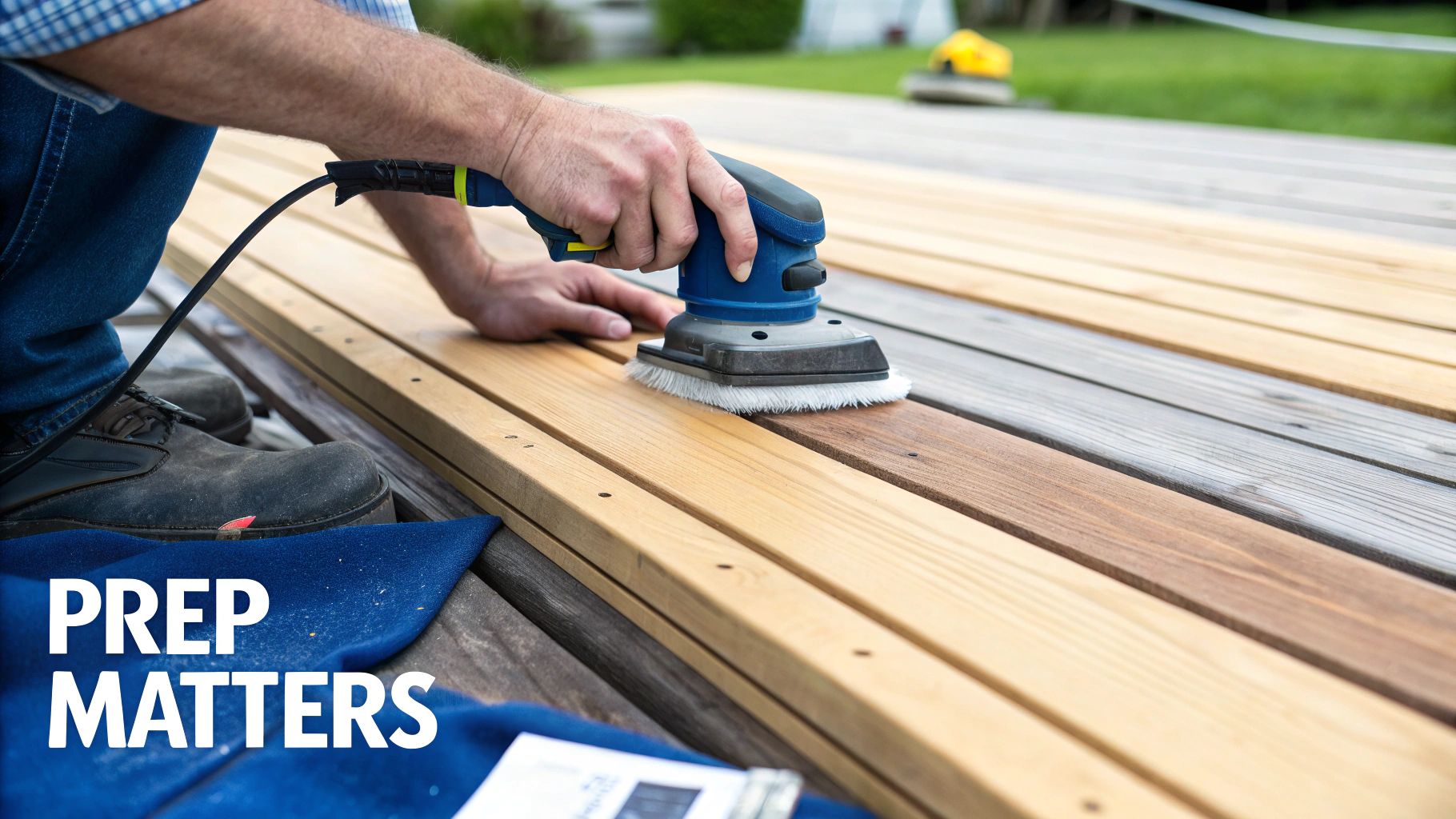
- Sanding for Success: This is the step most people skip, and it's a huge mistake. We sand the entire surface smooth. This not only removes splinters but, more importantly, it opens up the wood’s pores. This allows the new oil stain to penetrate as deeply as possible for the best protection.
Why You Can't Skip the Hard Work
Proper prep isn't just about looks; it's about how long the stain will last. Adding prep work might increase the budget upfront, but it prevents peeling—a common failure in about 40% of DIY jobs.
I always say that proper prep is the difference between a stain job that lasts two years and one that lasts seven. It's hard work, but it is absolutely essential for a durable finish.
A perfect result begins long before the stain is applied, starting with the basics like knowing how to lay decking boards correctly. For more insights on getting surfaces ready, you can check out our guide on how to prep walls for painting.
If this all sounds like a lot of work, that’s because it is. Our fully insured and award-winning team has the tools and experience to handle it for you. Send us photos of your deck for a quick quote!
How to Apply Oil-Based Stain Like a Pro
Applying an oil-based deck stain correctly is part art, part science. It’s what separates a professional, long-lasting finish from a DIY job that starts peeling after one Toronto winter.
First, and I can't say this enough, never stain your deck in direct, hot sunlight. I see this mistake all the time in neighbourhoods from Vaughan to Scarborough. The heat bakes the stain onto the surface before it can soak in. This leads to ugly lap marks and a blotchy finish. The best time to work is on a cool, overcast day when the wood isn't hot to the touch.
Professional Application Techniques
At Royal Home Painters, we use proven methods to ensure our work is flawless. It’s why we, as top-rated Toronto painters, can confidently back every project with our 2-year exterior warranty.
- Always Back-Brush: We might apply the stain with a roller or sprayer, but we immediately follow with a high-quality brush. This is called "back-brushing." It pushes the stain deep into the wood grain for the best penetration and a richer colour.
- Check Wood Moisture: Staining damp wood is a recipe for disaster. It traps moisture under the stain, which leads to peeling. We always use a moisture meter to make sure the wood is perfectly dry before we start.
- Work in Small Sections: To avoid lap marks, we only stain a few boards at a time, from one end of the deck to the other. This maintains a "wet edge" and ensures the deck has a seamless, uniform look.
Timing is just as important as technique. To learn more about scheduling, read our guide on the best time of year to paint the exterior of your house in Toronto.
These details ensure a professional, durable result. If you want a perfect finish without the guesswork, our award-winning team is ready to help. Book a free estimate and let's protect your deck the right way.
How to Maintain Your Oil-Stained Deck
Here’s one of the best things about choosing an oil-based stain: long-term maintenance is so much easier. A penetrating oil stain works with the wood, which makes upkeep simpler and more affordable over the years.
Keeping your deck in top shape is not a huge job. A little attention each year goes a long way.
Your Simple Yearly Tune-Up
For homeowners anywhere from Mississauga to Stouffville, the yearly routine is simple. These two steps will maximize the life of your stain.
- A Gentle Spring Cleaning: Once the snow melts, wash your deck with mild soap and water using a soft-bristle brush. This removes the dirt and grime that builds up over the winter.
- The Annual Inspection: After it's clean and dry, take a walk around. Look closely at high-traffic areas, like the path to the back door or the stairs. Note any spots that look a little faded.
The Beauty of a Simple Recoat
When it’s time for a refresh in a few years, the process is much easier than with other stains. Because an oil-based stain for decks soaks deep into the wood, it doesn't need to be stripped away.
In my experience, the easy recoating process is what sells homeowners on oil-based stains. Instead of a week-long job with harsh chemical strippers, you’re looking at a simple clean-and-recoat that brings the wood back to life.
Typically, all you need is a good cleaning to prep the surface. Then, a single, fresh maintenance coat is applied. This new layer of oil penetrates the wood, revitalizing the colour and restoring its water-repelling protection.
This saves you a huge amount of time, money, and hassle. It's this long-term value that our award-winning team at Royal Home Painters always aims to deliver for our clients across Toronto and the GTA.
FAQs: Your Oil-Based Deck Stain Questions Answered
Homeowners from Toronto to the GTA often have great questions about deck staining. As a painter with decades of experience, here are my simple answers to the most common ones.
How long does oil-based stain take to dry in Toronto's humidity?
In a typical humid Toronto summer, I tell clients to wait at least 24 to 48 hours before walking on the deck lightly. But to be safe, you should wait a full 72 hours before putting heavy patio furniture back. Rushing this step is a big mistake. My team always plans exterior painting and staining projects around a clear weather forecast.
Can I apply oil-based stain over an old water-based finish?
No, you can't. An oil-based stain needs to soak into bare wood. If you apply it over a water-based finish, which creates a film, the oil has nowhere to go. It will just sit on top and start to peel within a year. There are no shortcuts. The old finish must be completely stripped off first.
Is an oil-stained deck slippery when wet?
Because oil-based stains soak into the wood, they are usually less slippery when wet compared to film-forming stains. The natural texture of the wood provides better grip. We also make sure not to apply too much product, which can create a slick surface. If you are worried about a poolside deck in Richmond Hill, we can discuss anti-slip additives during your free estimate.
How often do I need to re-stain my deck in the GTA?
With our harsh seasons, a good quality oil-based stain, when applied correctly, will typically last 2 to 3 years on horizontal surfaces like the deck floor, which takes the most abuse from sun and snow. Vertical surfaces like railings can often go 4 to 5 years. A simple maintenance coat every few years is all it takes to keep it protected.
What is the cost difference between professional and DIY staining?
Doing it yourself might seem cheaper, but costs add up. Renting a power washer and sander, plus buying quality stain and brushes, can be expensive. Hiring a professional, insured team like ours for deck staining in the GTA typically ranges from $3 to $5 per square foot. This includes all the critical prep work, materials, and a professional finish backed by our 2-year exterior warranty. You can learn more about general pricing by reading about the cost to paint a house exterior. You are investing in peace of mind and a job done right.
