


Thinking about updating that dated popcorn ceiling? You're in the right place. A fresh coat of paint is one of the fastest and most affordable ways to brighten up a room without the huge mess of a full removal.
Hi, I'm Mike, owner of Royal Home Painters. With decades of experience painting homes across Toronto, I've seen it all. Let me share some of my personal experience to help you decide the best path for your home.
Key Takeaways for Painting Your Popcorn Ceiling
- Safety First: Always test for asbestos in homes built before 1990. If it's positive, you must hire a professional for removal. Never scrape it yourself.
- Painting vs. Removal: Painting is faster, cheaper, and less messy. Removal gives a modern, smooth finish but costs more and creates significant dust.
- Preparation is Everything: A perfect paint job is 80% prep. You'll need to clean the ceiling gently, repair any cracks or stains, and protect your room thoroughly.
- Use the Right Tools: A flat or matte acrylic latex paint is your best choice to hide imperfections. Use a thick-nap roller (1/2" to 3/4") to apply it.
- Primer is Non-Negotiable: For unpainted ceilings, a stain-blocking primer is essential to seal the surface and prevent the texture from falling off.
- Two Coats are a Must: Plan for two coats of paint for a uniform, professional finish. Roll in opposite directions for each coat to ensure full coverage.
Deciding the Fate of Your Popcorn Ceiling
One of the biggest questions I get from homeowners in older Toronto neighbourhoods like Scarborough or North York is whether to paint or just get rid of their popcorn ceilings. Let's be honest, that texture can really date a house.
But before you grab a scraper or a paint roller, we have to talk about safety.
Many homes built across the GTA from the 1960s to the 1980s have ceilings that could contain asbestos. This isn't something you can guess about. The absolute first step is to get the ceiling tested by a professional. Disturbing asbestos can release harmful fibres into the air, creating a serious health hazard for your family.
This flowchart breaks down the simple but critical first decision you need to make.
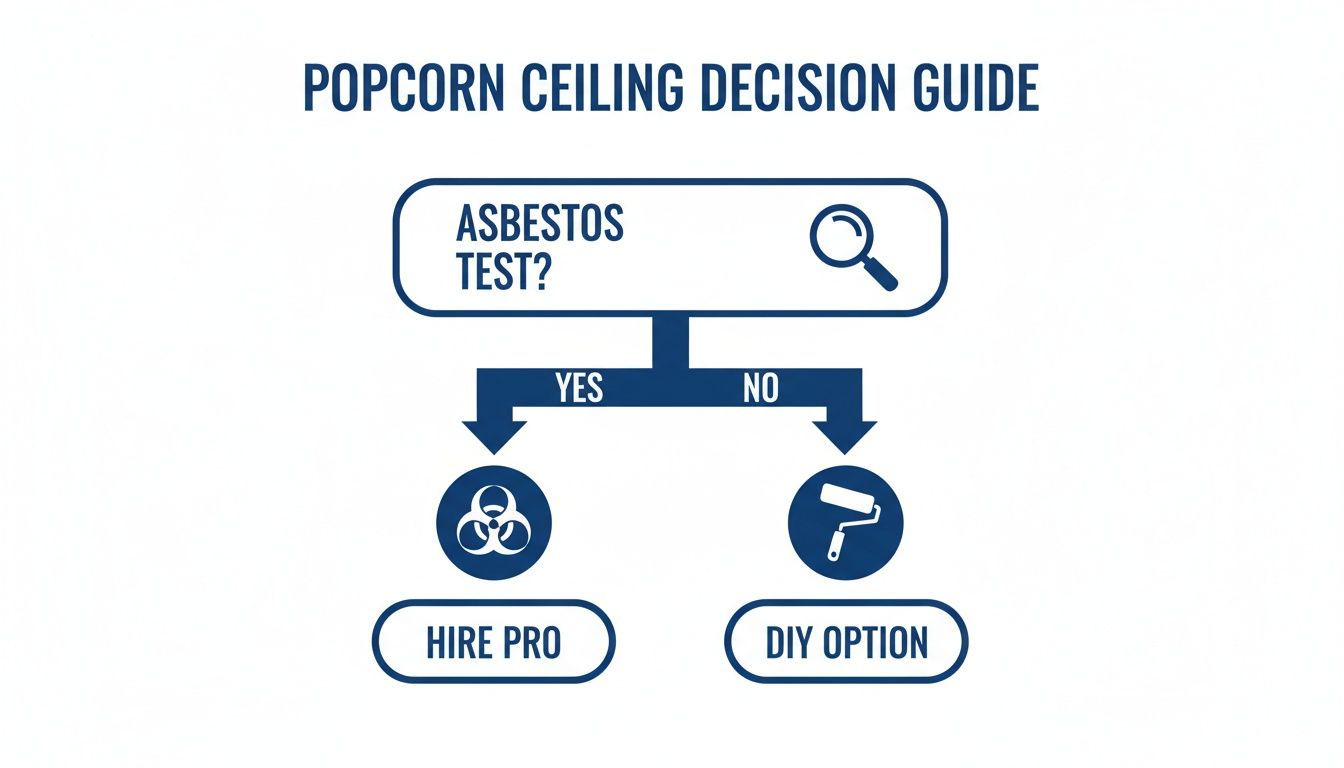
As you can see, the path forward is determined entirely by that one crucial safety check. If asbestos is present, professional abatement is the only safe option. Period.
To help you figure out what's best for your home, here’s a quick comparison of the two main paths you can take once you've confirmed your ceiling is asbestos-free. This table gives you a clear, side-by-side look at what to expect, helping you decide if painting or removal is the right path for your Toronto home.
Painting vs. Removing Your Popcorn Ceiling: A Quick Comparison
| Factor | Painting Popcorn Ceilings | Removing Popcorn Ceilings |
|---|---|---|
| Cost | $ (Significantly lower cost) | $$$ (Much higher cost due to labour) |
| Time | 1-2 days for a typical room | 3-5+ days due to scraping, repairs, and finishing |
| Mess | Minimal (dust from light prep) | Extreme (widespread dust and debris) |
| Final Look | Refreshed and brightened, but texture remains | Smooth, modern, and completely updated |
| DIY Friendly? | Yes, for experienced DIYers | Challenging; best left to professionals |
| Property Value | Modest improvement | Significant increase in appeal and value |
Ultimately, this table shows there's no single "right" answer—it all depends on your goals, your budget, and how much disruption you're willing to handle.
Why Painting Your Popcorn Ceiling is a Great Option
If your test comes back negative for asbestos, painting is a brilliant, budget-friendly option. It’s perfect for quickly modernizing a room, especially if you're preparing a home for sale in a competitive market like North York or Etobicoke.
Benefits of Painting:
- Cost-Effective: It's much cheaper than removal and refinishing.
- Faster Turnaround: An interior painting project like this can often be done in a weekend.
- Less Mess: You avoid the massive cleanup that comes with scraping an entire ceiling.
- Great Refresh: A fresh coat of paint seals the texture, brightens the room, and covers years of discolouration.
However, painting is a refresh, not a replacement. The texture will still be there. If the texture is already damaged or peeling, painting might make it worse by adding weight and moisture. If you're seeing signs of damage, our guide on how to fix peeling paint on a ceiling can be really helpful.
Why Removing Your Popcorn Ceiling is a Major Upgrade
Complete removal offers that perfectly smooth, modern finish. This is the ideal choice for a major renovation in areas like Vaughan or Richmond Hill where sleek, contemporary looks are in high demand.
The appeal of popcorn ceilings was once driven by pure economics. Historically, these textures concealed flaws and cut finishing times—a massive advantage during post-war building booms. Today, that trend has completely reversed. Many realtors will tell you that buyers now expect discounts on properties with dated popcorn ceilings.
When considering any significant change like this, it’s beneficial to understand the overall home remodeling return on investment. Removing the texture is a bigger job with more steps: scraping, sanding, priming, and painting. It's a messy, labour-intensive process that can be a tough job for even a seasoned DIYer.
Ultimately, the choice comes down to your budget, your timeline, and the final look you want to achieve. For a quick, impactful update, painting is a winner. For a complete transformation that boosts your home's value, removal is the way to go.
Setting the Stage for a Flawless Finish
I’ve been painting homes in Toronto for decades, and if there’s one thing I’ve learned, it’s this: a perfect paint job is 80% preparation. You can have the best paint in the world, but if you slap it on a dirty or damaged surface, it’s going to look terrible.
This is one area where you absolutely cannot cut corners, especially with a tricky surface like a popcorn ceiling. Let me walk you through exactly how our award-winning team preps a room for this specific job.
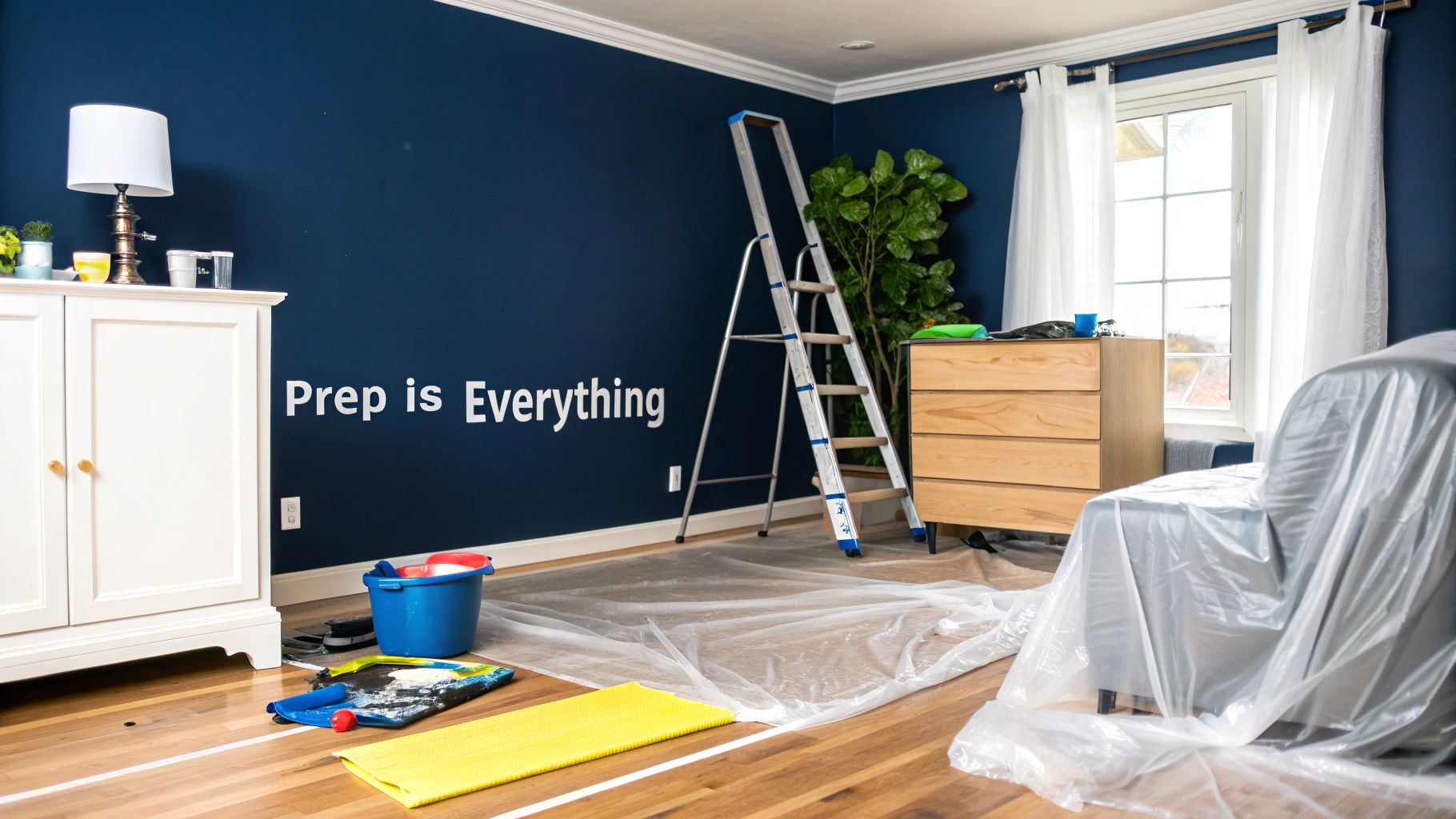
Step 1: Protect Your Space Like a Pro
First things first: you need to create a clean, protected workspace. Popcorn ceilings are messy. Even when you're just cleaning them, little bits of texture and paint splatter can get absolutely everywhere if you’re not careful.
Start by clearing the room completely. If you have heavy furniture, pull it right into the centre of the room. Cover it—and the entire floor—with painter's plastic and then layer heavy-duty drop cloths on top. We always overlap them to make sure nothing seeps through.
Next up is the painter's tape. This is how you get those super crisp, clean lines that scream "professional." Carefully mask off the top edge of your walls where they meet the ceiling. Do the same for any light fixtures, pot lights, ceiling fans, or crown moulding. For a more detailed guide, check out our post on how to properly prep walls for painting.
Step 2: Gently Clean Before You Paint
Now, you have to clean the ceiling itself. Over the years, ceilings in homes from Scarborough to Etobicoke collect a surprising amount of dust, cobwebs, and grime. Painting over this layer of dirt is a guaranteed recipe for failure—the paint simply won't stick properly.
But you can’t just scrub a popcorn ceiling; the texture is far too delicate and will crumble right off.
Our Gentle Cleaning Method:
- Use a Soft Brush: Grab a very soft-bristled brush or a duster attached to a long extension pole.
- Lightly Dust: Gently sweep the ceiling in one direction, using almost no pressure. The goal is just to knock off the loose dust and cobwebs.
- Vacuum with Care: Alternatively, you can use the soft brush attachment on your vacuum. Hold it just below the surface to suck up the dust without actually touching the texture.
A Quick Client Story: The Stubborn Stain in Markham
I remember a project in an older Markham home with a stubborn ceiling stain that just kept bleeding through every coat of paint the homeowner had tried. It was a classic water stain from a minor leak years ago.
The secret weapon we used was a high-quality, oil-based, stain-blocking primer. One coat sealed the stain completely. It’s a step we never, ever skip. It made all the difference and the client was thrilled with the final result.
Step 3: Fix Cracks and Stains
Once the ceiling is clean, it's time for a close inspection. Look for any cracks, water stains, or areas where the texture looks loose or is peeling away. Simply painting over these problems is like putting a bandage on a broken arm—it doesn’t solve the underlying issue.
For small hairline cracks, a paintable caulk is your best friend. Apply a thin bead and smooth it gently. For larger cracks, you'll need a special popcorn ceiling patch product, which usually comes in a spray can to help blend the new texture with the old.
For any water stains, like the one from that Markham job, a stain-blocking primer is non-negotiable. These primers create a barrier that stops the stain from showing through your new paint. Without it, that ugly brown spot will reappear within weeks.
It's these small repair details that create a long-lasting, beautiful finish. If you're unsure about this part of the prep, feel free to send us photos for a quick quote.
Choosing Your Arsenal: The Right Paint and Tools
Walking into a paint store can feel overwhelming, but don't worry. Choosing the right supplies is just as important as the prep work. It's the difference between a frustrating weekend and a flawless finish.
When it comes to the best paint for popcorn ceilings, one choice stands out: a high-quality, flat acrylic latex paint.
Let me break down why this is the perfect combination.
Why a Flat Finish is Your Best Friend
A flat or matte finish is your secret weapon. It has almost no sheen, which means it doesn't reflect light. This is brilliant for hiding minor imperfections, shadows, and uneven spots within the texture.
A paint with any gloss—like eggshell or satin—will catch the light and highlight every single lump and bump. Trust me, that's the opposite of what you want.
We always recommend premium brands like Benjamin Moore or Sherwin-Williams. Investing in quality paint means you'll get better coverage and a more durable, long-lasting finish. For more insights on this, you can check out our guide on the 5 best interior paints for your home.
Selecting the Perfect Roller for the Job
Now for the hero of this project: the paint roller. This isn’t the time for a standard, all-purpose roller. To paint a popcorn ceiling without damaging it, you need a thick-nap roller.
Look for one with a pile depth (the length of the fibres) between 1/2-inch and 3/4-inch.
- 1/2-Inch Nap: Good for ceilings with a finer, less aggressive texture.
- 3/4-Inch Nap: Ideal for deeper, more pronounced popcorn textures often found in older homes in Vaughan or Scarborough.
This thick pile holds more paint and gently works it into all those little nooks and crannies without you needing to press hard. Pushing too hard is the number one way people accidentally scrape off chunks of texture. A thick-nap roller does the work for you.
What About Using a Paint Sprayer?
Some homeowners ask if they should use a paint sprayer. A sprayer can deliver a beautiful, even coat and is much faster than rolling. However, the prep work is 10 times more extensive. You have to meticulously mask and cover everything—walls, windows, floors, everything—because overspray gets everywhere.
For most DIY projects, the time spent on extreme masking isn't worth it. Professional painting services like ours use sprayers for efficiency on large-scale jobs, but for a single room, a good roller is the most practical choice.
In fact, a quality paint-over is a smart investment. Industry professionals have noted that a great paint job on a textured ceiling can boost a home's perceived value. Learn more about how painting can add value to your home on angi.com.
Your final shopping list should also include a sturdy extension pole for the roller, a good 2.5-inch angled brush for cutting in the edges, and a solid paint tray. With this arsenal, you'll be ready for a successful project.
The Painting Process: Step-by-Step
Alright, you've done all the prep, the room is protected, and your tools are ready. Now for the main event—getting that fresh coat of paint onto the ceiling. My team at Royal Home Painters has fine-tuned a method that gives us a flawless, uniform look every time.
Let me walk you through it, just like we would on a job in any home across the GTA.
Step 1: Apply a High-Quality Primer
This first step is absolutely non-negotiable. You must prime the ceiling first. A popcorn texture is like a sponge; it will soak up an incredible amount of paint. If you skip the primer, the moisture from the paint can loosen the texture, causing it to crumble and fall off.
A good, stain-blocking primer does two critical jobs:
- It seals the surface: This stops the paint from getting absorbed, which gives you a much more even and consistent final coat.
- It blocks stains: If you have old water spots or yellowing, the primer creates a barrier to stop them from bleeding through your new paint.
Apply one solid coat of primer using the same rolling technique I’ll get into below. Let it dry completely according to the manufacturer’s instructions.
Step 2: Master the Art of "Cutting In"
"Cutting in" is just painter-speak for carefully painting the edges where the ceiling meets the walls and around any fixtures. This is how you create those sharp, clean lines that really make the job look professional.
Grab a 2.5-inch angled brush. Dip just the tip into the paint and create a 2-3 inch border around the entire perimeter of the ceiling. Take your time with this part. A steady hand is what gets you that crisp, perfect line.
Step 3: Rolling the Right Way
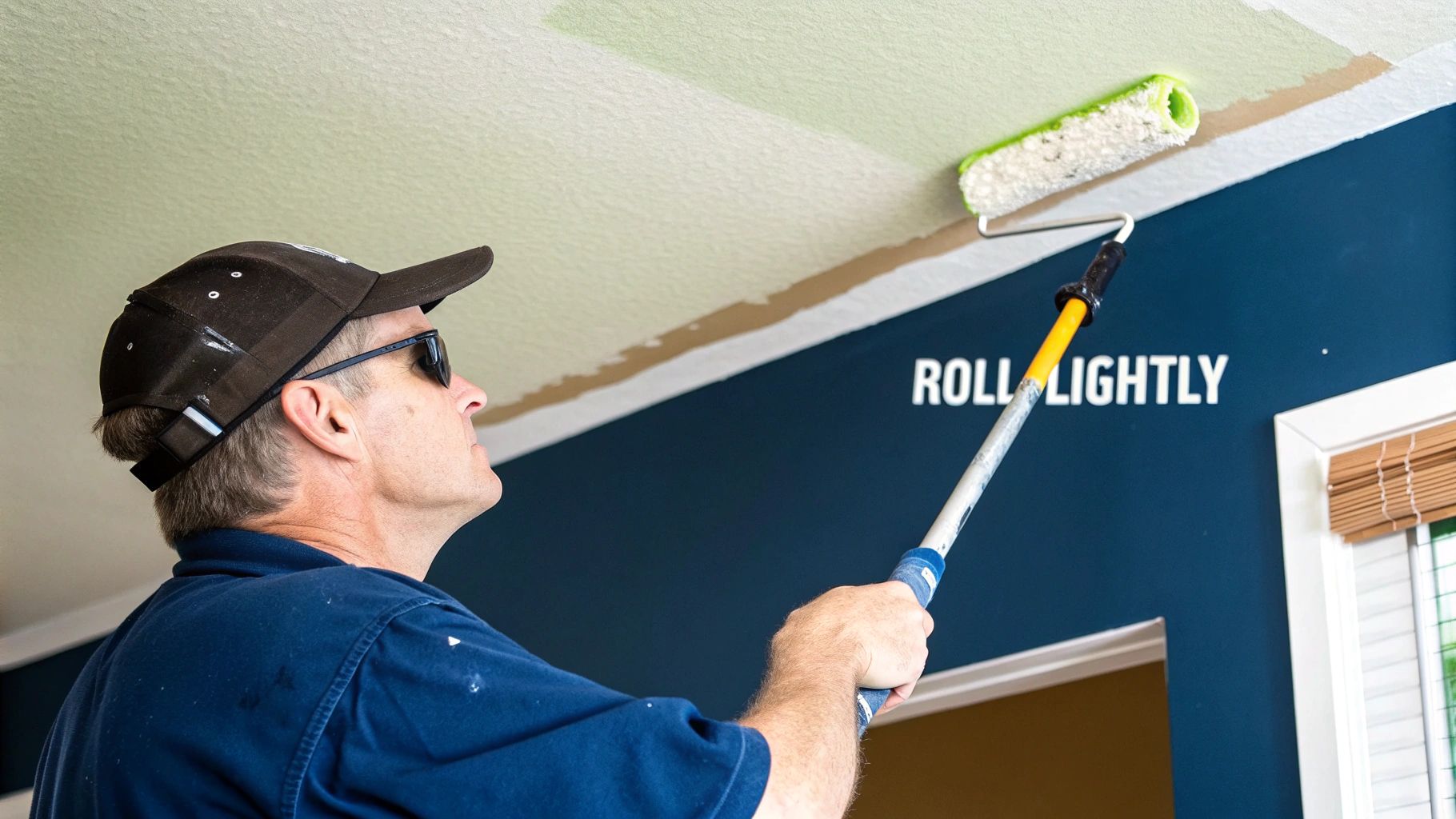
Now for the fun part. Pour your paint into a tray and load up your thick-nap roller, rolling it on the ramp to get rid of any excess. You want the roller saturated, but not dripping.
The absolute key to rolling a popcorn ceiling is light, even pressure. Let the roller do the work. If you push too hard, you risk tearing the texture right off the ceiling, creating a huge mess that’s a real pain to fix.
My method is simple but it works:
- Work in small sections: I like to focus on a 4×4 foot area at a time. It keeps things manageable.
- Paint in one direction: Roll the entire ceiling in one consistent direction, say north to south. This helps you avoid those ugly roller marks or "lap lines."
- Maintain a "wet edge": Always overlap your previous stroke slightly while the paint is still wet. This helps everything blend together seamlessly.
Our Personal Experience: A Tricky Toronto Condo
I remember a condo painting project we handled in downtown Toronto. The unit had popcorn ceilings, but it was also packed with tricky pot lights and vents. The ceilings weren't very high, which meant every little imperfection would be on full display.
We had to be incredibly patient. The cutting-in process around each pot light took twice as long as usual. When we started rolling, we used extremely light pressure to avoid knocking any texture loose. It was a slow, careful job, but the result was a perfectly uniform ceiling that made the whole condo feel brighter and more modern. That's the level of detail we bring to every job.
Step 4: Plan for a Second Coat
You will almost certainly need two coats of paint for a perfectly uniform finish, especially if you're covering a darker colour or a yellowed ceiling. The unique texture of popcorn ceilings makes it incredibly easy to miss tiny spots on the first pass.
Let that first coat dry completely—just check the paint can for the recommended recoat times. When you apply the second coat, roll in the opposite direction (for example, east to west). This cross-hatching technique ensures you cover every single nook and cranny for that flawless, professional look. This technique was popular for a reason; developers loved popcorn ceilings because they hid flaws so well. You can learn more about the history of popcorn ceilings on fastexpert.com.
Pro Tips by Royal Home Painters
After decades of painting homes across the Toronto area, my team and I have picked up a few tricks that make a huge difference. These are the little details that separate a frustrating DIY job from a flawless, professional finish.
Mike's Pro Tip #1: The Water Test
Here's a simple test I use on every project. Grab a spray bottle and lightly mist a small, hidden area of your popcorn ceiling with water.
- If the water absorbs quickly: This ceiling has likely never been painted. It's raw and will soak up paint like a sponge. For a ceiling like this, using a quality primer first is non-negotiable.
- If the water beads up and rolls off: Good news! The ceiling has been painted before. This means the surface is already sealed, and you might get away without a separate primer coat if you’re using a high-quality paint-and-primer-in-one product.
Knowing this upfront completely changes your approach and can save you time and money.
Mike's Pro Tip #2: De-Fuzz Your Roller
Before you start, use a lint roller or some painter's tape to de-fuzz your new paint roller. New rollers often shed loose fibres on the first use, and the last thing you want is a fuzzy ceiling. This is a small, two-minute step my team never skips. It guarantees a smooth application.
Mike's Pro Tip #3: Light Your Workspace Like a Pro
Don’t just rely on the room's single overhead light. I always bring a portable work light with me and place it on the floor, aiming it up at the ceiling. This low-angle light exaggerates every shadow and imperfection, making it incredibly easy to spot missed patches or uneven spots while the paint is still wet and easy to fix.
Did you know? The popcorn ceiling trend started decades ago for a very practical reason. During the post-WWII housing boom, developers needed fast, cheap ways to finish homes, and these textures hid drywall imperfections perfectly. You can learn more about the history of these unique ceilings on titan-enviro.com.
If tackling these details feels like a bit much, our award-winning team is here to help. Book a free, no-obligation estimate, and let us handle the hard work for you. We are fully insured, WSIB covered, and offer a lifetime warranty on our interior painting services.
When to Put Down the Roller and Call a Pro
Painting a popcorn ceiling can be a really satisfying DIY project, but let’s be honest—it’s not for everyone. Sometimes, the smartest move is to hang up your roller and call in the pros.
If you're staring up at towering ceilings, finding ugly water stains, or have even the slightest suspicion about asbestos, hiring a professional is the safest and smartest choice. It’s also the right move if you just don’t have the time or patience for the meticulous prep work needed for a flawless finish.
Situations That Scream "Call a Professional"
Certain scenarios can quickly turn a manageable DIY job into a total nightmare. Here are the big ones we see all the time in the GTA:
- Soaring Ceilings: Many homes in areas like King City or Aurora boast vaulted or two-storey ceilings. Working safely at that height demands proper equipment like scaffolding, not just a wobbly stepladder.
- Significant Damage: Big cracks, crumbling sections, or extensive water stains aren't just cosmetic issues. A coat of paint won't fix them. These problems often point to bigger trouble that needs a professional eye before any painting can even start.
- You're Out of Time (and Patience): A proper popcorn ceiling paint job takes time. There's cleaning, taping, priming, and applying multiple coats. If your schedule is already jam-packed, hiring our crew to get it done in a couple of days is a huge relief.
In Toronto's competitive real estate market, updated interiors can help a home sell faster. Instead of spending thousands on a messy removal, a professional paint job is often more cost-effective. You can learn more about how popcorn ceiling updates affect property value on fastexpert.com.
If the job starts feeling too big, it might be time to bring in some help. Learning how to find the right contractor can save you a ton of stress. Our award-winning team is fully insured and WSIB-covered, and we back our interior work with a lifetime warranty. We’ve earned hundreds of 5-star reviews from happy clients all across the GTA, from Mississauga to Newmarket.
If this project feels like more than you bargained for, don't hesitate. Our team at Royal Home Painters is a trusted painting company near you ready to deliver perfect results. Send us some photos for a quick quote, or book your free, no-obligation estimate today.
Frequently Asked Questions (FAQs)
When it comes to popcorn ceilings, I get a lot of the same questions from homeowners across Toronto. Here’s some straightforward advice based on years of experience.
1. Can I paint a popcorn ceiling that has never been painted before?
Yes, you can, but I can't stress this enough: you must use a primer first. An unpainted popcorn ceiling is like a dry sponge. If you hit it with water-based paint, the texture will soak up the moisture, soften, and could start peeling or falling right off. A quality oil-based or stain-blocking primer creates a seal, locking everything in place.
2. How many coats of paint does a popcorn ceiling need?
Always plan for two full coats of paint, and that's after you've primed. A popcorn ceiling has many tiny peaks and valleys, and getting perfect coverage with a single coat is practically impossible. A second coat is what gives you that uniform, professional-looking finish.
3. Is spraying better than rolling for popcorn ceilings?
For most homeowners in the GTA, I’d stick with a roller. While a paint sprayer gives a flawless finish, it requires a huge amount of prep. You have to mask off literally everything—walls, floors, windows—because overspray gets everywhere. A good quality, thick-nap roller (1/2 to 3/4-inch) is far more manageable and less messy for a DIY project.
4. What is the best type of paint for popcorn ceilings?
The hands-down best choice is a high-quality flat or matte finish acrylic latex paint.
- Flat/Matte Finish: This is non-negotiable. It absorbs light, which does a fantastic job of hiding imperfections in the texture. Any sheen will highlight them.
- Acrylic Latex: This type of paint is durable, has low odour, and cleans up easily with just soap and water.
My advice? Don’t cheap out on the paint. Investing in a premium can from a brand like Benjamin Moore will give you much better coverage and save you a lot of frustration.
If you’re still feeling overwhelmed, our award-winning team is always here to help. Book a free estimate, and we can take care of everything for you, backed by our lifetime warranty.
