


Yes, you can absolutely paint a popcorn ceiling. It’s a great way to quickly update a dated room without the huge mess and cost of removal. For many homeowners we’ve helped across Toronto and the GTA, a fresh coat of paint is the smartest way to brighten up a space.
This is especially true in older homes where the texture might contain asbestos, making removal a hazardous job.
Why Should You Paint Your Popcorn Ceiling?
Popcorn ceilings were popular for hiding flaws and reducing noise. But today, they often make a room feel old and dark. If you’re tired of that dingy ceiling in your North York or Vaughan home, painting is a powerful solution. It instantly makes the space feel cleaner, taller, and more modern.
Unlike a full removal, which is dusty and expensive, painting is much faster and more affordable. It’s a project some homeowners can do themselves, but the unique texture requires the right technique.
The Benefits of a Fresh Coat of Paint
Painting does more than just change the colour; it transforms the feel of a room. Here’s why it’s a great option for your home:
- Brightens the Room: A clean, white ceiling reflects more light, making your space feel brighter and more inviting.
- Modernizes Your Home: It covers yellowing and stains, giving your home an immediate update. This is a big plus for effective home staging techniques if you’re planning to sell.
- Cost-Effective Update: Painting is much cheaper than hiring a crew for popcorn ceiling removal. You get a big impact on a smaller budget.
- Seals the Texture: A good coat of paint helps bond the popcorn texture, reducing dust and flakes over time.
This guide will walk you through everything, from prep work to the best tools for a flawless finish. We’ll also help you with common problems, like issues with peeling paint on your ceiling. Our goal is to help you decide if this is a good DIY project or if it’s better to call our award-winning team for a professional touch.
Safety First: Check for Asbestos in Older Homes
Before you pick up a roller, we need to talk about safety. This is the most important step. If your Toronto home was built before the early 1990s, your popcorn ceiling could contain asbestos. It was a very common practice back then.
Disturbing asbestos by scraping or sanding can release harmful fibres into the air. This can lead to serious long-term health problems. For your family’s safety, you cannot skip this step.
Why Was Asbestos Used in Ceilings?
Why was a dangerous material used in homes across Etobicoke and Scarborough? Popcorn ceilings were a cheap and easy way for builders to hide imperfections. Asbestos fibres were added to make the texture more durable and fire-resistant.
Typically, these ceilings contained between 1% and 10% asbestos. Even though it was banned in the late 1970s, builders used their existing stock into the 1980s and sometimes the early ’90s.
Key Takeaway: If your house was built before 1990, assume your popcorn ceiling has asbestos until a professional test proves it doesn’t. This simple rule keeps everyone safe.
How to Test Your Ceiling for Asbestos in the GTA
You cannot see or smell asbestos. The only way to know for sure is to have a small sample tested by a certified lab. We strongly recommend hiring a professional for this. A pro knows how to take a sample safely without releasing dangerous fibres.
Here’s what the process looks like:
- Hire a Certified Pro: Find a local Toronto-area asbestos testing company.
- Safe Sample Collection: The technician wets a small area and carefully scrapes a sample into a sealed bag.
- Lab Analysis: The sample is sent to a lab to be analyzed.
- Get Your Results: The lab sends a report confirming if asbestos is present.
It’s important to understand how to identify asbestos in an older home, but only a test can be certain.
This simple decision tree can help you figure out your next steps.

Painting is a safe option if asbestos isn’t present or if you plan to encapsulate it. Removal, however, often requires professional help, especially with a positive asbestos test.
What to Do with Your Test Results
Once you have your results, you can make a safe decision.
- Negative Result (No Asbestos): Great news! You can move forward with painting your popcorn ceiling.
- Positive Result (Asbestos Present): Don’t worry. Your safest option is to encapsulate it by painting over it. A fresh coat of paint seals the asbestos fibres in place. This is a safe and widely accepted approach. Do not scrape, sand, or disturb the ceiling.
If you find asbestos and feel unsure, our team at Royal Home Painters is experienced in safely handling these situations. We can properly paint and seal your ceiling to keep your home safe. Our painters are fully insured and WSIB covered, offering you complete peace of mind.
How to Prep Your Room for a Flawless Finish
A great paint job is all about the preparation. When painting a popcorn ceiling, prep work is everything. It’s the difference between a clean, professional finish and a frustrating mess. Our teams bring this careful attention to detail to every project across Toronto, from small condos to large homes.
Taking the time to prepare the room means the paint goes only where it should. You protect your furniture, floors, and walls from splatter.
Protect Your Space from Paint Splatter
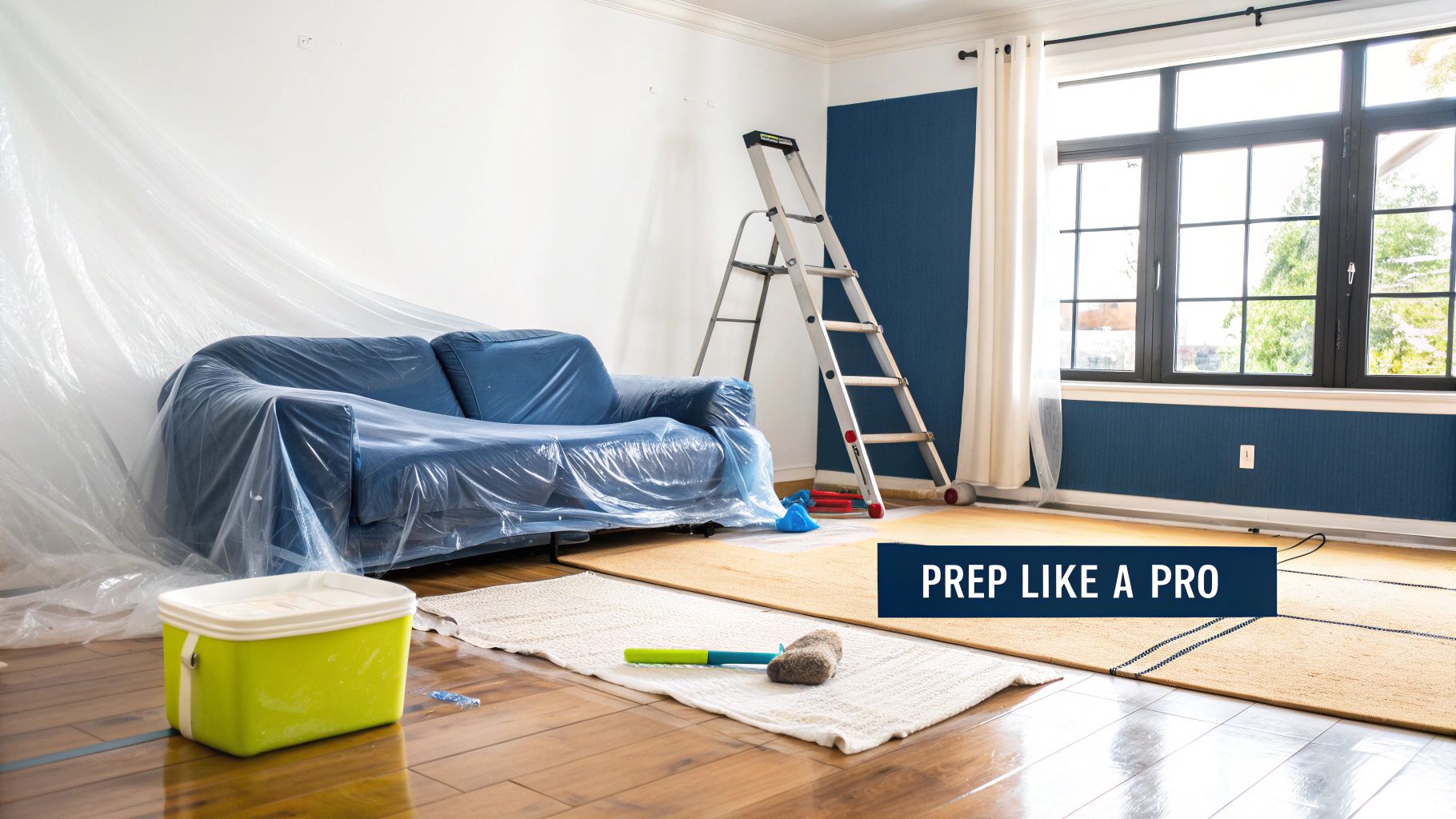
First, clear the room. Popcorn ceilings are known for flinging paint droplets everywhere.
Move as much furniture out as you can. For heavy items that can’t be moved, like a large sofa in a Markham condo, pull them to the centre of the room. Cover them completely with plastic sheeting and tape it securely.
Also Read: Complete guide to flawless house painting in Toronto
Next, cover the entire floor with canvas drop cloths or heavy-duty plastic. Tape it right along the baseboards.
Pro Tip: Don’t forget the walls! Run painter’s tape along the top edge where the walls meet the ceiling. Hang plastic sheeting from the tape down the walls. This “paint shield” catches roller spray and saves you hours of touch-up work.
How to Clean and Repair the Ceiling Surface
You can’t paint over dust and cobwebs. A clean surface helps the paint stick properly. But you have to be gentle—aggressive cleaning will knock down the delicate popcorn texture.
Use a vacuum with a soft-bristle brush attachment. Go over the ceiling lightly to pull away dust. Avoid pushing hard, as this can damage the texture.
Once the ceiling is clean, inspect it for any problems. In homes across Richmond Hill or Etobicoke, we often find:
- Water Stains: These ugly brown spots must be sealed before you paint. After fixing the leak, apply a high-quality oil-based stain-blocking primer, such as Kilz or Zinsser, directly over the spot. If you skip this, the stain will bleed through your new paint.
- Minor Cracks or Dings: For small cracks, use a paintable caulk. For larger dings where the texture has worn off, you can find a spray-on popcorn-texture patch at most hardware stores. Follow the directions to blend the repair before you prime.
Fixing these small issues now is key to a uniform, flawless finish. If this sounds like a lot of work, remember that our expert interior painting services handle all of it for you.
Also Read: How to Paint Coffered Ceiling in Toronto
Your Essential Prep Checklist
Here’s a quick list to make it easy. Getting these steps right will make painting much smoother.
- Empty the Room: Remove all furniture and decor.
- Cover Everything Left: Wrap large items completely in plastic.
- Protect Floors and Walls: Lay down drop cloths and hang plastic on the walls.
- Turn Off Power: Shut off power at the breaker box before painting near light fixtures.
- Clean the Ceiling Gently: Use a vacuum with a soft brush to remove dust.
- Spot-Prime Stains: Use a stain-blocking primer on any water stains.
- Repair Any Damage: Use caulk for small cracks and a texture patch for missing popcorn.
If this detailed work feels like too much, our team is here to help. Send us photos of your room for a quick, no-fuss quote for our professional painting services. Our fully insured team has helped hundreds of clients across the GTA.
Choosing the Right Paint and Tools
Getting the right supplies is half the battle. For this specific job, your choices are simple. Using the right paint and tools is the secret to a smooth finish that doesn’t damage the delicate texture.
A few key selections will set you up for a professional result and save you time and frustration.
The Best Paint for Popcorn Ceilings
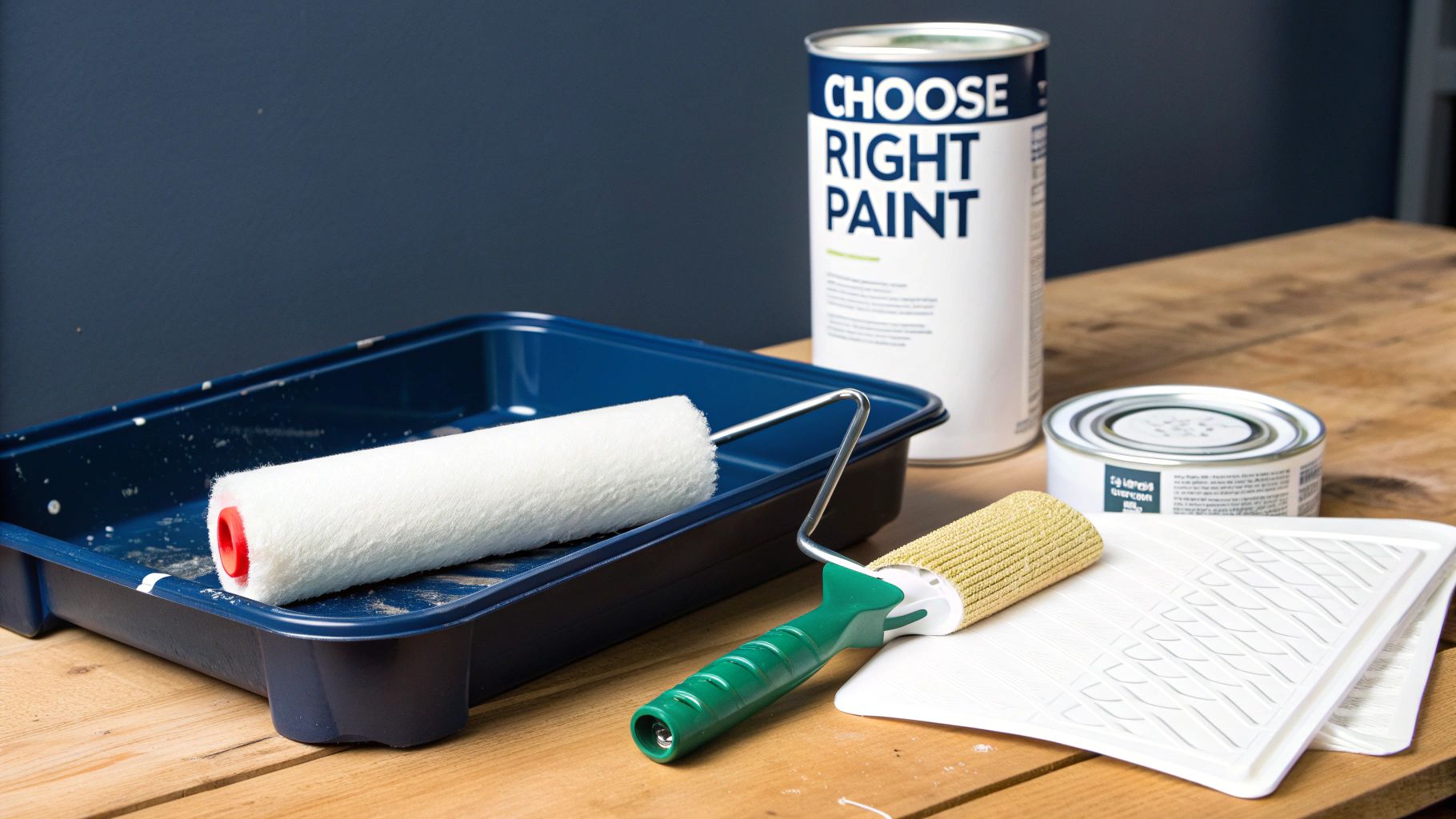
Here is the most important rule: you must use a flat or matte finish paint. Any shine will highlight every bump and flaw. A flat finish absorbs light and hides imperfections, giving you a beautiful, uniform look.
Your best choice is a high-quality acrylic latex paint. It’s durable, sticks well, and cleans up easily with water. Avoid cheap paints. They are often thin and require extra coats, which adds weight and moisture to the ceiling.
For more advice on picking quality products, see our guide on the five best interior paints for your home.
Essential Tools for the Job
Having the right tools is just as important as the right paint. The wrong roller can pull texture right off the ceiling.
Here’s your essential shopping list:
- Thick-Nap Roller (1/2-inch to 3/4-inch): This is your most important tool. A thick roller holds a lot of paint and gets it into all the nooks and crannies without hard pressure.
- Roller Frame and Extension Pole: An extension pole saves your back and lets you paint comfortably from the floor.
- 2-Inch Angled Paint Brush: Perfect for “cutting in”—painting the edges where the ceiling meets the walls.
- Paint Tray and Liners: A deep-well tray holds more paint. Disposable liners make cleanup fast.
- Painter’s Tape: For masking off walls and fixtures to get clean lines.
- Drop Cloths and Plastic Sheeting: To protect everything in the room from paint splatter.
Roller vs. Sprayer: Which Is Better?
For most homeowners in Vaughan or Markham, a roller is the best choice. It gives you good control and requires less prep work than a paint sprayer.
A sprayer might seem faster, but you have to spend a huge amount of time masking every single surface from overspray. For a typical home project, rolling is much easier and more manageable.
How to Apply Paint Like a Professional
Now for the fun part: painting. Your patience during prep will pay off here. Painting a bumpy popcorn ceiling requires a special touch to get into every corner without damaging the texture.
Be methodical. Your goal is to apply enough paint for good coverage without soaking the ceiling. Too much paint adds weight and can cause the texture to peel off with your roller.
Mastering The Roller Technique
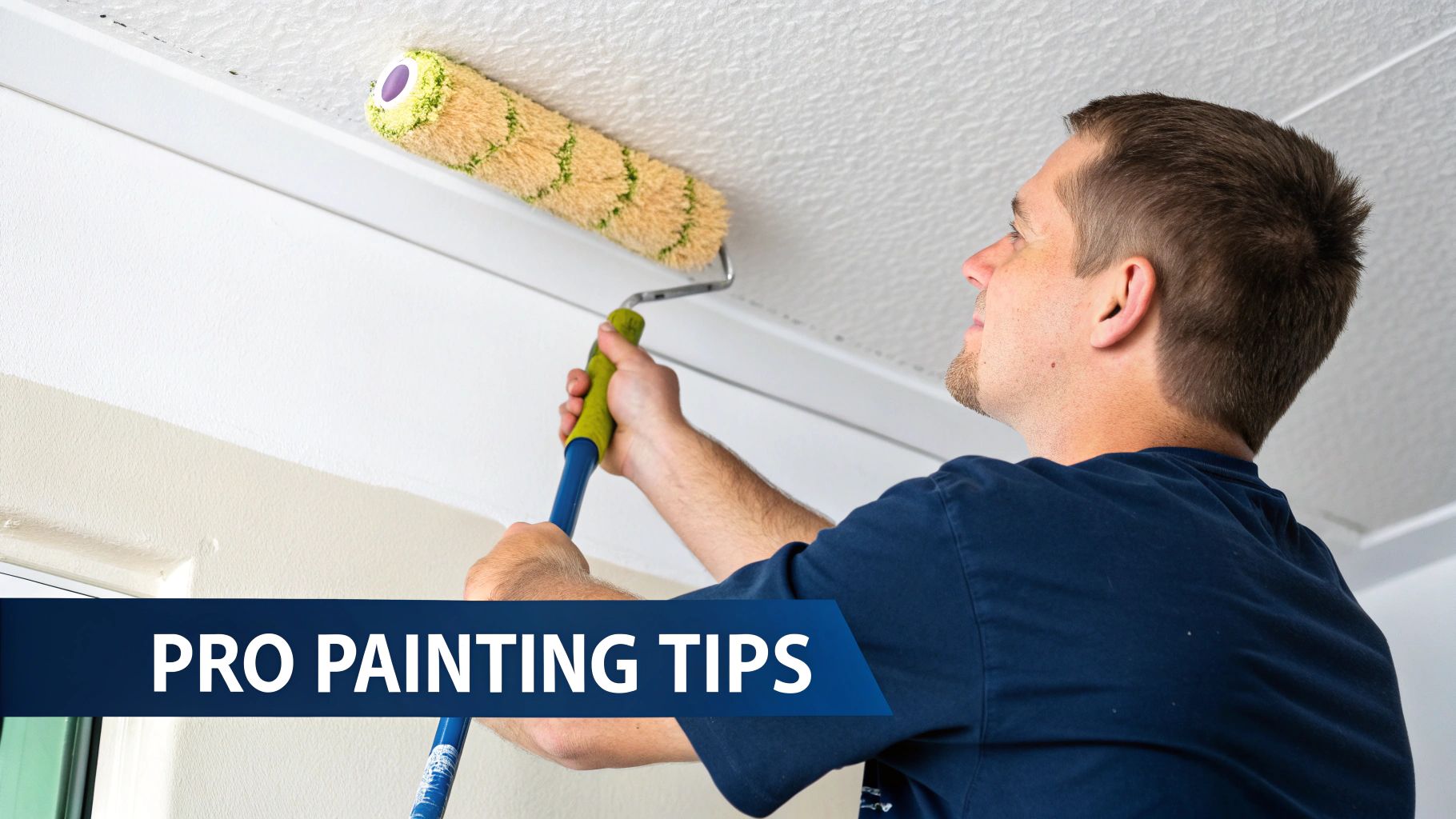
First, load your thick-nap roller properly. Roll it back and forth in the paint tray to get an even coat. You want it saturated, but not dripping. If paint is dripping, it’s overloaded.
Start in a corner and roll with light, gentle pressure. Let the roller do the work. The biggest mistake is pressing too hard, which tears off the texture.
The Cross-Hatch Method For Perfect Coverage
For a flawless finish, use the cross-hatch technique. This simple method ensures you hit the texture from every angle, eliminating shadows and missed spots.
Here’s how to do it:
- First Pass: Roll your first coat of paint in one direction across the ceiling (e.g., north to south).
- Let It Dry Completely: This is critical. Let the first coat dry fully, which usually takes at least 4-6 hours. Painting a second coat too soon will re-wet the texture, causing peeling.
- Second Pass: Apply your second coat in the opposite direction (e.g., east to west).
This two-direction method forces paint into all the tiny crevices, giving you solid, even colour. It’s one of the professional tricks we use. You can learn more about how Toronto house painters achieve professional results in our other guides.
Pro Tip: Maintain a “Wet Edge”
To avoid ugly lines where your roller strokes overlap, always work from wet to dry. Paint in small sections (about 3×3 feet) and blend each new section into the last one while the paint is still wet. This creates a seamless finish.
Cutting In For Clean, Sharp Lines
Before you start rolling the main surface, you need to “cut in.” Use your 2-inch angled brush to paint the perimeter where the ceiling meets the walls. Also, do this around light fixtures and vents.
Dip the tip of your brush in the paint and use a steady hand to draw a clean line along the edge. The painter’s tape on the wall will help you get a sharp line.
This is the level of detail our award-winning team at Royal Home Painters brings to every project across the GTA. If this sounds like more work than you want, book a free estimate today, and let our experts handle it for you.
When to Hire a Professional GTA Painter
DIY projects can be rewarding, but some jobs are better left to professionals. Knowing when to call a painter for your popcorn ceiling is about making the smart choice for your home and your safety.
The decision often comes down to a few key factors. If the job is complex, the risks of a DIY attempt can be high. For many homeowners across Toronto, this is when our team steps in.
Situations That Demand a Professional Touch
A small room with a standard ceiling might be a manageable DIY project. But some scenarios require an expert.
We strongly recommend hiring professionals in these situations:
- Confirmed Asbestos: If your ceiling tests positive for asbestos, do not touch it. Our fully insured and award-winning team is trained to safely encapsulate the texture, following strict protocols to keep your home safe. This is a common issue in older homes. You can explore the history of asbestos in ceiling textures to learn more.
- Very High Ceilings: Vaulted or two-story ceilings in your Richmond Hill or Markham home require special ladders and safety gear. Our crews are fully equipped to handle heights safely.
- Significant Repairs Needed: Widespread water damage or large cracks are not simple fixes. A professional painter knows how to properly repair, re-texture, prime, and paint for a seamless finish. Our top-rated Toronto painting company has the skills to make your ceiling look new again.
Hiring Royal Home Painters means you get flawless results backed by our lifetime interior warranty. Whether you’re in Scarborough, Vaughan, or anywhere in the GTA, book a free, no-obligation estimate today.
FAQs: Painting Popcorn Ceilings
Homeowners across Toronto often have the same questions. Here is some clear advice from our experienced team.
How many coats of paint does a popcorn ceiling need?
Plan for two coats. The popcorn texture is very porous and will absorb the first coat. This first layer acts as a sealer. The second coat provides that beautiful, solid, uniform colour.
The most important tip: let the first coat dry completely. We recommend waiting at least 4 to 6 hours. If you apply the second coat too soon, the moisture can cause the texture to soften and peel off with your roller.
Can I paint over an already painted popcorn ceiling?
Yes, you can. If the ceiling is in good condition, it’s a simple job. Just clean it to remove dust, and you’re ready to paint. We see this often in older homes across the GTA.
If you see any flaking or peeling paint, you need to do some prep work. Gently scrape away any loose bits, then use a spot-primer on the bare patches. This ensures your new paint will stick properly.
Is it better to roll or spray a popcorn ceiling?
Both methods work. Spraying is fast and gives a perfect finish, but the prep work is huge. You have to mask everything because the overspray gets everywhere.
For most homeowners, rolling is the better choice. It takes longer, but the prep is much easier. For a typical project in North York or Scarborough, a quality thick-nap roller is the most practical option.
Help! The texture is coming off while I’m painting. What do I do?
First, stop painting immediately. This common problem usually means you are using too much paint on your roller or you are pressing too hard.
Let the damaged area dry completely. Then, you can fix it with a can of spray-on popcorn texture repair from a hardware store. Follow the directions, let the patch dry, prime it, and then you can start painting again. Just remember to use a lighter touch this time.
Ready to give your ceilings a flawless, professional finish without the stress? The Royal Home Painters Toronto team is here to help. Our work is backed by hundreds of satisfied clients and a lifetime interior warranty.
