


Hi, I'm Mike, owner of Royal Home Painters. After years of refinishing cabinets in homes all across Toronto and the GTA, I’ve seen it all—from beautiful factory finishes to DIY jobs that started peeling a week later. A common question I get is, "Can you paint over cabinets that are already painted?"
The short answer is yes, absolutely. But the real story is in the details. Repainting a poorly done job is a completely different project than just changing the colour on a professionally finished surface. The success and cost depend entirely on the condition of that existing paint.
Key Takeaways for Repainting Kitchen Cabinets
For busy homeowners in Toronto, I know you need the essential info first. Here’s a quick summary of what I’ve learned from hundreds of cabinet projects in Vaughan, Richmond Hill, and Markham.
- Prep is 90% of the Job: The #1 reason paint fails is poor preparation. If the previous job skipped degreasing, proper sanding, or a bonding primer, the new paint will fail. It’s not a matter of if, but when.
- Wall Paint is Not Cabinet Paint: Never use regular wall paint on kitchen cabinets. It’s not designed for high-touch surfaces, stays soft, gets sticky in Toronto's humidity, and can't withstand daily cleaning. We use industrial-strength Renner Italian coatings for a durable, factory-hard finish.
- Fixing a Bad Paint Job Costs More: This is a hard truth. Repainting cabinets that are already peeling or were painted improperly means a lot more labour. We often have to strip the old paint down to the wood, which takes more time and money than a standard project. You can learn more in our guide to the average cost to paint kitchen cabinets in Toronto.
- Yellowing is a Common (and Fixable) Problem: That factory-applied lacquer on white cabinets from 10-15 years ago almost always turns yellow. We see this constantly in older homes and condos across North York and Etobicoke. The only fix is proper sanding, a stain-blocking primer, and a modern, non-yellowing topcoat.
Repainting your cabinets is a big decision. Understanding how to plan a kitchen remodel can help you see how this project fits into your home's bigger picture.
Common Problems We See in Toronto with Previously Painted Cabinets
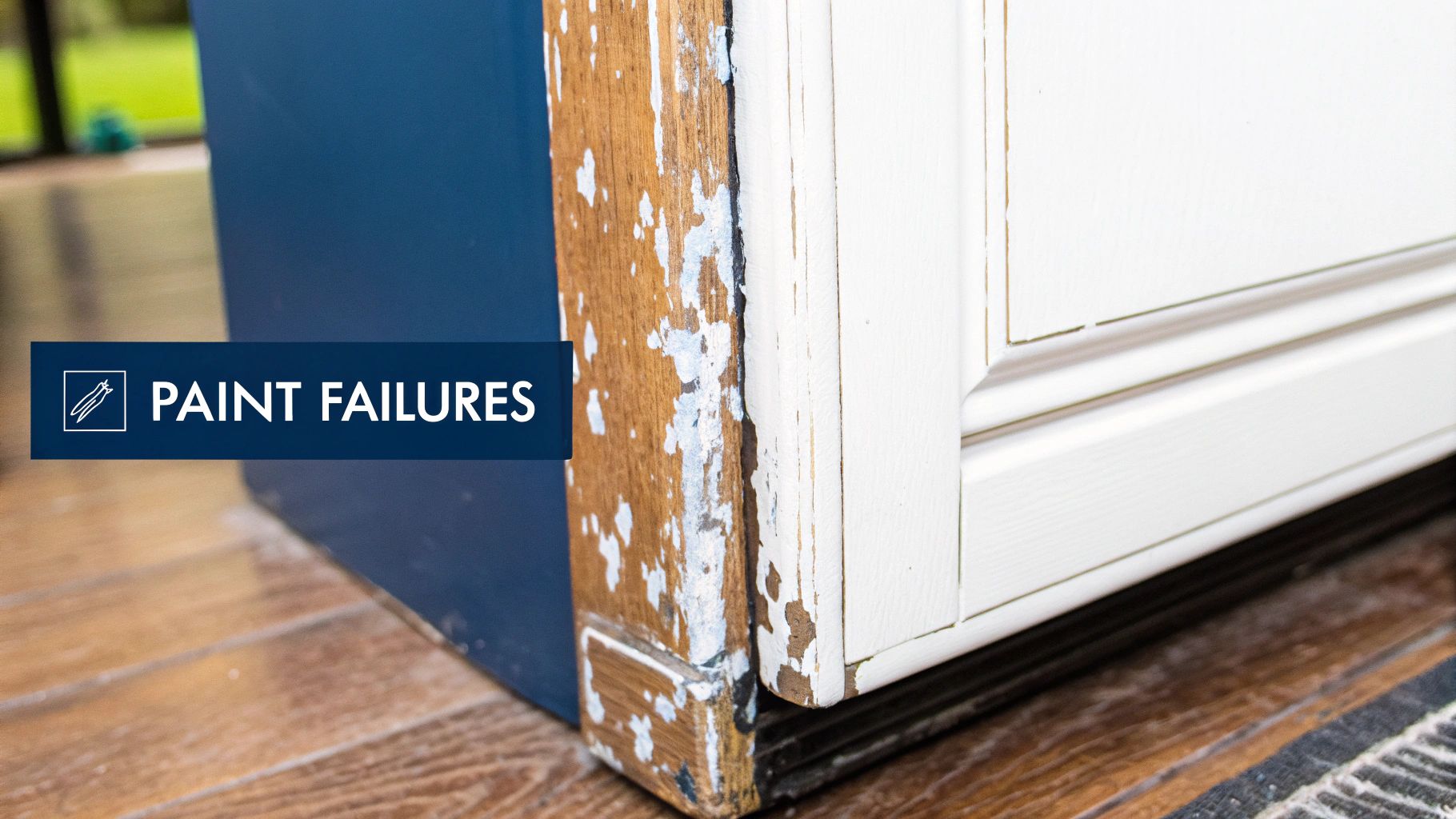
When a cabinet paint job goes wrong, it’s rarely a mystery. It’s a symptom of shortcuts taken months, or even years, earlier. Every week, my team and I visit homes across Toronto, from Scarborough to Mississauga, and we see the same handful of preventable issues.
These problems are more than just cosmetic—they’re a clear signal that the foundation of the paint job is failing. Trying to paint over them without fixing the root cause is like building a house on a crumbling foundation.
Peeling and Chipping Paint
This is the most dramatic failure we see. You’ll notice it first around high-traffic spots like handles and the cabinet under the sink, where paint lifts right off the surface.
Why it happens: This is a total lack of proper adhesion. It almost always means the surface wasn't sanded correctly, or no bonding primer was used. A good bonding primer is designed to grip onto slick surfaces like old paint. Without it, the new paint is just sitting on top, waiting to get knocked loose.
Brush Marks and Roller Texture
A professional finish should be smooth, like it came from a factory. If you can see deep brush strokes or a bumpy "orange-peel" texture, you're looking at a DIY or amateur job.
Why it happens: This is a classic case of the wrong tools and wrong paint. Many people grab standard wall paint and a cheap brush. Professional cabinet coatings are designed to be sprayed on, which creates that perfectly even layer.
Paint That Feels Sticky or Soft
Ever touched a painted cabinet and it feels slightly tacky, even months later? That is a huge red flag.
Why it happens: This is a tell-tale sign that the wrong type of paint was used. Standard latex wall paint isn't made to cure into a hard shell. In a kitchen with humidity and temperature swings, it never fully hardens, remaining soft and attracting dirt.
👉 Mike’s Pro Tip: High humidity, a common issue in many older Toronto homes, can seriously slow down how paint cures. When paint doesn't cure properly, it stays soft and is easily damaged. That's why we use industrial-strength coatings like Renner, which are chemically designed to cure hard. We also finish doors off-site in our climate-controlled shop to guarantee a perfect result.
Yellowing Lacquer on Factory-Painted Cabinets
Many Toronto homes, especially those built 10-20 years ago, have factory-painted white or cream cabinets that have turned a dingy yellow. It often happens unevenly, depending on sunlight exposure.
Why it happens: This is the result of old lacquer coatings aging. Exposure to UV light and cooking heat breaks down the chemical compounds in the paint, causing them to yellow. The only real fix is to thoroughly sand the surface, seal it with a stain-blocking primer, and repaint with a modern, non-yellowing coating.
If you're dealing with these issues on older wood cabinets, our guide on painting oak cabinets offers more specific advice.
The Story of a DIY Job Gone Wrong in Etobicoke
A job that really sticks in my mind was for a couple in an Etobicoke bungalow. They’d just bought the place, but the previous owner had tried a DIY cabinet painting project. It looked okay from a distance, but as soon as the humid Toronto summer hit, the paint started feeling tacky and began peeling off in sheets.
The DIYer made two critical mistakes: they used cheap wall paint, and they skipped all the prep work on the glossy surface underneath. Wall paint is just not engineered for the reality of a kitchen. It never properly cures on a slick surface, leaving a soft finish that’s doomed to fail.
Fixing it was a big job. It required stripping everything down to bare wood—a far more labour-intensive and costly process than a standard repaint. It’s the perfect example of why preparation is 90% of the job. You can see many of our successful transformations in our gallery of spray-painted kitchen cabinets in Toronto.
Why Repainting Over Bad Paint Jobs Costs More
The real difference between a cabinet finish that lasts a decade and one that chips in a year comes down to the steps you can’t see. After refinishing hundreds of kitchens across the GTA, I’ve learned that a beautiful finish is built on meticulous preparation.
When I see a repaint job that’s failing, it’s almost always because the foundation was weak. Amateur painters often rush to the final coat because that's what you see. But the unglamorous work—the degreasing, sanding, and priming—is what determines if the paint will last. Skipping these steps turns a dream kitchen update into a costly, peeling nightmare.
The Critical Steps Often Skipped by DIYers
- Skipping Degreasing: Kitchens are greasy environments. Over years, an invisible film of cooking oils builds up. If you paint over that, it’s like putting a sticker on a greasy pan—it won’t stick. Proper degreasing is non-negotiable.
- No Proper Sanding: The goal of sanding isn’t to strip the old paint. It’s to "scuff up" the surface, creating thousands of microscopic grooves that give the primer something to bond with. A smooth, glossy surface offers zero grip.
- Using Wall Paint: Using standard latex wall paint on cabinets is a destructive mistake. It’s not formulated for high-use kitchen cabinets that need to withstand constant cleaning and impact. That's why we use professional-grade best paint for cabinet painting like Renner's Italian coatings.
- No Spray Finish: A brush or roller will always leave texture. It can't achieve the flawless, factory-like finish that a professional HVLP sprayer can. Spraying applies the coating in thin, even layers for a seamless, durable surface.
👉 Mike’s Pro Tip: Here’s a quick test you can do yourself. Take a piece of strong tape (like painter's tape), press it firmly onto a hidden spot on a cabinet door, and rip it off quickly. If flakes of paint come off, the original bond is failing. That tells me we’ll need to do some aggressive sanding, or even stripping, to create a stable foundation for the new paint.
How Cabinet Condition Affects Your Project
This table breaks down common cabinet conditions we see in Toronto, whether they can be repainted, and how that impacts the prep work and cost.
| Cabinet Condition | Can It Be Repainted? | Extra Work Needed | Cost Impact |
|---|---|---|---|
| Properly Painted Cabinets | Yes, absolutely. | Standard cleaning, scuff sanding, and priming. | Standard Cost |
| DIY Painted Cabinets | Yes, but with caution. | Extensive sanding to remove brush/roller marks. May need stripping if wall paint was used. | Moderate Increase |
| Peeling/Chipping Cabinets | Yes, but it's intensive. | Complete stripping of all failing paint is often required to reach a stable surface. | Significant Increase |
| Yellowing Lacquer Cabinets | Yes, this is very common. | Thorough sanding and application of a stain-blocking primer to prevent yellow bleed-through. | Slight to Moderate Increase |
The initial condition of your cabinets plays a huge role. A job that looks simple might require a lot of restoration work underneath to ensure the new finish lasts for years.
Our Professional Repainting Process for a Lasting Finish
Getting a durable, factory-like finish isn’t about a secret trick—it’s about a meticulous, proven process. For every project, whether in a Richmond Hill home or a downtown Toronto condo, we follow the same steps to guarantee a finish that stands up to daily life.
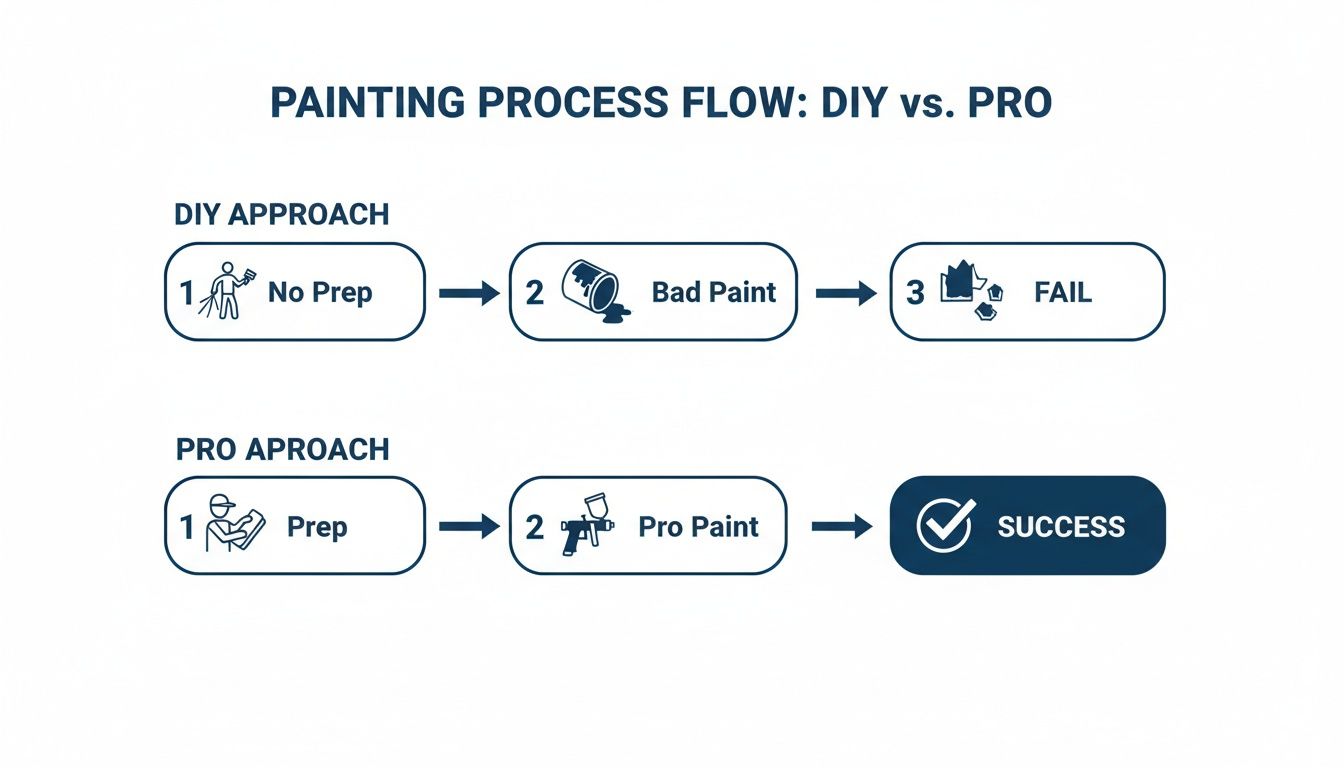
It all starts with a free, in-person estimate where we inspect your existing cabinets. We’re checking for peeling, chipping, or grease that must be addressed.
Preparation: The Foundation of Durability
- Inspection & Disassembly: We carefully remove all doors and drawers, labeling everything so it goes back perfectly.
- Thorough Degreasing: We clean every square inch with a professional-grade degreaser. This cuts through years of built-up cooking oils that would stop the new paint from bonding.
- Sanding or Stripping: We scuff-sand all surfaces to de-gloss the old finish and create a texture for the primer to grip. If the old paint is failing badly, we may need to strip it completely.
- Bonding Primer: We apply a high-adhesion bonding primer. This specialized formula locks onto tricky surfaces and ensures the old finish and the new coating become one stable unit.
Professional Spray Finish in a Controlled Environment
We take your cabinet doors and drawer fronts back to our dedicated spray facility. This dramatically cuts down on the disruption in your home and allows us to work in a dust-free, climate-controlled environment—essential for a flawless finish.
In our facility, we apply multiple thin coats of Renner Italian cabinet coatings using a professional HVLP sprayer. This technique eliminates brush marks and creates an incredibly hard, even finish. These coatings are chemically engineered to resist chipping, staining, and yellowing. You can learn more in our guide on spray painting kitchen cabinets.
👉 Mike's Pro Tip: One of the biggest advantages of using professional coatings like Renner is their chemical resistance. The 2K polyurethane we use cures into a hard shell that won't be damaged by common household cleaners. This is a huge difference from DIY paints, which can soften or break down over time when you try to clean them.
We are a top-rated, award-winning Toronto painting company, fully insured with WSIB coverage. Our work is backed by a 5-year warranty on cabinets, giving homeowners from Aurora to Mississauga complete peace of mind. If your cabinets need a new lease on life, send us a few photos for a quick quote and let's get started.
FAQs: Answering Your Cabinet Repainting Questions
As a painter, I get asked these questions all the time by homeowners across the GTA. Here are some straightforward answers based on my years of experience.
Can you repaint already painted kitchen cabinets?
Yes, absolutely. Painting painted cabinets is a huge part of what our company does. The success of the project depends on the condition of the existing paint. If it was done well, it provides a great base. If it's a peeling DIY job, we first have to fix those underlying problems, which requires more work.
Why is my cabinet paint peeling?
Peeling paint is almost always a sign that the paint never adhered properly. From my experience in Toronto homes, it boils down to two common shortcuts from the previous painter:
- No Proper Sanding: They likely painted over a glossy, smooth surface. New paint needs a scuffed-up texture to grip onto.
- Skipped the Bonding Primer: A quality bonding primer is essential for making new paint adhere to an old finish. Without it, the bond is weak and will eventually fail.
Why are my white cabinets turning yellow?
This is a very common issue, especially in Toronto and Vaughan homes with cabinets painted 10-20 years ago. The yellowing isn't a stain; it's a chemical reaction from old oil-based paints or lacquers aging and reacting to sunlight (UV rays). The only real solution is to sand the surface, seal it with a stain-blocking primer, and refinish it with a modern, non-yellowing coating like the Italian Renner coatings we use.
Does repainting painted cabinets cost more?
It can, yes. If the existing paint is in bad shape—peeling, chipping, or was the wrong type of paint (like wall paint)—the cost will be higher than a standard refinishing project. The extra labour comes from having to strip or aggressively sand off the failing layer to get down to a stable surface.
Is repainting cheaper than replacing cabinets in Toronto?
Without a doubt. Professional cabinet refinishing typically costs 60-70% less than a full cabinet replacement. Even with the extra prep work for previously painted cabinets, repainting is almost always the more economical choice. You get a brand-new look without the massive expense and mess of a full tear-out.
How long does professional cabinet painting last?
When the job is done correctly by a professional using industrial-grade materials, you should expect the finish to last for 10 years or more with normal household use. This is why we are confident enough to offer a 5-year warranty on our cabinet work. The coatings we use create a hard, factory-like surface built for a busy kitchen.
