


Staring at that dated wallpaper and dreaming of a fresh, modern look? We get it. Taking off old wallpaper can feel like a huge job, but it’s a project many Toronto homeowners can handle with the right plan. This guide is your roadmap to success, walking you through everything from the right tools to prepping your walls for a flawless interior painting job.
Your Essential Toronto Wallpaper Removal Guide
Removing old wallpaper is a great way to update a room, but the idea can be a bit scary. If you live in an older Toronto neighbourhood, from North York to Etobicoke, you might be dealing with layers of paper that have been there for decades. The key is to know what you’re up against before you start scraping.
This is the kind of prep work our award-winning team at Royal Home Painters focuses on. A clean, perfectly smooth surface is the only foundation for a beautiful paint job. It’s why we’re confident enough to offer a lifetime warranty on our interior work.
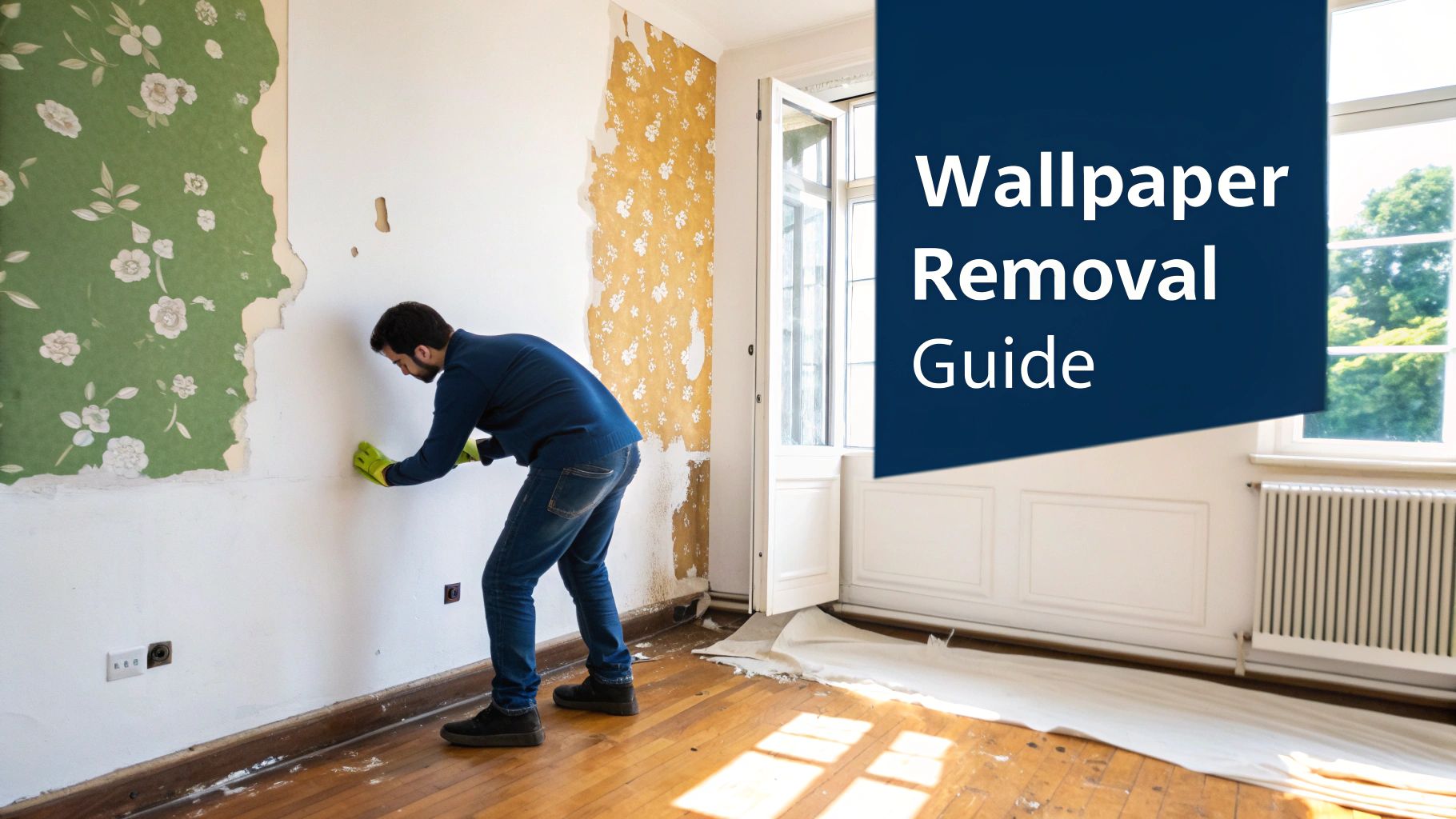
Why Proper Removal is So Important
Painting directly over old wallpaper is a shortcut that almost always ends in regret. Sooner or later, you’ll see peeling, bubbling, and ugly seams showing through. Taking the time to take off wallpaper professionally ensures your investment in new paint pays off for homeowners across the GTA, including Vaughan and Richmond Hill. A professional finish boosts your home’s value.
A flawless paint finish begins long before the first coat is applied. Proper wallpaper removal and wall preparation are the true secrets to a lasting, beautiful result.
Whether you’re planning a DIY weekend or looking for the right pros, understanding the basics is key. Finding the right painting company for your project means choosing a team that values detailed preparation. Our fully insured and WSIB-covered painters have seen it all and are ready to help you get the fresh look you want.
Book a free estimate with our top-rated Toronto team today.
Assembling Your Wallpaper Removal Toolkit
Before you peel that first corner of old wallpaper in your Toronto home, let’s talk about tools. Getting your toolkit right is the most critical first step. It’s the difference between a frustrating weekend and a job done well. It also protects your walls from damage.
Proper prep is everything in home projects. This idea applies to almost any task, like having the right supplies for cleaning. You can find helpful tips for assembling the right cleaning kit, such as for cleaning shower grout, which follows the same principle. Having the right gear means you’re ready for anything, whether it’s stubborn glue or the delicate plaster found in older York Region and Scarborough homes.
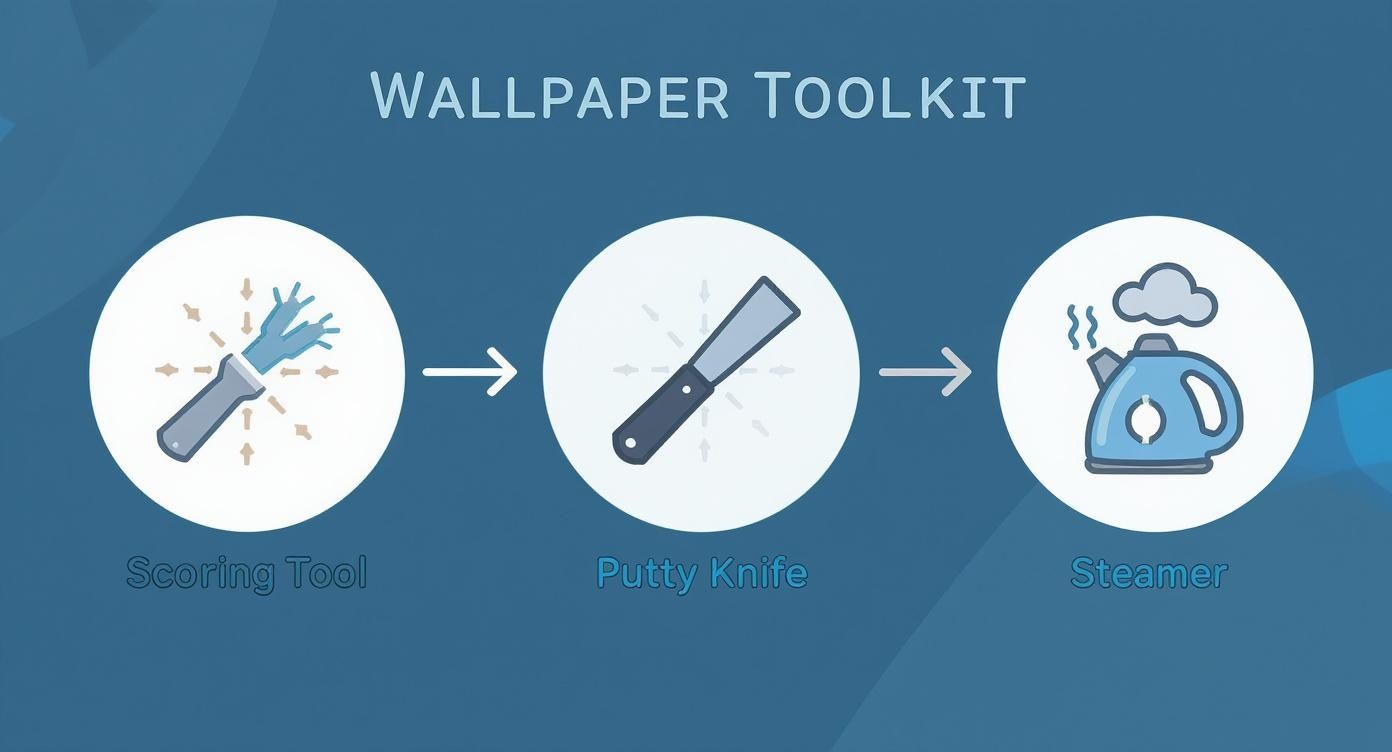
Essential Wallpaper Removal Gear
Your basic kit needs to cover three things: protection, applying the solution, and scraping. These are your must-haves for safely and efficiently taking off wallpaper.
- Protective Gear: Don’t skip this. Always start with safety glasses and gloves. Lay down plastic or canvas drop cloths to protect your floors from water and sticky glue.
- Scraping Tools: A flexible, wide putty knife will be your best friend. A flexible one helps you get under the paper without damaging the drywall. A plastic scraper is also great for more delicate surfaces.
- Solution Applicators: You don’t need anything fancy. A simple spray bottle, a large sponge, and a bucket are all you need for your removal solution.
Tools for Tough Wallpaper Removal Jobs
Sometimes, the basics aren’t enough. This is especially true for vinyl wallpaper or multiple layers of old paper. A few extra tools can make a tough job much easier.
Pro Tip: When working in older homes, especially in areas like Etobicoke or North York, be gentle. The plaster walls in these houses can be more fragile than modern drywall. A light touch now will save you from costly repairs later.
A wallpaper scoring tool is a must-have for vinyl or painted-over papers. It pokes tiny holes in the surface, allowing your stripping solution to get behind the waterproof barrier and dissolve the glue.
For the really stubborn jobs, a wallpaper steamer is a game-changer. It uses hot steam to soften old, hard glue, making the paper easier to remove.
Once the paper is gone, you’ll probably find minor nicks or holes. It’s smart to have spackle and sandpaper ready for these minor wall repairs. This gets the surface smooth for priming and painting. To learn more about achieving clean, professional edges, read our guide on the importance of good caulking.
Proven Methods for Removing Any Wallpaper
Not all wallpaper comes off the same way. The best method for taking off wallpaper in your Toronto home depends on the type of your walls. A modern, strippable paper from a recent reno in Vaughan is very different from a decades-old vinyl in a Scarborough kitchen.
Matching your strategy to the wallpaper type is the secret to a successful project. It stops you from wasting hours on a technique that won’t work.
How to Remove Strippable and Peelable Wallpaper
If you’re lucky, you have modern “strippable” wallpaper. This is the easiest type to remove and often comes off in large sheets.
Start by loosening a corner at the bottom with a putty knife. Then, pull the sheet up and away from the wall at a low angle. If it tears, just find another corner and start again.
The Challenge of Removing Vinyl Wallpaper
Vinyl wallpaper is durable and water-resistant, which is great when it’s on your walls, but makes removal difficult. Because vinyl is not porous, you must perforate the surface before applying the adhesive. This is where a scoring tool is essential. Run it over the entire wall to create tiny holes. This allows your removal solution to get behind the vinyl and dissolve the adhesive.
Do not skip the scoring step on vinyl wallpaper. Spraying water on an unscored vinyl surface is like trying to water a plant through a plastic bag—it simply won’t work.
Our teams in Markham and across the GTA are experts at removing this stubborn material.
How to Remove Traditional Paper-Backed Wallpaper
Older, traditional wallpaper is held on with strong glue that needs moisture to break down. You have a few options for a removal solution.
For a simple DIY approach:
- Mix equal parts hot water and white vinegar in a spray bottle.
- Thoroughly soak a section of the wallpaper. It should be wet, not just damp.
- Let it sit for about 10-15 minutes. This gives the solution time to soften the glue.
- Gently scrape the softened paper and glue off with a flexible putty knife.
If the vinegar-and-water mix doesn’t work, a commercial wallpaper stripper is your next best option. For the most challenging jobs, a wallpaper steamer is the best tool. Steam is very effective at melting old glue, which makes scraping much easier.
Once all the paper is off, wash the walls to remove any leftover glue. This final cleaning is a critical step for a smooth paint job. For more details, check out our guide on cleaning walls before painting. A clean surface is what our award-winning team needs to deliver the flawless finish backed by our lifetime interior warranty.
If you’d rather leave the hard work to the experts, send us photos for a quick quote on your wallpaper removal and painting project.
How to Handle Common Wallpaper Removal Problems
Even with a good plan, you can run into problems when taking off old wallpaper. You might start a project in your Richmond Hill home feeling confident, only to get stuck. These issues are typical, and our award-winning team has seen (and fixed) them all.
The most common problem? The top vinyl layer peels off, but leaves a thin paper backing stuck to the wall. This is common with older vinyl wallpapers. The secret here is simple: moisture and patience.
Another frequent issue is dealing with stubborn patches of old, sticky glue. After the paper is gone, you might see shiny or sticky spots. Leaving this residue will cause your new paint to bubble, crackle, or peel.
Painting walls or installing wallpaper? Find it here.
What to Do About Stubborn Wallpaper Backing and Glue
If you’re left with that frustrating paper backing, it’s time to soak, not scrape.
- Soak the Paper: Use your hot water solution to thoroughly wet the remaining paper. Let it sit for 10-15 minutes to allow the glue underneath to dry.
- Scrape Gently: Once soaked, the backing should slide off easily with a putty knife. If it’s still stuck, add more solution and wait a few more minutes. Don’t force it and damage your drywall.
- Remove Old Glue: For sticky residue, use a sponge with warm water and a degreaser. Scrub in small sections, then rinse each area. The wall should feel smooth, not tacky, when dry.
The goal is a perfectly clean, smooth surface. Any leftover paper or glue will ruin your new interior painting project. This detailed prep is what our fully insured team is known for across the GTA.
How to Fix Minor Drywall Damage After Wallpaper Removal
It’s almost impossible to remove wallpaper without making a few minor nicks in the drywall. This is normal, especially in older North York homes with plaster walls. The good news is this is easy to fix.
For minor scrapes, a little spackle is all you need. Use a putty knife to apply it. Once dry, sand it smooth with fine-grit sandpaper until you can’t feel the patch.
These wall repairs are the same ones we use for other common problems. For more details, check out our guide on how to fix peeling paint on ceilings. Fixing these minor flaws ensures your final paint job looks perfect—a standard we back with our lifetime interior warranty.
Prepping Walls for a Perfect Paint Job
Congratulations, you’ve done the hard part! Taking off wallpaper is tough, but now you have a clean slate. This next step—wall preparation—is the most important part of getting a professional, long-lasting paint finish.
Skipping prep is a common mistake that can ruin a paint job. Leftover glue, small holes, or rough patches will show through the new paint. This detailed preparation is a key part of Royal Home Painters’ quality, and why we offer a lifetime warranty on our interior painting.
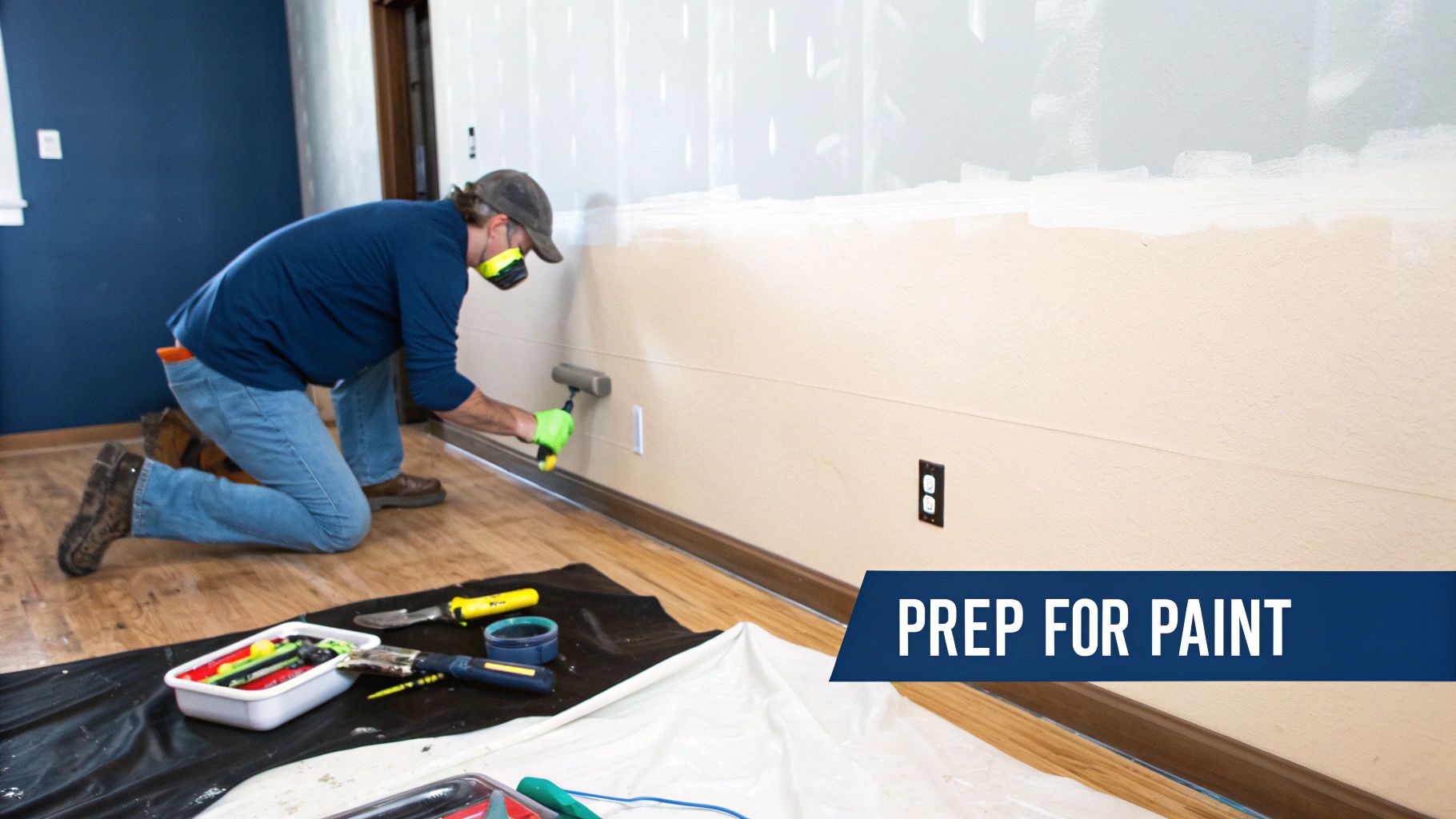
Wash, Fill, and Sand for a Flawless Surface
First, you have to get rid of every bit of wallpaper glue. Even if the walls look clean, a thin layer of glue is likely still there.
- Wash the Walls: Use a large sponge and a mix of warm water and a TSP substitute. Scrub the walls, then rinse with a clean sponge and plain water. Let it dry completely.
- Fill Imperfections: Look for any nicks, gouges, or holes. Use a quality spackle and a putty knife to fill these spots.
- Sand Everything Smooth: Once the spackle is dry, use a fine-grit sanding block on the patches until they are perfectly smooth.
For a more detailed guide to these steps, explore our advice on properly preparing walls for painting.
Why Priming Is Not an Optional Step
After all that work, priming is the final, essential step before you paint. A high-quality primer does two critical jobs after wallpaper removal.
First, it seals the wall and any leftover glue, which stops stains from showing through. Second, it creates a uniform surface so your new paint colour looks even.
This is more important than ever, as over 75% of homeowners have recently done at least one home improvement project. You can find more details about these trends on CountBricks.com.
Think of primer as the bridge between your old wall and your new paint. It guarantees your paint sticks and looks flawless, protecting your investment.
This level of detail is standard for our award-winning team, whether we’re doing a full interior painting service in a North York home or a specialized cabinet refinishing project in Vaughan using high-end Renner Italian coatings.
When to Call a Toronto Wallpaper Removal Pro
While DIY projects can be rewarding, some wallpaper removal jobs are best left to the pros. Calling an expert can save you time, prevent costly wall damage, and guarantee a perfectly smooth finish for your new paint.
Sometimes, it’s just the size of the job. If you have multiple rooms with old wallpaper or discover several layers, the work adds up fast. What might take you a few weekends, our experienced team can often finish in a day or two.
Signs You Should Hire an Expert Painter
Certain situations are red flags for a DIY approach. If you see any of these, it’s a good time to call a professional.
- You Have Plaster Walls: Many of Toronto’s beautiful older homes in areas like North York and Etobicoke have plaster walls. Plaster is easier to damage than drywall if you don’t know what you’re doing. Our team is fully insured and knows how to handle these delicate surfaces.
- You See Water Damage: If you see stains or feel soft spots under the paper, it could be a sign of mould or water damage. A professional should check the wall before starting to scrape.
- You’re on a Tight Deadline: If you need the job done quickly and correctly, hiring a pro is the most efficient choice.
This is just like calling an expert for other tricky home issues, like safely getting rid of a wasp nest. Sometimes, professional help is the safest and smartest route.
The real value of a professional isn’t just speed—it’s the guarantee of a perfectly prepared surface ready for paint. We have the right tools to make sure every bit of paper and old glue is gone.
At Royal Home Painters, we understand budgets are important. We provide clear, fixed-price quotes with no surprises. You can send us photos for a quick quote to start, or we can book a free in-person estimate anywhere in the GTA.
FAQs on Taking Off Wallpaper
We get many questions from Toronto homeowners about taking off old wallpaper. Here are answers to the most common ones.
Can I just paint over my old wallpaper?
It’s tempting, but we strongly advise against it. Paint can make wallpaper seams lift and bubble. Any texture on the paper will also show through the new paint. For a smooth, professional finish, taking the wallpaper off is always the best way to start. It’s how we guarantee a long-lasting result backed by our lifetime warranty.
How long does it take to remove wallpaper from one room?
It really depends. If you have modern, strippable wallpaper in a newer condo, it might only take a few hours. But if you’re in an older North York home with old, glued-on paper, it could be a whole weekend project. The paper’s age, the glue used, and the wall’s condition all affect the outcome.
Do I really need a wallpaper steamer?
Not always, but it can be a lifesaver for stubborn, old wallpaper. Steam penetrates deep into the paper and softens old glue much better than water alone. If you’re struggling, renting a steamer is a good investment. It can save you hours of scraping and prevent wall damage.
What is the best way to remove wallpaper?
For many jobs, a simple 50/50 mix of hot water and white vinegar works great. It’s cheap and effective. If that doesn’t work, head to a hardware store in the GTA for a commercial wallpaper stripper. These are made to break down harsh glues.
Ready to skip the mess and guarantee a perfect finish? The experts at Royal Home Painters Toronto are here to help. Our award-winning, fully insured team handles everything from wallpaper removal to flawless interior painting, all backed by our lifetime warranty.
