


Pro Tips to Paint Concrete Floors – Durable Finish Guide
Painting a concrete floor is a fantastic way to transform a space, but the key to a finish that actually lasts is all in the prep work. As the owner of Royal Home Painters, I’ve seen it all across Toronto. The process consists of crucial steps: deep cleaning, repairs, surface etching, priming, and applying thin, even coats of a specialized concrete paint or epoxy. Get this right, and you’ll have a floor that looks great for years.
Your Quick Guide to Painting Concrete Floors
Hi, I’m Mike, owner of Royal Home Painters. After transforming countless concrete floors across Toronto and the GTA, from Scarborough to Etobicoke, I can tell you one thing for sure: the painting itself is the easy part.
The real work—the part that guarantees a beautiful, durable result—is everything you do before you even open a can of paint.
Think of it this way: meticulous cleaning and preparation is 90% of the job. A dirty or greasy floor will cause any coating to fail, and it often happens within just a few months.
This guide is your cheat sheet for getting it right. I’m sharing the same no-nonsense advice I give to homeowners in Vaughan, Richmond Hill, and right here in Toronto.
Key Takeaways for Your Project
Here’s a quick rundown of what you need to know before starting:
- Prep is Everything: You must clean, degrease, and repair any cracks or holes. Skipping this is the #1 reason concrete paint peels. No exceptions.
- Paint vs. Epoxy: Standard concrete paint is great for low-traffic areas like a basement. But for a garage in Markham that sees cars and road salt, a two-part epoxy is much tougher.
- Etching is Non-Negotiable: Concrete is smooth. Etching roughs it up, giving the paint something to grab onto. Without it, your coating will just lift off.
- Toronto’s Climate Matters: Our humid summers and cold winters affect drying times. You need good ventilation, especially in basements.
- Test for Moisture: Always do the “plastic sheet test” to check for dampness before you start. Trapped moisture is the enemy of painted concrete.
This guide will walk you through the whole process. Whether you’re doing it yourself or want our award-winning team to handle it, you’ll have the right info.
If you’re feeling a bit overwhelmed, you can always send us a few photos for a quick quote—we’re always happy to help.
Is Painting Your Concrete Floor the Right Choice?
Before you grab a roller, let’s talk about whether painting your concrete floor is the right move for your home. As a painter in Toronto for decades, I always ask homeowners, “What are you trying to achieve with this space?” The answer makes all the difference.
A freshly painted concrete floor can absolutely transform a room. I’ve seen it happen time and again across the GTA. It can turn a dark basement in Vaughan into a bright family room, or a stained garage in Markham into a clean workshop.
But—and this is a big but—it’s not always the best solution. The success of a painted concrete floor depends on the condition of the concrete and your expectations.
Pros: The Upside of a Painted Floor
Let’s start with the good stuff. Painting is one of the most cost-effective ways to finish a concrete slab.
Here are the main benefits:
- Affordability: It’s a budget-friendly way to make a big impact, covering old stains and creating a clean look.
- Aesthetic Appeal: With endless colours, you can match any decor. A simple light grey can make a North York basement feel much bigger and brighter.
- Easy Maintenance: A properly painted floor is sealed and non-porous, so spills wipe right up. This is great for workshops, laundry rooms, or play areas.
Cons: What to Consider Before You Start
On the other hand, painting concrete isn’t a magic wand. If your concrete has underlying issues, the paint is guaranteed to fail. I’ve fixed so many DIY jobs in Richmond Hill where the paint peeled within a year because the prep was rushed.
Here are the potential downsides:
- Intensive Prep Work: Cleaning, degreasing, repairing cracks, and etching the floor takes time and a lot of elbow grease. It is 100% non-negotiable.
- Moisture Issues: If your basement has dampness problems, paint will trap that moisture. This leads to bubbling and peeling. You must solve water issues first.
- Durability Limits: Even the best floor paint can be chipped or scratched. For high-impact areas like a busy garage, an epoxy coating is a better choice.
A Quick Story from Richmond Hill
We worked with a client whose basement was damp and only used for storage. They were worried about putting carpet down. After we addressed a minor seepage issue, properly prepared the floor, and painted it with high-quality paint, it became their kids’ favourite playroom. It was the right choice because we tackled the root cause first.
The decision comes down to your space and your goals. For an outdoor area, the considerations are different. We have a detailed guide on painting a concrete porch that explores those challenges.
If you’re still on the fence, our award-winning team can help. We offer free, no-obligation estimates to assess your floor and give you honest advice.
Choosing Your Weapon: Paint vs. Epoxy Coatings
This is probably the biggest question I get from homeowners across York Region: “Mike, should I use paint or epoxy?” My answer is always the same—it completely depends on how you use the space.
A quiet basement workshop has different needs than a busy two-car garage in Scarborough that deals with road salt and melting snow all winter.
Let’s break down the two main options. Think of it like choosing between a regular jacket and a heavy-duty winter parka.
Concrete Paint: A Solid and Simple Choice
Standard acrylic latex floor paint is your go-to for most interior, low-traffic areas. This is a one-part product—you just open the can, stir, and roll. It’s user-friendly and affordable.
I often recommend concrete paint for:
- Basement Floors: Perfect for turning a storage area in North York into a home gym or playroom.
- Laundry Rooms: It provides a clean, easy-to-wipe-down surface.
- Utility or Storage Areas: A great way to brighten up a space without a huge investment.
Remember, while it’s durable for foot traffic, it’s not designed for hot tires or dropped tools. When choosing a finish, it’s essential to understand the characteristics of different types of paint and related materials to pick the right one.
Epoxy Coatings: The Ultimate in Durability
Two-part epoxy is the powerhouse of floor coatings. It’s a resin that you mix right before application—a base and a hardener. They create a chemical reaction that results in a hard, thick, and incredibly resilient surface.
This is the system we use for high-demand environments. It’s more work and costs more, but the payoff in longevity is massive.
Mike’s Take: Epoxy forms a thick, plastic-like shell over your concrete that’s resistant to almost everything. It’s not just paint; it’s a protective shield. For any garage in the GTA, this is the only solution I trust to last.
Concrete Paint vs. Epoxy Coating At a Glance
Still on the fence? This direct comparison should help you decide.
| Feature | 1-Part Concrete Paint | 2-Part Epoxy Coating |
|---|---|---|
| Durability | Good for foot traffic; prone to scratches. | Excellent; resists chemicals, abrasions, and impact. |
| Application | Simple DIY; stir and roll. | More complex; requires mixing and precise application. |
| Cost | $40 – $60 per gallon | $100 – $150+ per kit |
| Best For | Basements, laundry rooms, low-traffic areas. | Garages, workshops, high-traffic industrial floors. |
| Lifespan | 2-5 years | 10-20+ years |
| Appearance | Flat or satin finish, solid colours. | High-gloss, seamless finish; can add decorative flakes. |
For a quick cosmetic upgrade on a budget, paint is a great choice. But for a long-term, bomb-proof solution for a demanding space like a garage, epoxy is the clear winner.
Our Experience Transforming a Mississauga Warehouse
A few years ago, we were hired for a project at a busy warehouse in Mississauga. The concrete floor was stained, cracked, and covered in forklift tire marks. The owner needed a solution that could withstand constant heavy traffic and chemical spills.
Standard paint wouldn’t have lasted a month. We brought in our team to diamond-grind the entire surface, repair all the damage, and then apply a high-solids, industrial-grade epoxy system.
The result was a seamless, glossy, and rock-hard floor that looked incredible and was unbelievably easy to clean. That floor is still performing perfectly today. For complex jobs like that, understanding large-scale applications is key, something we cover in our guide to industrial painting services.
This shows that while epoxy requires more investment and expertise, its performance in demanding environments is unmatched.
The Step-by-Step Guide to Painting Concrete
Alright, let’s get down to the actual work. A perfect finish on a concrete floor is all about following a proven process. I’m going to walk you through it just like I would with a new painter on my crew.
Success comes from getting the prep work right. There are no shortcuts. We’ll start with the most critical steps: cleaning and surface prep.
The Foundation: Deep Cleaning and Degreasing
You can’t paint over dirt, oil, or grease and expect it to stick. It just won’t. Any contamination creates a barrier between the concrete and the coating. This is especially true for garage floors in places like Vaughan or Etobicoke.
My go-to method involves a few key stages:
- Sweep and Vacuum: Get rid of all loose dust and debris. A shop vac is your best friend.
- Apply a Degreaser: Use a heavy-duty concrete degreaser on oil stains and scrub with a stiff-bristled brush.
- Wash the Entire Floor: Clean the whole floor with a pressure washer on a low setting or a deck brush and concrete cleaner.
- Rinse Thoroughly: This is critical. Rinse away all soap residue. Let the floor dry completely for at least 24-48 hours.
Repairing Cracks and Holes for a Smooth Surface
Painting over imperfections won’t hide them; it will highlight them. You need to fill any cracks or holes before you prime.
For small cracks, use an epoxy crack filler. For larger holes, use a concrete patching compound. Overfill the repair slightly, then use a putty knife to smooth it level. Once it cures, sand it flush for a seamless finish.
Why Etching Concrete Is Absolutely Essential
This is the one step most DIYers are tempted to skip, and it’s the single most common reason for paint failure. Concrete is smooth and non-porous. Etching opens up the surface, creating a texture like sandpaper. This gives the primer something to grip.
You have two main options:
- Acid Etching: This uses a solution to chemically rough up the surface. It’s effective, but you need to take safety seriously—gloves, goggles, and excellent ventilation are a must.
- Mechanical Grinding: For our professional projects at Royal Home Painters, we often use a diamond grinder. It’s faster and creates the perfect surface profile every time.
Whether you use acid or a grinder, the goal is the same: create a surface with enough “tooth” for the coating to grab onto. This principle is universal in our trade, something we often discuss when guiding clients on how to properly prep walls for painting.
The trend of painting concrete floors is growing for a reason. In California, for example, nearly 35% of properties use painted concrete for its durability. This is highly relevant for Toronto homeowners. Properly painted floors, which involve meticulous prep, can last 10-15 years. To learn more, you can discover more insights about concrete floor painting on getbasementpainting.com.
This chart gives you a quick visual breakdown of paint versus epoxy.
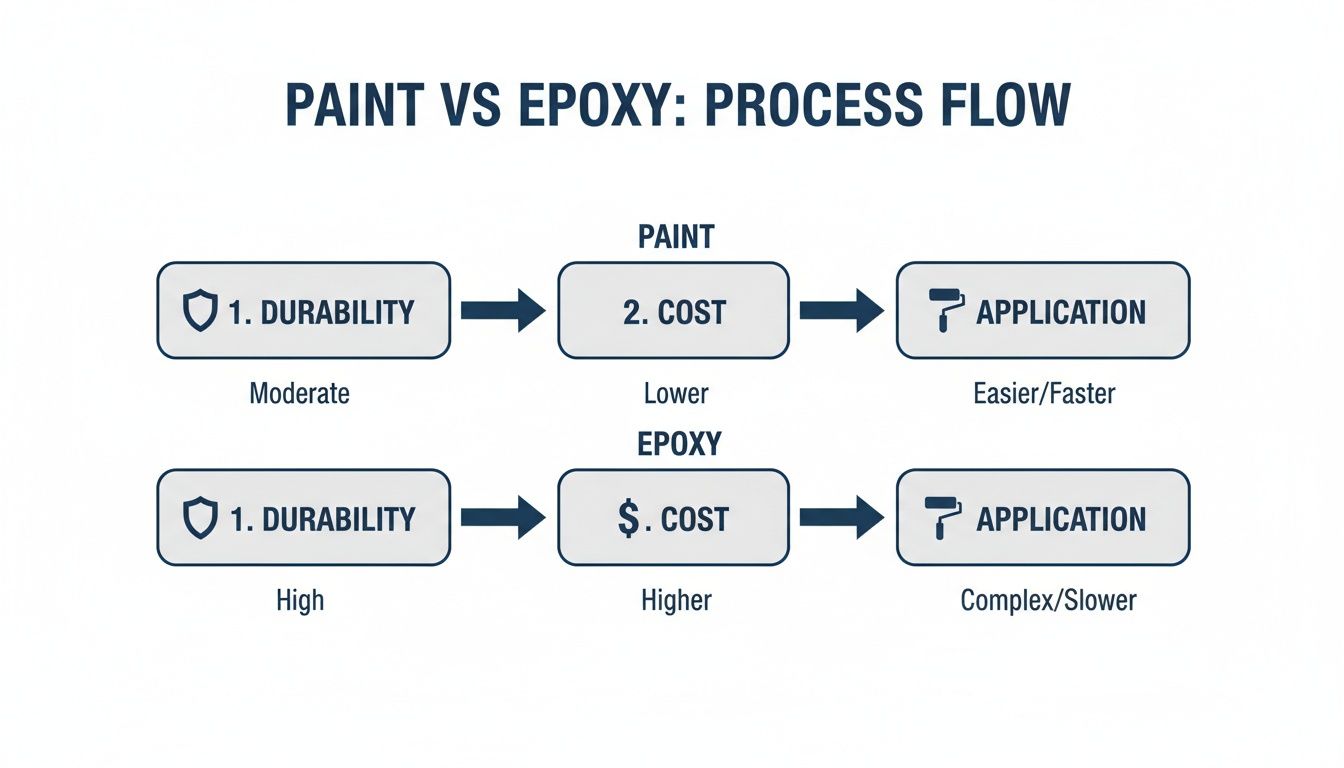
As you can see, while epoxy costs more, its durability is significantly higher, making it a better long-term investment for high-traffic areas.
Priming and Painting for a Professional Finish
Once your floor is clean, repaired, dry, and etched, you’re finally ready for the rewarding part.
First, apply a coat of bonding primer made for concrete. This seals the surface and helps the topcoat adhere properly. Use a high-quality roller with a 3/8-inch nap.
After the primer is dry, you can apply your topcoat of concrete paint or epoxy.
Here are a few tips for a flawless application:
- Maintain a Wet Edge: Always roll from the dry area back into the wet area you just painted to prevent ugly lap marks.
- Apply Thin Coats: Two thin coats are always better than one thick coat. A thick coat takes forever to cure and is more likely to peel.
- Cut in the Edges First: Use a brush to paint a 2-3 inch border around the perimeter of the room first.
Let the first coat dry completely before applying the second. And most importantly, respect the curing time. Your floor might feel dry to the touch in a few hours, but it needs several days to fully harden.
Feeling like this is a lot to handle? Our award-winning team can take care of everything, backed by our multi-year warranty. Book a free estimate and we’ll give you a detailed plan.
Pro Tips by Royal Home Painters
Over my decades painting in Toronto, I’ve picked up a few tricks you won’t find on a paint can. These are the details that make the difference between a floor that lasts two years and one that looks great for ten.
One of the biggest culprits of failed paint jobs is moisture, especially in older Toronto homes. It silently pushes up through the concrete and lifts the paint right off.
The Essential Moisture Test
Before you buy paint, check for hidden moisture. This simple test can save you from a complete nightmare.
- The Plastic Sheet Test: Cut a 2×2 foot square of clear plastic sheeting.
- Tape it Down: Use painter’s tape to seal all four edges to a clean spot on your concrete.
- Wait 24 Hours: Leave it completely sealed for a full day.
- Check the Results: After 24 hours, peel it back. If the plastic is wet or the concrete looks dark, you have a moisture problem. You must fix this before painting.
A Story from an Etobicoke Basement
We once had a project in an Etobicoke bungalow. The homeowner had tried painting the basement floor twice, and both times it peeled within a year. He was beyond frustrated.
The first thing we did was the plastic sheet test. Sure enough, condensation appeared overnight.
Instead of just painting again, we recommended they install a dehumidifier and seal a few minor foundation cracks. Once the dampness was solved, we prepped the floor properly and painted it. It’s been five years, and the floor still looks perfect.
This is exactly what I mean when I say preparation is everything. This careful approach is the same one we take in all our interior painting services, from understanding how to clean walls before painting to our expert cabinet refinishing.
Mike’s Insider Tip on Rollers
Don’t just grab any old roller. For a smooth concrete floor, use a high-quality, lint-free, woven roller with a 3/8-inch nap. Cheaper rollers shed fibres that get trapped in your paint, leaving a fuzzy texture. It’s a small detail that makes a huge difference.
Mixing Two-Part Epoxy Correctly
If you’re using a two-part epoxy, getting the mix right is non-negotiable. Don’t eyeball it. Measure the resin and hardener exactly as instructed.
Mix them in one bucket for at least two minutes, scraping the sides and bottom. Then, pour the entire mixture into a second, clean bucket and mix again for another minute. This process, called “boxing,” ensures you don’t end up with sticky spots on your floor.
These are the details that separate an amateur job from the award-winning results we deliver. If you want a flawless finish without the guesswork, book a free estimate with our fully insured team.
DIY vs. Calling a Toronto Professional

I have huge respect for homeowners who want to roll up their sleeves and do it themselves. There’s pride in saying, “I did that.”
But I also know it’s crucial to recognize when a project is bigger than it looks. Painting concrete seems straightforward, but sometimes calling a professional team is the smarter, safer, and more cost-effective choice.
The decision usually comes down to the size of the job, the condition of your concrete, and your timeline.
When DIY Makes Sense
Going the DIY route can be perfect for smaller projects.
- Small, Simple Areas: A small laundry room or a basement storage area in your North York home with concrete in decent shape is a great weekend project.
- Minimal Repairs Needed: If the floor is clean and only has a few hairline cracks, the prep is manageable.
- You’ve Got the Time: Good prep can’t be rushed. If you can dedicate a full weekend or more, you can get a solid result.
When to Call the Pros at Royal Home Painters
On the other hand, some situations just scream for professional expertise. This is where you save yourself frustration and get a guaranteed result.
Think about hiring our team if:
- The Area is Large: A two-car garage or an entire basement is a massive undertaking. Our crew can prep and coat a huge area in a fraction of the time.
- The Concrete is in Rough Shape: If your floor has extensive cracks, deep oil stains, or old peeling paint, the prep is intense. We use commercial-grade diamond grinders to profile the concrete properly.
- You Suspect Moisture Issues: Moisture is the #1 killer of any concrete coating. Our experienced team knows how to test for it and recommend the right solutions.
At Royal Home Painters, we stand by our work. Our professional interior painting, including concrete floors, is backed by a lifetime warranty. That’s peace of mind you can’t get from a DIY job.
There’s a reason high-quality floor coatings are so popular—homeowners see the value. Industry trends show painting costs averaging $2.34–$4.22 per square foot. For a standard 300 sq. ft. condo basement in Toronto, you might look at a professional cost around $1,000–$1,500. That price includes the intensive labour and superior materials that guarantee a finish won’t peel in a year.
Ultimately, the choice is yours. For outdoor surfaces, you might consider specialists in professional concrete patio and deck finishing. But for any interior floors, our team has the expertise you need.
If you’re in Toronto, Vaughan, Richmond Hill, or anywhere in the GTA and just want a perfect, hassle-free finish, the best next step is to find reliable painting contractors near you. Book a free estimate with our award-winning team.
Frequently Asked Questions (FAQs)
Over the years, I’ve heard every question you can imagine from homeowners across Toronto and the GTA. Let’s tackle some of the most common ones.
1. Can you just paint directly over old concrete paint?
No, I strongly advise against it. Painting over an old, failing coating is like building a house on a crumbling foundation. If the original coat is already peeling, your new layer will lift right off with it. You need to scrape, sand, or strip the old paint to get back to bare concrete for a lasting finish.
2. How long does painted concrete really take to dry and cure?
Patience is key, especially with Toronto’s humidity. A floor might feel dry to the touch in 4-6 hours, but it’s not ready. Allow 24 hours for a second coat, 48-72 hours for light foot traffic, and 7-30 days for it to fully cure and harden before moving heavy items or parking a car on it.
3. Is a primer always necessary on concrete?
Yes. 100%. A high-quality bonding primer seals the porous concrete so your topcoat goes on evenly. More importantly, it creates a strong bond between the concrete and the paint. Skipping primer will drastically shorten the life of your paint job, guaranteed.
4. Why is my painted concrete floor peeling already?
It’s frustrating, I know. Peeling or bubbling almost always comes down to one of three things:
- Rushed Prep Work: The floor wasn’t properly cleaned, degreased, or etched.
- Moisture Problem: Water vapour is pushing up through the concrete from below, which is very common in GTA basements.
- It Was Painted While Damp: The concrete wasn’t allowed to dry completely after cleaning, trapping moisture under the paint.
5. What’s the average cost to have professionals paint a concrete floor in Toronto?
The cost can vary, but generally, you can expect to pay between $3 to $7 per square foot in the Toronto area. The final price depends on the floor’s condition (how much repair and prep is needed) and whether you choose paint or a more expensive epoxy system. We always provide a detailed, fixed-price quote with no surprises.

