


Brick Staining in Toronto – Modern Alternative to Painting
Thinking about updating your brick home in Toronto? It’s a huge decision. As the owner of Royal Home Painters, I’ve spent decades working on brick homes across the GTA, and the biggest question I get is: “Mike, should I stain or paint my brick?”
My answer usually comes down to one simple thing: do you want a finish that works with your brick or against it?
Stain soaks into the brick, letting it breathe. Paint sits on top like a plastic sheet, trapping moisture. In a city with our wild freeze-thaw cycles, that difference is everything.
Key Takeaways: Brick Staining vs. Painting
Here’s a quick summary to help you understand the core differences before we dive deep:
- What is Brick Staining? A special dye that soaks into the brick, changing its colour permanently without creating a surface film.
- What is Brick Painting? Applying a layer of paint that sits on top of the brick, covering its natural texture.
- Durability: Stain lasts 20+ years and fades naturally. Paint often peels and chips within 5-10 years, especially in our Toronto climate.
- Breathability: Stain lets brick breathe, preventing moisture damage. Paint traps moisture, leading to peeling, mould, and potential brick damage.
- Appearance: Staining gives a rich, natural look that enhances texture. Painting creates a flat, coated appearance.
- Cost: Staining costs more upfront but is a better long-term investment. Painting is cheaper initially but requires more maintenance.
A Lasting Transformation for Toronto’s Brick Homes

Hello, I’m Mike, owner of Royal Home Painters. For decades, my team and I have been helping homeowners across Toronto and the GTA modernize their properties. From historic brick homes in North York to newer builds in Vaughan and Markham, one thing is constant: brick is the heart of our city’s architecture.
The Rise of Brick Staining in the GTA
The problem is, many of these beautiful homes now have faded, dated brick that hurts their curb appeal. That’s why picking the right finish is so important—it’s not just about a new colour, it’s about protecting your home for the long run.
Working on brick homes throughout Toronto and York Region, I’ve helped many homeowners modernize faded or outdated brick exteriors. We’ve seen a huge increase in requests for brick staining, especially in areas like Richmond Hill and Etobicoke, as people look for a durable, high-end finish that paint just can’t match. You can read more about brick staining trends and costs on our blog.
For so many homeowners I talk to, staining hits that sweet spot. It delivers a rich, permanent colour change but keeps the natural texture of the brick—something paint completely hides.
Here at Royal Home Painters, we understand this is a significant investment. Our goal is to give you clear, honest advice based on years of hands-on experience so you can make a decision you feel great about. As an award-winning team, we specialize in exterior painting and staining services, ensuring a flawless finish built to withstand our local climate.
This guide will walk you through the key differences you need to know, from my personal experience.
What is Brick Staining? A Deeper Look
So, what exactly is brick staining? Think of it less like a coating and more like a dye for your masonry.
A professional brick stain is a mineral-based product designed to soak into the porous surface of the brick. It creates a chemical bond with the material itself, permanently changing the colour from within.
The most important part? It doesn’t form a film on the surface. This means the natural texture of your brick remains visible, and crucially, the brick can still breathe.
What is Brick Painting? The Surface-Level Solution
Brick painting is just what it sounds like. We apply a layer of acrylic or latex paint that sits on top of the brick, forming a solid, non-porous film.
While painting gives you an immediate and dramatic colour change, it completely seals the surface. This hides the brick’s unique texture and, as I’ll explain, can set the stage for major problems down the road, especially here in the GTA.
Brick Staining vs Brick Painting – Key Differences
When a Toronto homeowner asks me whether to stain or paint their brick, my first question is always the same: “Are you looking for a quick makeover or a permanent solution?” This choice goes far beyond just colour—it’s about the long-term health of your home’s exterior.
After decades of working on homes from Etobicoke to Scarborough, I’ve seen firsthand how this decision impacts future maintenance, costs, and curb appeal. Let’s break it down.
Quality: Stain Penetrates, Paint Sits on the Surface
The core difference is how each product interacts with the brick. I like to explain it this way: stain becomes part of the brick, while paint is just a coat sitting on top.
- Brick Staining: The stain soaks in and chemically bonds with the masonry. This is huge because it lets the brick keep its natural texture and—most importantly—its ability to breathe.
- Brick Painting: The paint forms a solid film. While this gives you a bold colour, it seals the surface completely.
Longevity: Stain Lasts Longer, Paint Can Peel
Toronto’s weather is a true test for any exterior finish. We swing from hot, humid summers to brutal winters packed with freeze-thaw cycles. This is where staining proves its worth.
A professionally applied brick stain lasts for 20 years or more. It won’t peel, chip, or flake because it’s part of the brick. Over time, it simply fades gently and evenly. You’ll never wake up one spring to find big patches peeling off your wall.
Paint has a much shorter lifespan. You’re typically looking at touch-ups or a full repaint within 5 to 10 years. The film traps moisture, and when that water freezes, it forces the paint right off the surface.
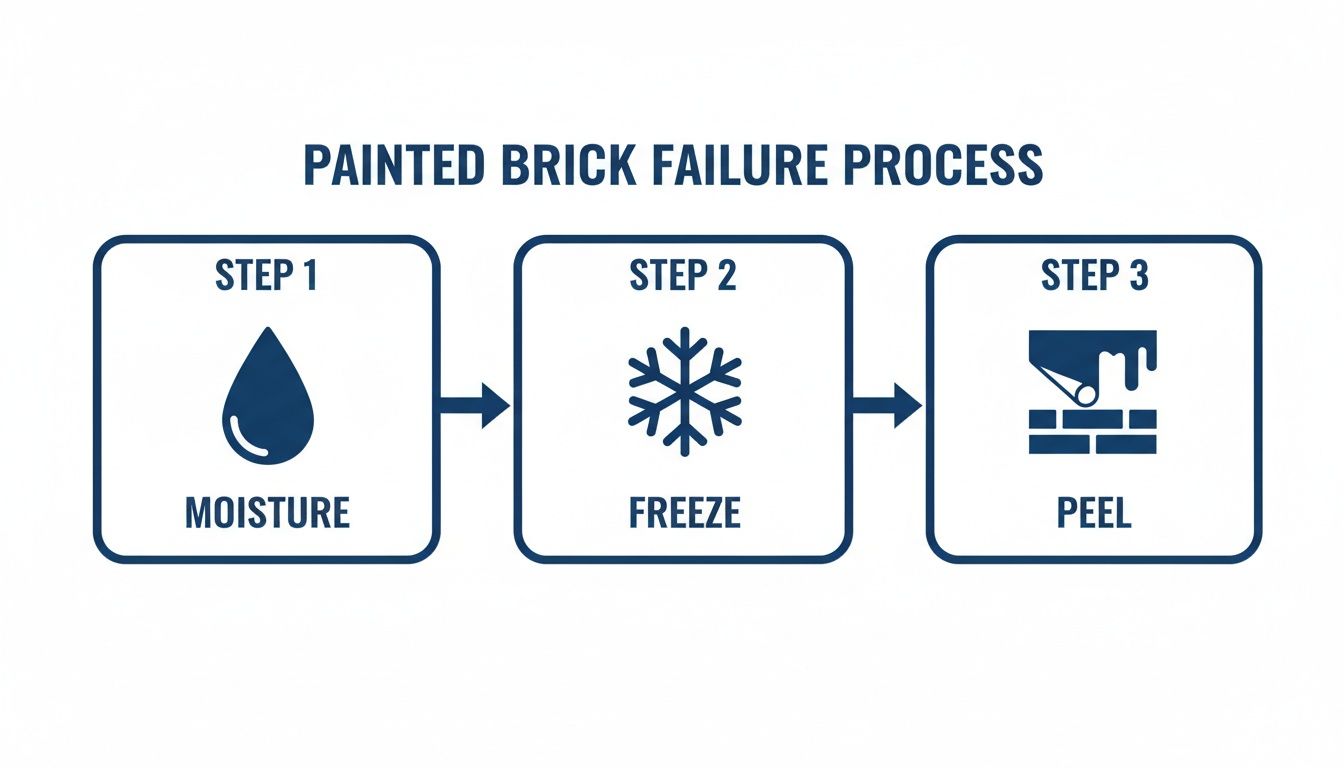
👉 Mike’s Pro Tip: Toronto’s freeze-thaw cycles are the #1 enemy of painted brick. When moisture gets trapped behind the paint film and freezes, it expands with incredible force, pushing the paint off the surface. This is what causes the bubbling and peeling I see on homes all over North York and Richmond Hill every spring.
Breathability: Why It Matters for Toronto Homes
If you take just one thing away from this, let it be this: brick needs to breathe. Bricks are porous, meaning they absorb and release moisture. This is essential for the health of your masonry.
Staining preserves this vital breathability. Moisture can soak in and then evaporate out, preventing it from getting trapped inside your walls, which can lead to mould and structural damage. Painting eliminates breathability, trapping moisture and creating a recipe for disaster.
Price: Upfront Cost vs. Long-Term Value
- Staining typically costs more upfront. The process is more meticulous, and the professional-grade products are more expensive.
- Painting is cheaper initially but has higher maintenance costs. The long-term costs of repainting, scraping, and repairing moisture damage often make it the more expensive choice in the end.
Brick Staining vs Painting: Comparison Table
This table gives a quick summary of the key differences to help you decide.
| Feature | Brick Staining | Brick Painting |
|---|---|---|
| Appearance | Natural, matte finish shows brick texture | Coated look, hides texture |
| Longevity | 20+ years, fades naturally | 5-10 years, can peel and chip |
| Breathability | Yes – Allows brick to breathe | No – Traps moisture |
| Maintenance | Low, requires little to no upkeep | Higher, requires frequent touch-ups |
| Typical Cost | Higher upfront | Lower upfront |
Ultimately, while painting might seem like a faster fix, staining is the superior long-term investment for your brick home in a demanding climate like ours.
Common Problems with Painted Brick in Toronto
My team sees it all the time across North York, Scarborough, and the GTA: painted brick that’s bubbling, cracking, and peeling. This isn’t just a bad paint job—it’s a fundamental conflict between a paint film and our demanding Toronto climate.
1. Peeling and Cracking Paint
This is the most common issue. When you paint brick, you seal the surface. Moisture inevitably finds its way behind the paint film through tiny cracks or mortar joints. When winter hits, that trapped water freezes, expands, and pushes the paint right off the brick.
2. Trapped Moisture and Brick Damage
That trapped moisture doesn’t just cause peeling. It keeps the brick constantly damp, which can lead to spalling—where the face of the brick literally flakes or pops off. This is serious structural damage that is expensive to repair.
3. A Breeding Ground for Mould and Mildew
Trapped moisture also creates the perfect damp, dark environment for mould and mildew. I’ve seen this countless times on north-facing walls in Richmond Hill and Etobicoke, which get less sun and stay damp longer. Staining, because it lets the brick dry out, naturally prevents this.
A Client Story: A Costly Mistake in Vaughan
A few years ago, we were called to a beautiful home in Vaughan. The owner had painted their classic red brick a modern grey just three winters prior. By the time they called us, large sections of paint were peeling off in sheets.
They had to pay for a costly and labour-intensive process to strip all the failing paint before we could properly prepare and stain the surface. The cost to fix the problem was nearly double what it would have cost to simply stain the brick correctly from the start. This experience is a powerful reminder that understanding when you should not paint brick is crucial.
Professional Brick Stain Products We Trust
At Royal Home Painters, we only use professional-grade systems designed specifically for masonry. These aren’t products you’ll find at your local big-box store.
- H&C® Colortop™ Water-Based Solid Color Concrete & Brick Stain (from Sherwin-Williams): This is a go-to for us. It provides excellent penetration, durability, and a huge range of colours for a vibrant, long-lasting finish.
- Permatint Masonry Stains: Another industry leader known for its deep-penetrating formula that ensures permanent colour and breathability.
- Behr Premium Concrete & Masonry Stain: A solid product that offers great performance and colour retention, suitable for various brick types.
👉 It’s interesting to note that Benjamin Moore currently does not offer a dedicated brick staining product. This highlights that brick staining is a specialized trade requiring specific products and expertise that go beyond general painting.
Our Professional Brick Staining Process (The Royal Home Painters Way)
Homeowners across Toronto often ask what a professional brick staining job involves. It’s a meticulous, multi-stage process we’ve perfected over the years to guarantee a flawless, permanent bond. This isn’t a DIY guide; it’s an inside look at how our award-winning team ensures a perfect finish every time.
1. Brick Inspection and Moisture Testing
Before we do anything, we start with a detailed inspection. We look for cracked bricks, failing mortar joints, and efflorescence (that chalky white powder). These issues must be fixed first.
Most importantly, we conduct moisture testing. Applying stain to damp brick is a recipe for failure. We use professional moisture meters to get an exact reading, ensuring the brick is perfectly dry. We will never proceed if moisture levels are too high.

2. Intensive Cleaning and Prep
I can’t stress this enough: prep is everything. A clean surface is non-negotiable for a lasting finish, a principle we follow for all our projects, including how to properly prep walls for painting. We use carefully controlled power washing to strip away decades of dirt and grime without damaging the brick.
3. Stain Application
With a clean, dry, and repaired surface, we apply the professional-grade stain using sprayers. This allows for a perfectly even, consistent finish that saturates every pore of the brick, resulting in a uniform colour that looks completely natural.
4. Sealing (If Needed) and Final Inspection
In some cases, a breathable sealer may be applied for extra protection, but often the stain itself is the final finish. We then do a final walk-through to ensure flawless coverage. This meticulous process is why we can confidently back our exterior work with a comprehensive 2-year warranty.
Mike’s Pro Tips for a Flawless Brick Transformation
After decades of working on brick homes all over the GTA, I’ve learned what separates a good job from a great one. It always comes down to the details.
👉 Mike’s Pro Tip #1: How to Tell if Brick is Suitable for Staining
Not sure if your brick can be stained? Do a simple water test. Flick some water onto it. If it soaks in and darkens the brick, you’re good to go. If the water beads up and runs off, the brick has likely been sealed or painted, and stain won’t penetrate.
👉 Mike’s Pro Tip #2: When Painting Might Be The Only Option
I’m a huge advocate for staining, but sometimes painting is the only realistic option. If your brick is already painted, you can’t stain over it. Painting is also the better choice if the brick has ugly, mismatched repairs or significant surface damage that needs to be hidden.
👉 Mike’s Pro Tip #3: Why Testing Stain Absorption Matters
Always, and I mean always, do a test patch. We find a discreet spot and apply the stain. We let it dry completely and check it at different times of day. It’s the only way to be 100% sure you’ll love the final colour on your home. This is just as important as our process for how to clean walls before painting.
The Royal Home Painters Difference for Your Brick Home
Choosing the right local team is everything. The success of a project like this hinges on experience—not just with the products, but with the unique challenges of our Toronto climate. My team at Royal Home Painters lives and breathes this stuff.
We’re a top-rated, award-winning Toronto painting company for a reason. We’re fully insured, have WSIB coverage, and back our work with a 2-year exterior warranty. Our reputation is built on trust and meticulous workmanship, one home at a time across Toronto, Vaughan, Richmond Hill, Markham, and the entire GTA. You can learn more about our commitment to quality and our team.
Choosing a team means choosing a promise. Our promise is simple: a beautiful, durable finish that protects your investment for decades.
If you’re considering updating your brick exterior in Toronto, professional staining can offer a long-lasting, natural-looking transformation. I invite you to book a free estimate with us. We’d be happy to come out, assess your home, and give you our professional recommendation.
Frequently Asked Questions About Brick Staining
Is brick staining better than painting in Toronto?
For most unpainted brick homes in Toronto, yes. Staining is far more durable because it allows the brick to breathe, which is essential for surviving our freeze-thaw cycles. Paint traps moisture, leading to peeling and chipping in our climate.
How long does brick stain last?
A professionally applied brick stain will last 20 years or more. It doesn’t peel or chip like paint. Instead, it becomes part of the brick and fades very slowly and evenly over many years.
Does brick stain fade?
Yes, over a very long period (15-20+ years), brick stain will gradually and evenly lighten from sun exposure. However, it won’t peel or flake, so the appearance remains natural and well-maintained.
Can all bricks be stained?
Most unpainted and unsealed bricks can be stained. If your brick has previously been painted or has a waterproof sealer on it, the stain cannot penetrate the surface. A professional can perform a quick water test to see if your brick is suitable.
Is brick staining more expensive than painting?
Yes, the upfront cost for professional brick staining is typically higher than painting. This is due to the meticulous prep work required and the higher cost of the specialized staining products. However, it is more cost-effective in the long run due to its longevity and low maintenance.
Will painted brick peel in winter?
It is very likely. Toronto’s winter freeze-thaw cycles are the main cause of paint failure on brick. When trapped moisture freezes behind the paint film, it expands and forces the paint to bubble, crack, and peel off the surface.

